
Syrup Pitcher, 1865-1870
THF300776 / Syrup Pitcher, 1865-1870
01
Artifact Overview
Nineteenth-century Americans who could not afford refined white sugar found a sweet alternative with molasses or maple syrup. Syrup jugs or pitchers with their dripless metal pouring spouts held the slow-pouring, sugary liquid. These pressed or mold-blown glass containers became a common fixture on many middle-class Victorian Americans' tables.
Artifact Details
Artifact
Pitcher (Vessel)
Date Made
1865-1870
Place of Creation
Location
at Greenfield Village in Davidson-Gerson Gallery of Glass
Object ID
30.1191.3
Credit
From the Collections of The Henry Ford.
Material
Glass (Material)
Pressed glass
Pewter (Tin alloy)
Color
Cobalt blue (Color)
Dimensions
Height: 6.75 in
Length: 4.5 in
Diameter: 3.75 in
Weight: 13.1 oz
Keywords |
|---|
02
Related Content
 Set
SetPressed Glass
- 15 Artifacts
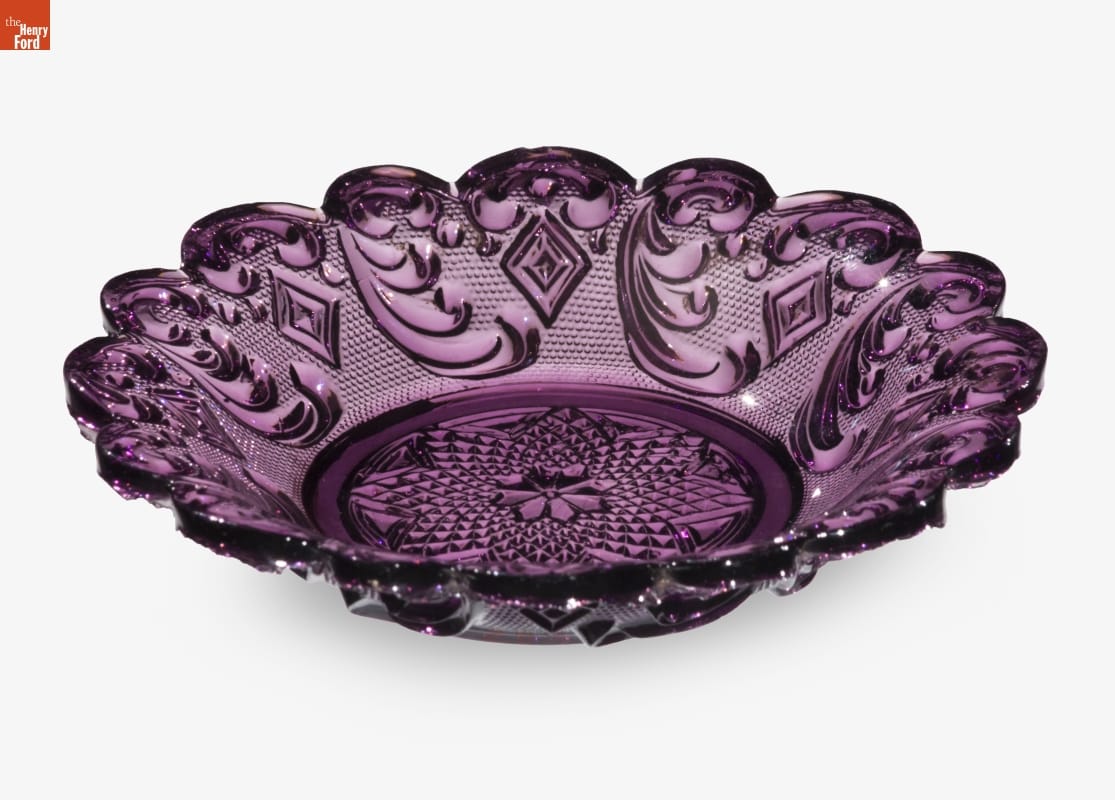
Mechanically pressed glass was an innovation in glass history, making decorative, "patterned" glass available to a broad audience. One of the earliest types of pressed glass, dating to the 1830s is known as "Lacy Glass". Complex stippled patterns were developed to help hide technical defects caused by early presses, when the glass gather was cut off and dropped into a mold.