
Joint Resolution of the United States Congress, Proposing the 13th Amendment to Abolish Slavery, 1865
THF118475 / Joint Resolution of the United States Congress, Proposing the 13th Amendment to Abolish Slavery, 1865
01
Artifact Overview
The 13th Amendment to the Constitution, not the Emancipation Proclamation, formally abolished slavery in the United States, settling the issue which had long plagued the nation. Congress adopted the Amendment in January 1865 and sent it to states, which ratified it in December. The word "Duplicate" at the top of this document indicates the bill had been passed by Congress but had not yet been ratified.
Artifact Details
Artifact
Resolution (Administrative record)
Date Made
01 February 1865
Subject Date
01 February 1865
Place of Creation
Collection Title
Location
Not on exhibit to the public.
Object ID
60.108.1
Credit
From the Collections of The Henry Ford. Gift of Mr. and Mrs. Robert Watson Pomeroy
Material
Vellum (Paper)
Ink
Technique
Handwriting
Color
Black-and-white (Colors)
Dimensions
Height: 20.75 in
Width: 15.5 in
Inscriptions
Written at top: Thirty Eighth Congress of the United States...
Top, center: Duplicate
Keywords |
|---|
02
Related Content
 Set
SetCurators' Choice: American Democracy & Civil Rights
- 25 Artifacts
George Washington carried folding beds, tents, eating utensils, and other equipment to use while encamped on the field with his troops during the Revolutionary War. Washington likely used this bed when he traveled from his Newburgh, New York, headquarters in July 1783 -- as the war was winding down -- to tour upstate New York and the military installations located there. Set
SetAbraham Lincoln: Preserving the Union
- 10 Artifacts
Following the American Civil War, this engraving commemorated a crucial event and became popular for classroom display across the country. On July 22, 1862, President Abraham Lincoln first read the Emancipation Proclamation to his cabinet officers. Publicly announced by Lincoln in September 1862 to become law on January 1, 1863, it was the essential first legal step in eliminating slavery.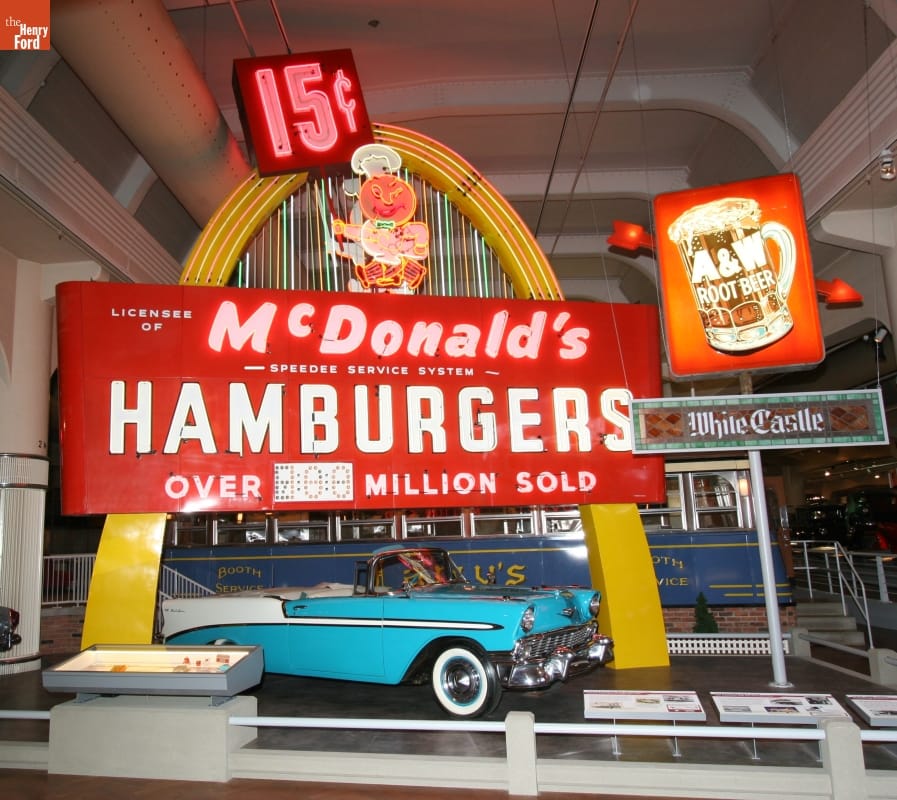 Set
SetSocial Transformation
- 50 Artifacts
In 1948, the McDonald brothers transformed their Southern California drive-in restaurant with their radical new "Speedee Service System"--assembly-line production of a limited menu at drastically reduced prices. Richard McDonald created this sign design in 1952. In 1955, milkshake machine salesman Ray Kroc franchised the McDonald's concept--prompting numerous imitators and ultimately turning America into a "fast food nation."-600x600%2Fthf735583dbfd2a2113724fe9ae653ca5a3400066.jpg%3Fsfvrsn%3Df48f65ae_1&w=3840&q=75) article
articleThe Declaration of Independence and George Washington: A Chirographic Portrait
Immediately after the Civil War, William Pratt, a penmanship teacher, and Augustus Hageboeck, a Davenport, Iowa, printer, created this striking image of George Washington. In its unique design, the print blended commerce, country, and long-simmering ideas of freedom and union.