
1922 Detroit Electric Coupe
THF159913 / 1922 Detroit Electric Coupe
01
Artifact Overview
Detroit Electric was the best-known and longest-lived American electric car company. Detroit Electric built cars from 1907 to 1939, although after 1930 production was limited to custom orders. This elegant four-passenger Model 90 coupe was in regular use from 1922 to 1934. A large battery provided electricity for the vehicle's electric motor. The car had a driving range of 70 to 100 miles between charges and a top speed of about 25 miles per hour.
Artifact Details
Artifact
Automobile
Date Made
1922
Creators
Place of Creation
Location
Not on exhibit to the public.
Object ID
34.371.1
Credit
From the Collections of The Henry Ford. Gift of Joseph W. Ballard.
Material
Steel (Alloy)
Metal
Leather
Glass (Material)
Cloth
Rubber (Material)
Color
Dark blue
Black (Color)
Gold (Color)
Dimensions
Height: 71 in
Width: 65 in
Length: 159 in
Wheelbase: 100 in
Inscriptions
Monogram: JWB
Plate on firewall:
THIS 1922 MODEL DETROIT ELECTRIC CAR IS POWERED BY AN EDISON NICKEL-IRON-ALKALINE STORAGE BATTERY MANUFACTURED IN OCTOBER, 1913, AND WHICH FOR MANY YEARS WAS USED TO OPERATE MRS. HENRY FORD'S PERSONAL ELECTRIC AUTOMOBILE.
Plaque under front hood: DETROIT ELECTRIC CAR CO. / DETROIT MICH., U.S.A./ETC.
Step plates and hubs: THE DETROIT ELECTRIC CAR CO. / THE DETROIT ELECTRIC/DETROIT, MICH., U.S.A.
Keywords |
|---|
02
Related Artifacts
 Artifact
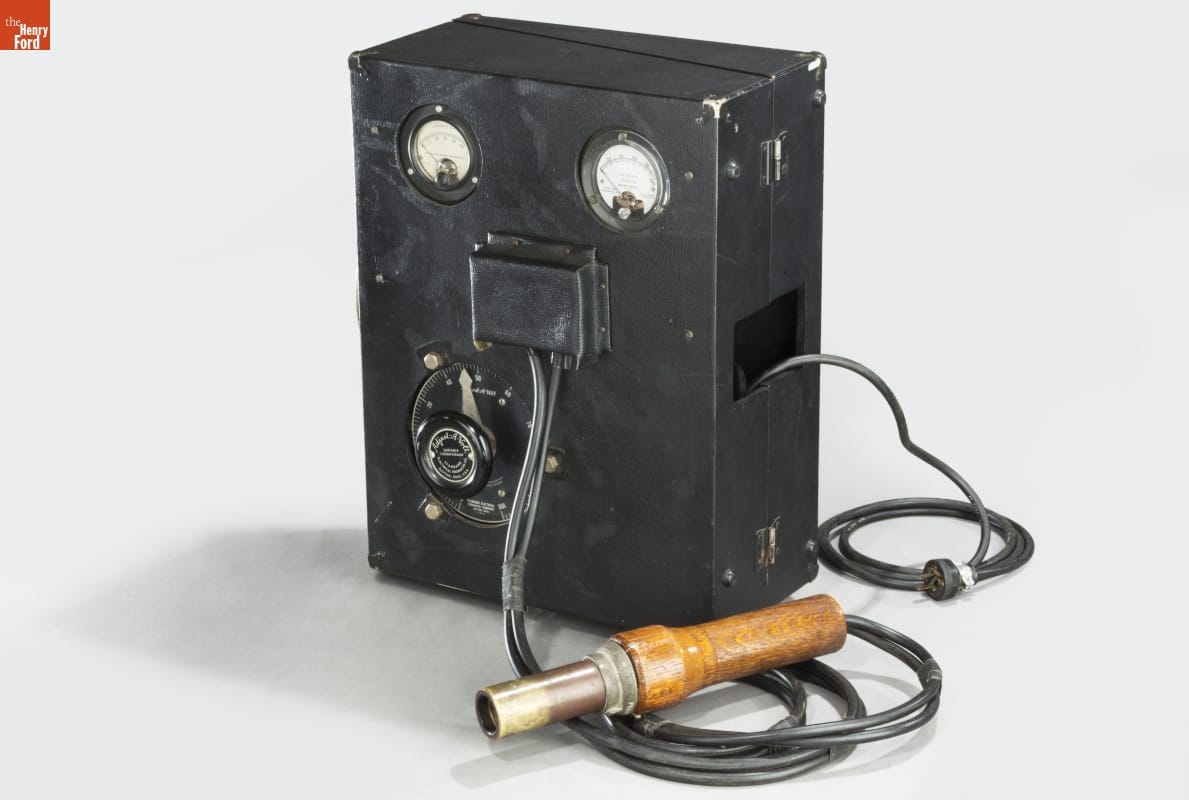
Battery Charger for Detroit Electric Coupe, circa 1922
Early electric automobiles were clean, quiet and -- with no gears to shift -- easy to drive. But fully recharging their batteries could take anywhere from 8 to 16 hours. Into the 1920s, larger cities often had public charging stations to service electric cars. Owners could also charge their vehicles at home using units like this one.
03
Related Content
 Set
SetLesson: Transportation for People and American Attitudes
- 16 Artifacts
Few American cities embraced the automobile like Los Angeles. The southern California metropolis opened the first of its many limited-access freeways in 1940. Work on the Harbor Freeway, seen here, began in the early 1950s. Now designated Interstate 110, this freeway connects the downtown area with the Port of Los Angeles to the south, and with Pasadena to the northeast.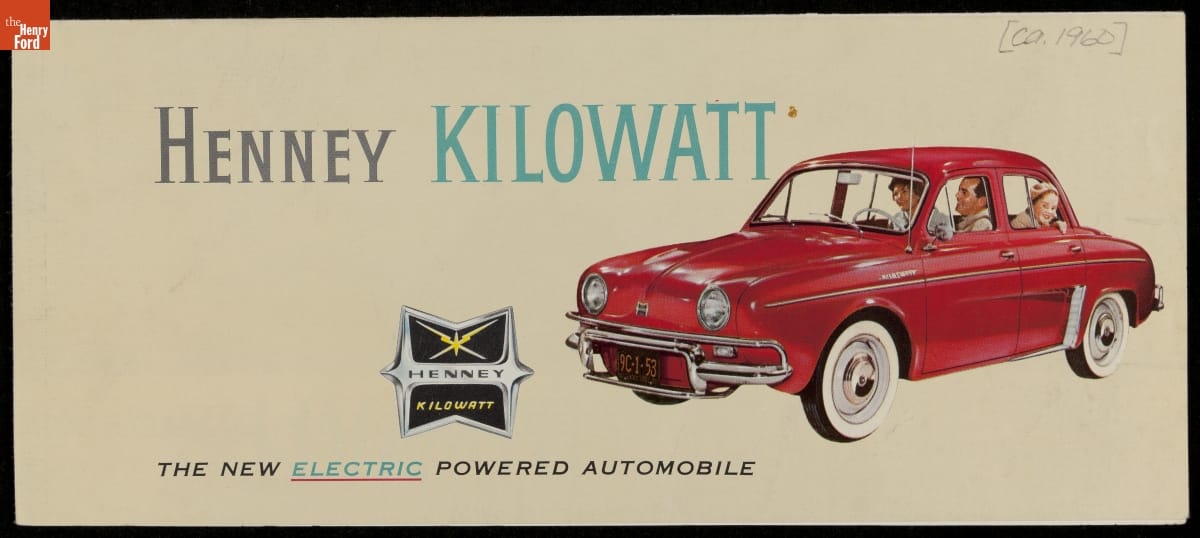 Set
SetElectrics and Hybrids at The Henry Ford
- 26 Artifacts
The Henney Motor Company produced an electric vehicle, based on the French-made Renault Dauphine, in 1959 and 1960. The cruising speed was around 30 miles per hour, with a range of about 40 miles between charges. This sales catalog for the Henney Kilowatt provided answers to questions buyers had about the vehicle.