
Broadside, "Pennsylvania Rail Road, its Necessity and Advantages to Philadelphia," 1847
THF204358 / Broadside, "Pennsylvania Rail Road, its Necessity and Advantages to Philadelphia," 1847 / detail
01
Artifact Overview
When the Erie Canal opened in 1825, New York City became the dominant trade center on the Eastern Seaboard. Other cities built competing transportation routes to the nation's interior. The Pennsylvania Railroad, chartered in 1846, ultimately connected Philadelphia with Chicago and St. Louis. It was one of the largest railroads in the United States before being merged in 1968.
Artifact Details
Artifact
Broadside (Notice)
Date Made
1847
Subject Date
1847
Place of Creation
Creator Notes
Document by order of commissioner, Thomas P. Cope, Philadelphia, Pennsylvania.
Collection Title
Location
Not on exhibit to the public.
Object ID
82.129.1271
Credit
From the Collections of The Henry Ford.
Material
Paper (Fiber product)
Dimensions
Height: 13.375 in
Width: 8.75 in
Inscriptions
Description beneath: A copy of the printed broadside issued in 1847 for circulation among the business men of Philadelphia and urging the necessities and advantages of the Pennsylvania Railroad, with arguments designed to win support for the project./ Cornerstone document of the present Pennsylvania Railroad System. No other copy bibliographically recorded. Signed by T.P Cope, Chairman of the Commissioners./ Published in Philadelphia. Date: 1847.
Keywords |
|---|
02
Related Content
 Set
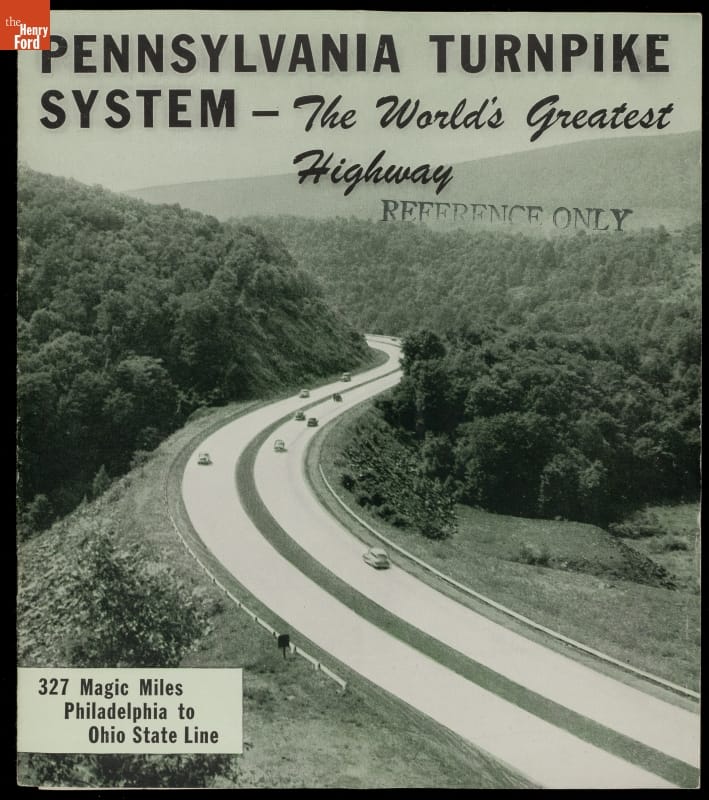
SetThe Pennsylvania Turnpike
- 21 Artifacts
Opened in 1940, the Pennsylvania Turnpike was the prototype for modern limited-access American highways. Financed by user tolls, the turnpike initially ran 160 miles across the Keystone State, connecting Harrisburg with Pittsburgh. It was soon extended 100 miles east to Philadelphia. Drivers appreciated the smooth pavement, gentle curves, and lack of stoplights. The turnpike became a tourist attraction in its own right.