
Scythe, circa 1880
THF32421 / Scythe, circa 1880
01
Artifact Overview
Scythes helped farmers harvest hay and other grasses quickly. The long sharp blade cut large swaths through the crops. The long handle allowed harvesters to work upright, which removed the bending and stooping required when using a sickle. Swinging a scythe was still hard work. In the 19th century, innovative farmers created mowing machines that made harvesting hay even easier.
Artifact Details
Artifact
Scythe
Date Made
circa 1880
Place of Creation
Location
at Greenfield Village in Soybean Lab Agricultural Gallery
Object ID
00.135.2
Credit
From the Collections of The Henry Ford.
Material
Steel (Alloy)
Wood (Plant material)
Inscriptions
wood burned into the arm: HENRY FORD
stamped on collar: PAT. NOV 08 (?) 81
[illegible symbols on tang of blade - maker's marks?
Keywords |
|---|
02
Related Content
 Set
SetHay
- 14 Artifacts
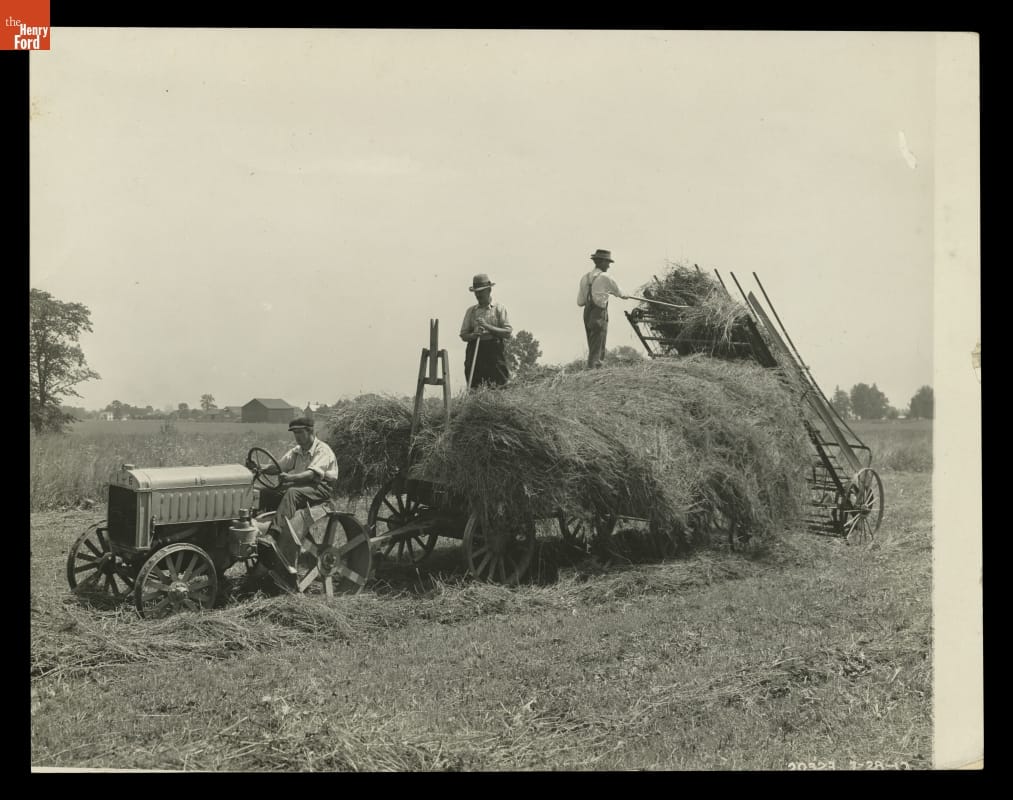
Hay is a mixture of cut grasses or crops like alfalfa or clover that keeps farm animals well fed during winter months. Making hay is a labor-intensive and time-consuming process--farmers cut, dry, and store hay all summer long. It is also a race against time--rain damages the crop drying in the fields. Mechanical innovations have reduced the time and labor--but not the urgency--required to complete this essential chore.