
Revolving Beehive, 1869-1877
THF172095 / Revolving Beehive, 1869-1877
01
Artifact Overview
Charles Eldad Spaulding's work as a cheese-box maker in Theresa, New York, influenced his design for a circular revolving beehive. His invention, patented in 1869, was not successful -- though this one is visually appealing with its hand-painted scrollwork and colorful scenes. Instead, rectangular beehives with removable frames in a bee-friendly space were becoming the standard for the growing commercial beekeeping industry.
Artifact Details
Artifact
Beehive (Apiary)
Date Made
1869-1877
Creators
Place of Creation
Creator Notes
Patented by Charles E. Spaulding, Theresa, New York, on April 8, 1869.
Location
Not on exhibit to the public.
Object ID
65.103.1
Credit
From the Collections of The Henry Ford.
Material
Wood (Plant Material)
Metal
Color
Yellow (Color)
Red
Green
Dimensions
Height: 29 in
Diameter: 18 in
Inscriptions
painted on front:
SPALDING'S [sic] / REVOLVING BEE HIVE / THERESA, N.Y. / PAT.D. APR. 8 1869.
Keywords |
|---|
02
Related Content
 Set
SetAgriculture and the Environment
- 50 Artifacts
"Combines" combine the major tasks of grain harvest: cutting and gathering the crop, threshing and separating the kernels from the chaff, and disposing of the straw. The Massey-Harris Model 20, introduced in 1938, culminated over 100 years of mechanical improvements. One driver operated the self-propelled machine, which reduced the need for hired help during the labor shortages of World War II.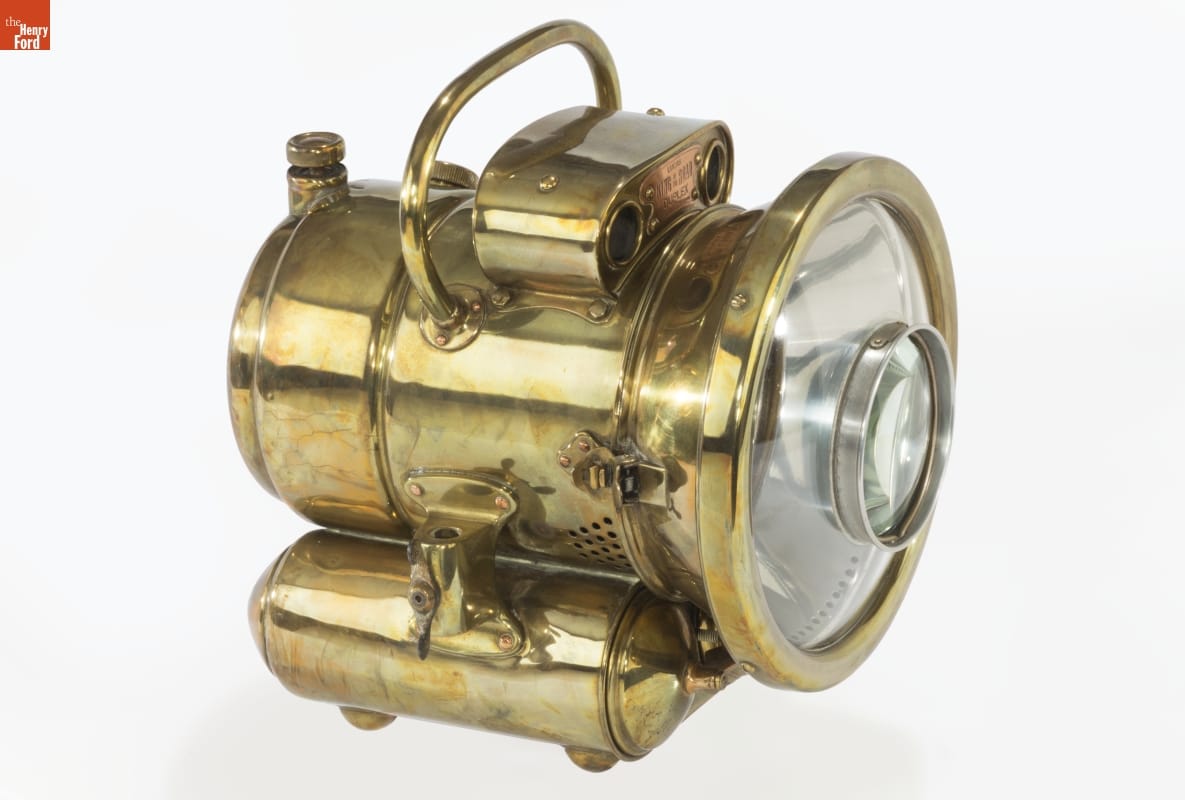 Set
SetExposed Collections—2017-2020 IMLS Grant Project
- 20 Artifacts
Drivers in the early 1900s attached headlights to their automobiles to help light their way at night. To use this "King of the Road" model, automobilists filled the chambers with calcium carbide and then added water creating acetylene gas. Igniting the gas burner produced a strong white light. The lamp's lens and parabolic reflector cast a broad beam lighting the road ahead.