
Pleasure Wagon, circa 1820
THF75657 / Pleasure Wagon, circa 1820
01
Artifact Overview
The pleasure wagon, developed in New England in the early 19th century, was pretty and practical. Its stylish body and bright paintwork were appropriate for a drive to church on Sunday. But, with its seat lifted out, the vehicle had room to carry produce to market the rest of the week. New Hampshire farmer Jonathan Fitts owned this pleasure wagon.
Artifact Details
Artifact
Pleasure wagon
Date Made
circa 1820
Place of Creation
Creator Notes
Attributed to an unknown South Hampton, New Hampshire maker
Location
Not on exhibit to the public.
Object ID
28.415.1
Credit
From the Collections of The Henry Ford. Gift of Miss Josephine F. Prescott.
Material
Iron (Metal)
Paint (Coating)
Wood (Plant Material)
Technique
Painting (Image-making)
Color
Black (Color)
Green
Red
Yellow (Color)
Dimensions
Height: 60 in
Width: 66.25 in
Length: 161 in
Wheelbase: 48 in
Diameter: 36.5 in (Wheel Diameter)
Diameter: 47 in (Wheel Diameter)
Keywords |
|---|
02
Related Content
 Set
SetOnline Horse-Drawn Vehicles Collection
- 29 Artifacts
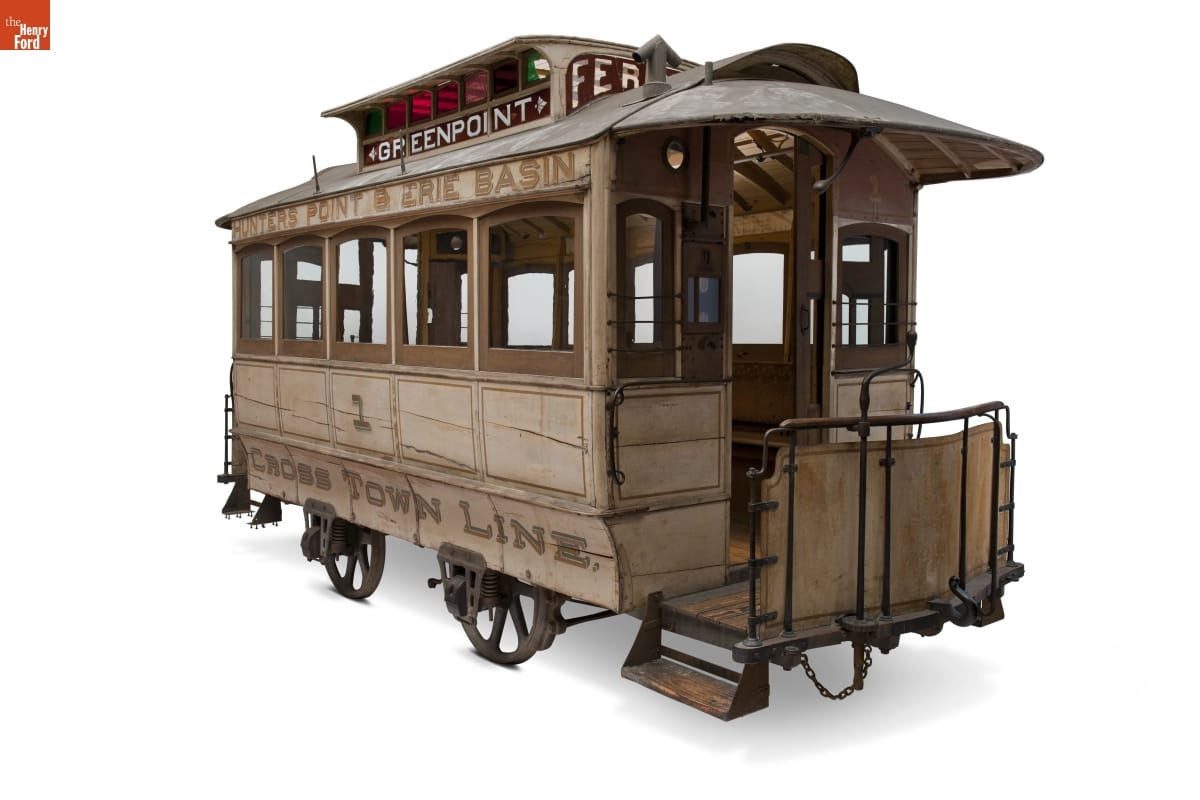
The horse-drawn streetcar was an important means of public transportation in 19th-century American cities. New York's Brooklyn City Railroad ran this car on its line between Hunters Point in Long Island City, and Erie Basin in South Brooklyn. But horses were expensive to stable and feed -- and messy too. Operators embraced electric streetcars starting in the late 1880s. article
Horse-Drawn Vehicles for Outings
Early American parks with special pathways, including New York's Central Park, were designed for people to take out and show off their vehicles. Learn more & see examples from our collections.