
Stover's Automatic Wind Engine for Pumping Water, Grinding, &c., 1876
THF123852 / Stover's Automatic Wind Engine for Pumping Water, Grinding, &c., 1876
01
Artifact Overview
Many American farmers in the late 1800s bought windmills to pump water and power machinery. The Stover Wind Engine Company -- one of several companies that used the Stover name -- manufactured windmills for a brief period around the late 1870s. With pages of testimonials, this Stover catalog touted the durable construction and labor- and money-saving qualities of its windmills.
Artifact Details
Artifact
Trade catalog
Date Made
1876
Creators
Place of Creation
Collection Title
Location
By Request in the Benson Ford Research Center
Object ID
90.219.91
Credit
From the Collections of The Henry Ford.
Material
Paper (Fiber product)
Technique
Printing (Process)
Color
Black-and-white (Colors)
Dimensions
Height: 9.125 in
Width: 5.75 in
Inscriptions
on front:
1776 STOVER'S 1876. / AUTOMATIC WIND WNGINE, FOR PUMPING WATER, GRINDING GRAIN, &c. / PLEASE READ THIS CIRCULAR ALL OVER WITH AN Unprejudiced Mind, and Buy a Mill and make your home a Garden Spot. . . .
on page 11:
. . .Our Mills will be on Exhibition at the Great National Centennial
Keywords |
|---|
02
Related Artifacts
 Artifact
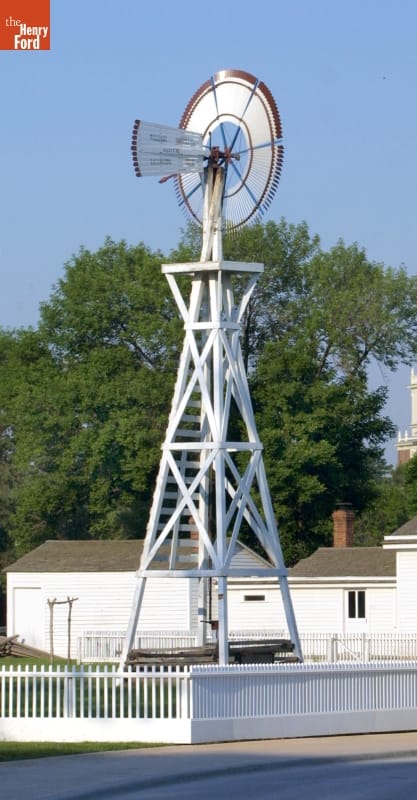
Stover Windmill, circa 1883
This windmill is similar to one purchased by William Ford, Henry Ford's father, and used on his Dearborn, Michigan, farm. Farmers throughout the United States in the late 1800s could purchase American prairie-style windmills like this one from scores of manufacturers. These labor-saving devices provided power for farm machinery and pumped well water used by the farmer's family and livestock.
03
Related Content
 Set
SetWindmills: Extracting Power from the Air
- 16 Artifacts
This engraving of Newport, Rhode Island, was published in London in 1831. The engraving features a picturesque view of the town, the shore, and a windmill. Newport was an early whaling town and played a pivotal role in the "Triangle Trade" of slaves, sugar, and rum. By the mid-19th century Newport was becoming a resort town for the wealthiest Americans.