
"Cleveland Greets the First Night Mail Plane," July 1, 1924
THF255253 / "Cleveland Greets the First Night Mail Plane," July 1, 1924
01
Artifact Overview
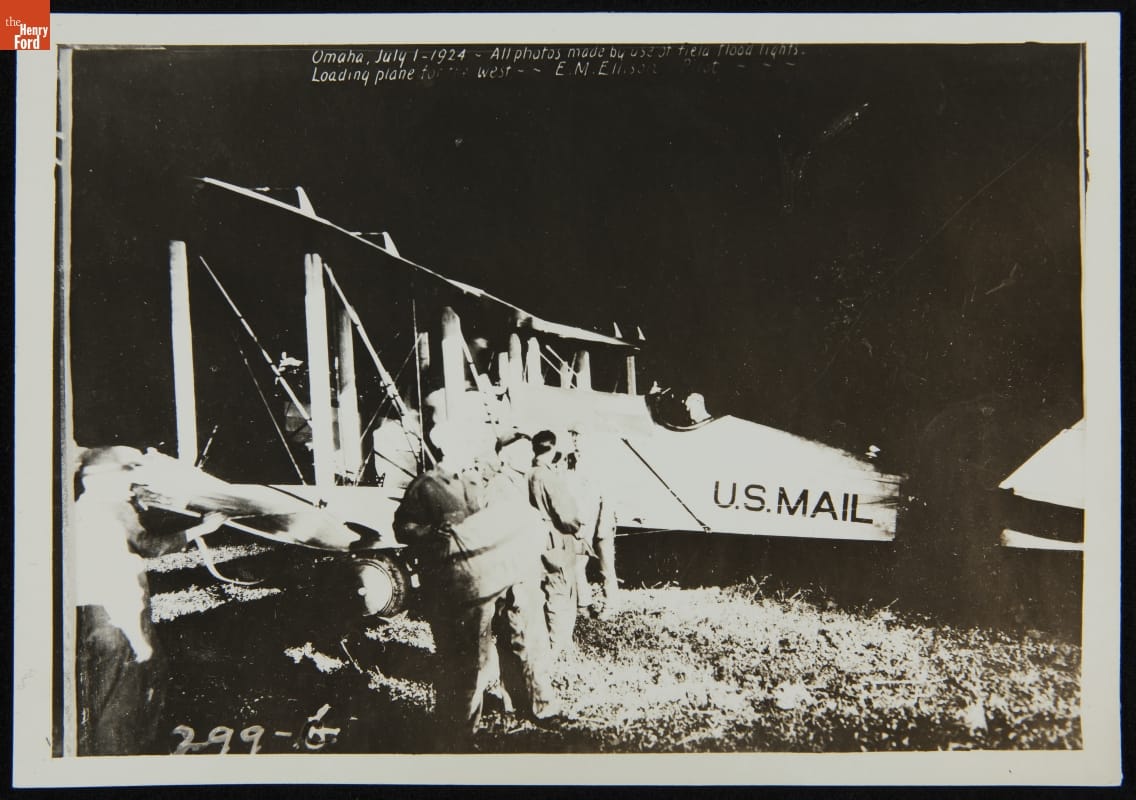
Early pilots depended on visual landmarks, preventing reliable nighttime navigation. When the postal service took to the skies with transcontinental mail delivery, a lighted pathway was formed to guide pilots at night. Throughout the 1920s, a series of powerful light beacons was built, eventually stretching from New York to San Francisco. This image celebrates Cleveland's first night mail flight.
Artifact Details
Artifact
Photographic print
Subject Date
01 July 1924
Collection Title
Location
By Request in the Benson Ford Research Center
Object ID
2001.0.107.26
Credit
From the Collections of The Henry Ford.
Material
Paper (Fiber product)
Technique
Gelatin silver process
Color
Black-and-white (Colors)
Dimensions
Height: 5 in
Width: 7 in
Inscriptions
handwritten in image:
489 / Cleveland greets first night mail plane / July 1-1924
Keywords |
|---|
02
Related Content
 Set
SetFlying the Night Mail
- 8 Artifacts
Transcontinental air mail pilots relied on a string of powerful light beacons to navigate sections of the New York to San Francisco route at night. They flew night mail planes equipped with illuminated instrument panels, navigation lights, and landing lights. At airfields along the way, floodlights helped workers inspect the planes, refuel, and unload and load the mail.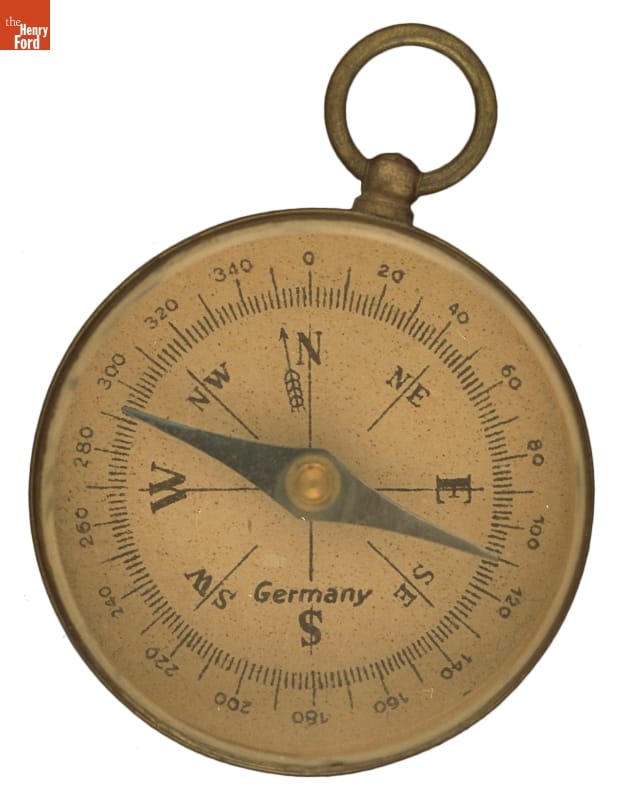 Set
SetSignals and Signs – Ground Communication
- 14 Artifacts
This early 20th-century compass uses a magnetized steel needle that rotates to align with the Earth's magnetic field. With the needle indicating north, users can reference markings around the dial to gain precise bearings. Despite modern GPS technology, compasses remain important navigational instruments for airplanes and ships and for casual use on small boats or recreational hikes.