
Campbell's Soup Can "Souper Dress," 1966-1967
Artifact Overview
This playful paper dress was inspired by the work of pop artist Andy Warhol, who began using the Campbell soup can image in his artwork during the early 1960s. Produced by the Campbell Soup Company in 1966-67, these "Souper" dresses served as creative advertising for the company during the late 1960s--a time when disposable paper dresses were a popular fad.
This dress was worn by Thelma Nykanen, an executive secretary at General Motors in Detroit. Since the dress was made of paper, it could easily be altered to accommodate the wearer. Nykanen simply trimmed a few stripes off the bottom to shorten it up a bit.
Artifact Details
Artifact
Date Made
Creators
Place of Creation
Location
Object ID
2002.43.1
Credit
Material
Paper (Fiber product)
Cellulose
Cotton (Textile)
Technique
Printing (Process)
Color
Red
Black (Color)
Gold (Color)
Dimensions
Width: 23.5 in (width at hem)
Length: 36.75 in (length from hem to shoulder seam)
Inscriptions
Keywords |
|---|
Related Content
 Set
SetFeatured on The Henry Ford’s Innovation Nation: Season 9
- 26 Artifacts
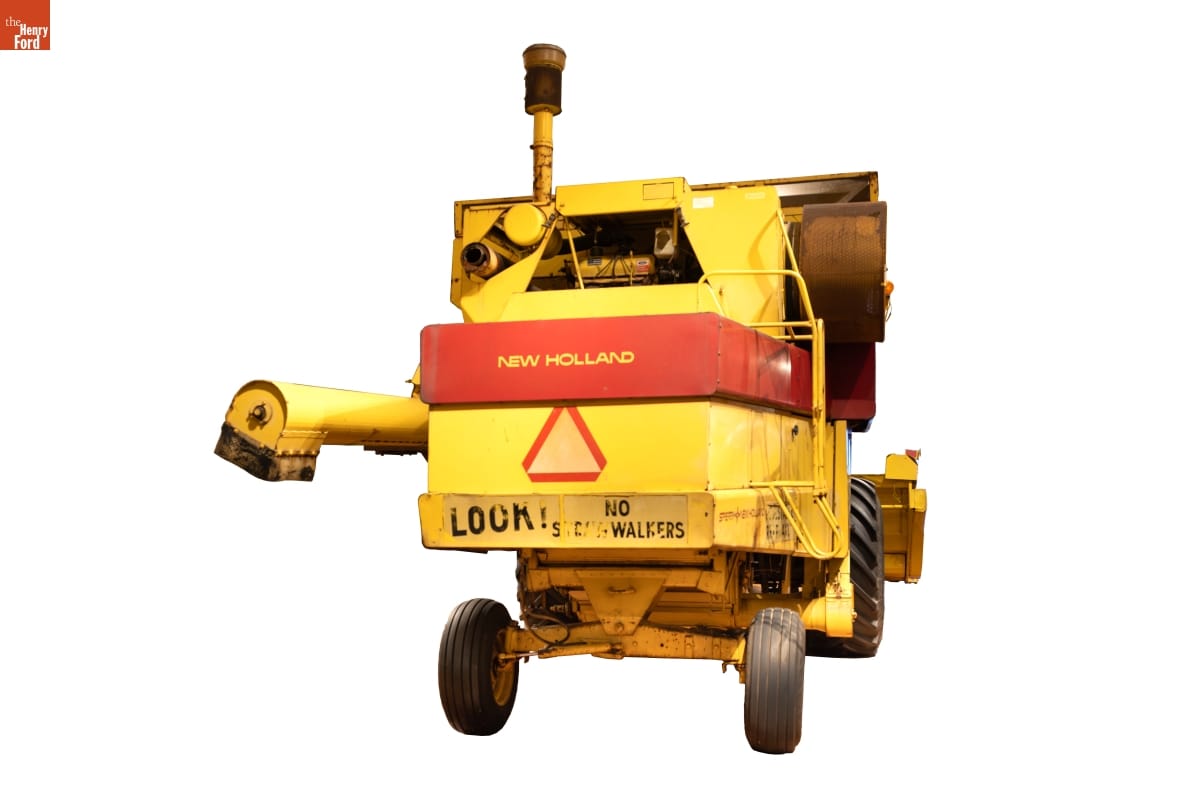
Engineers designed the TR70 as a compact machine suitable for hilly terrain. The twin rotors (TR) shelled corn or threshed grain and moved it through the combine's body. Setting the rotors at an angle (axial) shortened the machine. Farmers changed the front-end attachment to harvest corn, beans, or wheat. Stencils on this prototype, exhibited at trade shows, explained additional features. Set
SetBreak. Repair. Repeat.
- 21 Artifacts
The Henry Ford's collections contain objects that have been broken, repaired, or created through improvisation. Some objects have been altered many times, while others have led multiple lives, or served multiple purposes. These objects solve very specific practical needs or share an artistic vision. Ultimately, the objects in this group are evidence of unscripted innovation and the messiness of creative problem-solving. article
“Pulp Fashion”: Paper Dresses of the 1960s
Learn how the paper dress fits into the exploration and boundary-pushing of the 1960s with this deep dive into paper dresses currently on exhibit in "What We Wore" in Henry Ford Museum of American Innovation. article
A Look Back: The Souper Dress
In the late 1960s, for a couple of Campbell’s veggie soup labels and one buck, you could mail order the "Souper Dress," featuring a pattern of iconic vegetable soup cans and made out of paper.