
"Highways of the Sky," Advertisement Promoting Commercial Air Travel on Ford Tri-Motor Airplanes, 1928
THF116597 / "Highways of the Sky," Advertisement Promoting Commercial Air Travel on Ford Tri-Motor Airplanes, 1928
01
Artifact Overview
As the United States expanded in the twentieth century, air travel became an efficient alternative for the transportation of goods, services, and people. This advertisement compares the early days of commercial aviation to the early days of transcontinental rail travel, and predicts that air travel will become hugely popular -- especially on the Ford Tri-Motor airplane.
Artifact Details
Artifact
Advertisement
Date Made
1928
Subject Date
1928
Creators
Creator Notes
Made for Ford Motor Company
Collection Title
Location
By Request in the Benson Ford Research Center
Object ID
64.167.19.434
Credit
From the Collections of The Henry Ford. Gift of Ford Motor Company.
Material
Paper (Fiber product)
Dimensions
Height: 14 in
Width: 11 in
Inscriptions
At the top of the page under the map of the United States: THE HIGHWAYS OF THE SKY
At the bottom of the page: FORD MOTOR COMPANY
Keywords |
|---|
02
Related Content
 Set
SetHenry Ford: Aviation
- 29 Artifacts
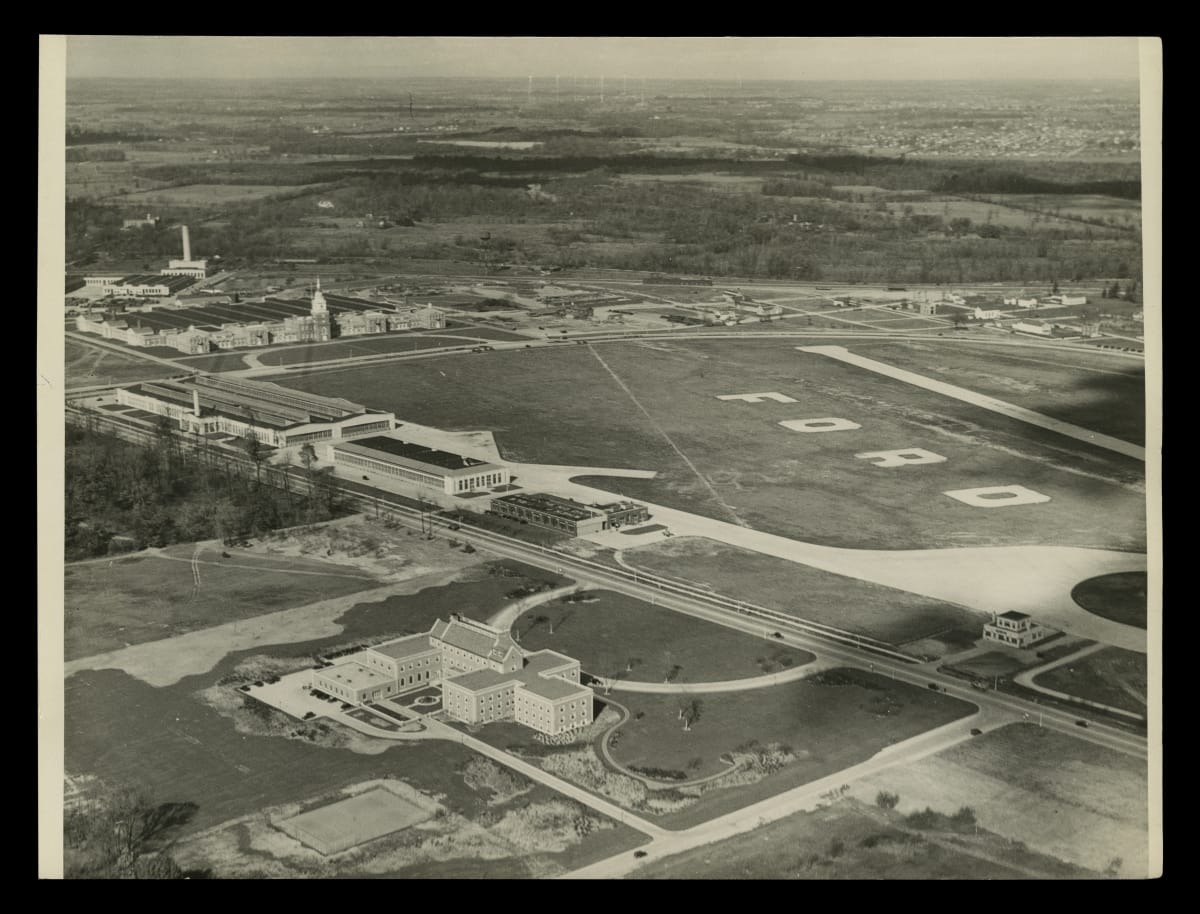
In 1925, an airport opened in Dearborn, Michigan. Edsel and Henry Ford conceived the Dearborn Inn as a business opportunity, a first-class hotel hosting pilots and travelers transiting through the Ford Airport. It is noted as one of the first airport hotels. This aerial photograph shows some of the airfield and the inn (bottom). Also note the Henry Ford Museum's clock tower in the distance.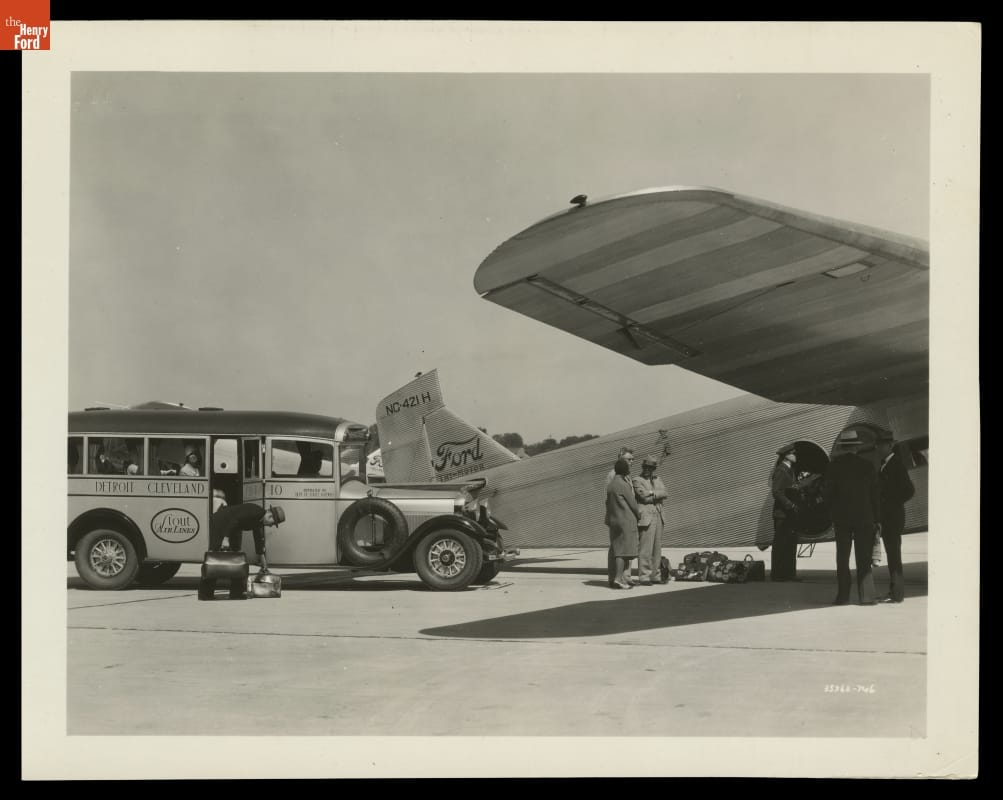 Set
SetFord Tri-Motor: Passenger Travel
- 16 Artifacts
Stout Air Lines advertised direct airplane service between Detroit and Cleveland, but this wasn't strictly true. Stout's "Detroit" terminal was, in fact, Ford Airport in Dearborn, ten miles west of the city. Passengers gathered at a station in Detroit and were shuttled by bus to the Dearborn airport where they boarded the actual plane.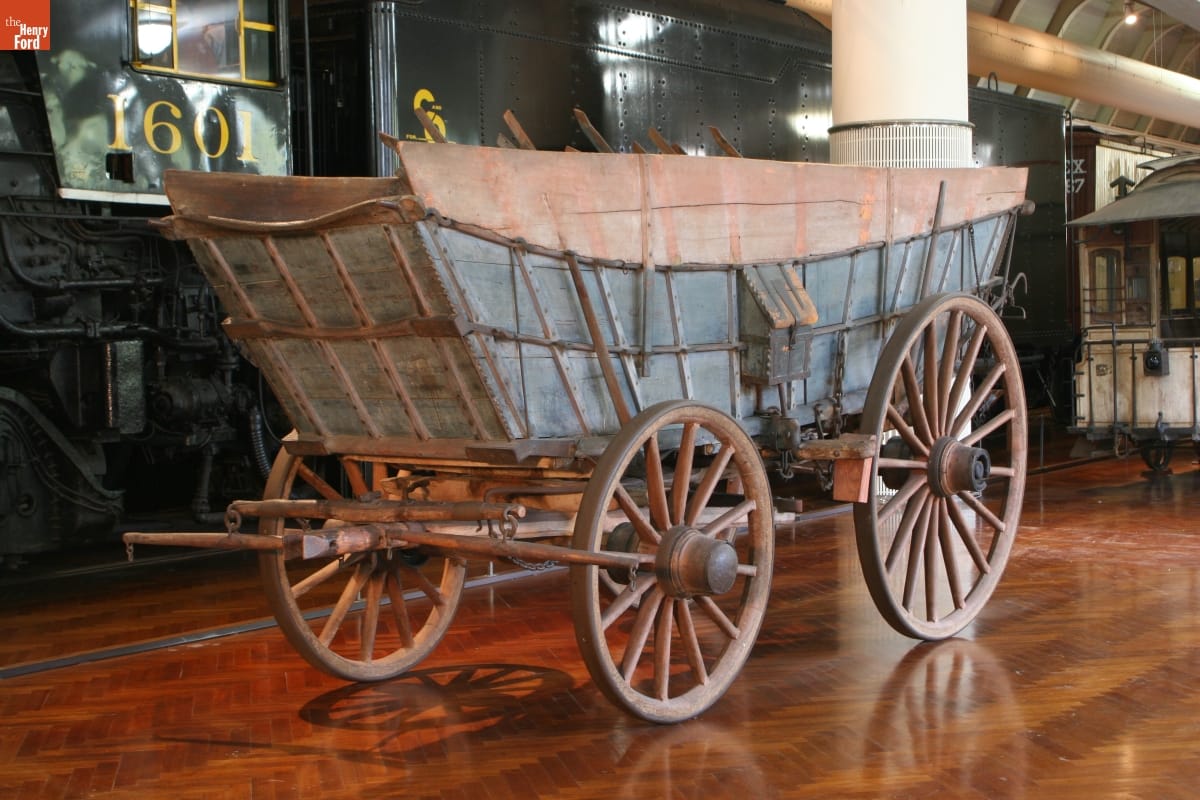 Set
SetLesson: Transportation of Goods and Consumption
- 8 Artifacts
Conestoga wagons first appeared in Pennsylvania's Conestoga River valley about 1750. Designed for freight, the Conestoga's curved body tended to keep the load in the center, rather than shifting it toward the rear. The Conestoga's popularity peaked in the first half of the 19th century -- before railroads replaced it for hauling agricultural products and manufactured goods.