
Model of a Flax Brake, circa 1900
THF174781 / Model of a Flax Brake, circa 1900
01
Artifact Overview
Producing linen yarn from the flax plant is a labor-intensive, time-consuming process. The hard outer coating of flax stems is removed by rotting, drying and breaking to extract the useable fibers within. A flax brake is the tool used to "break" or remove that outer coating. Bundles of flax stems are repeatedly pounded between the hinged upper and lower bars of the tool. This model represents one of the flax brake designs developed in America.
Artifact Details
Artifact
Model (Representation)
Date Made
circa 1900
Place of Creation
Location
Not on exhibit to the public.
Object ID
29.2402.1
Credit
From the Collections of The Henry Ford.
Material
Wood (Plant Material)
Color
Brown
Dimensions
Height: 7 in
Width: 6.625 in
Length: 15.25 in
Keywords |
|---|
02
Related Content
 Set
SetSpinning Highlights from the Collections of The Henry Ford
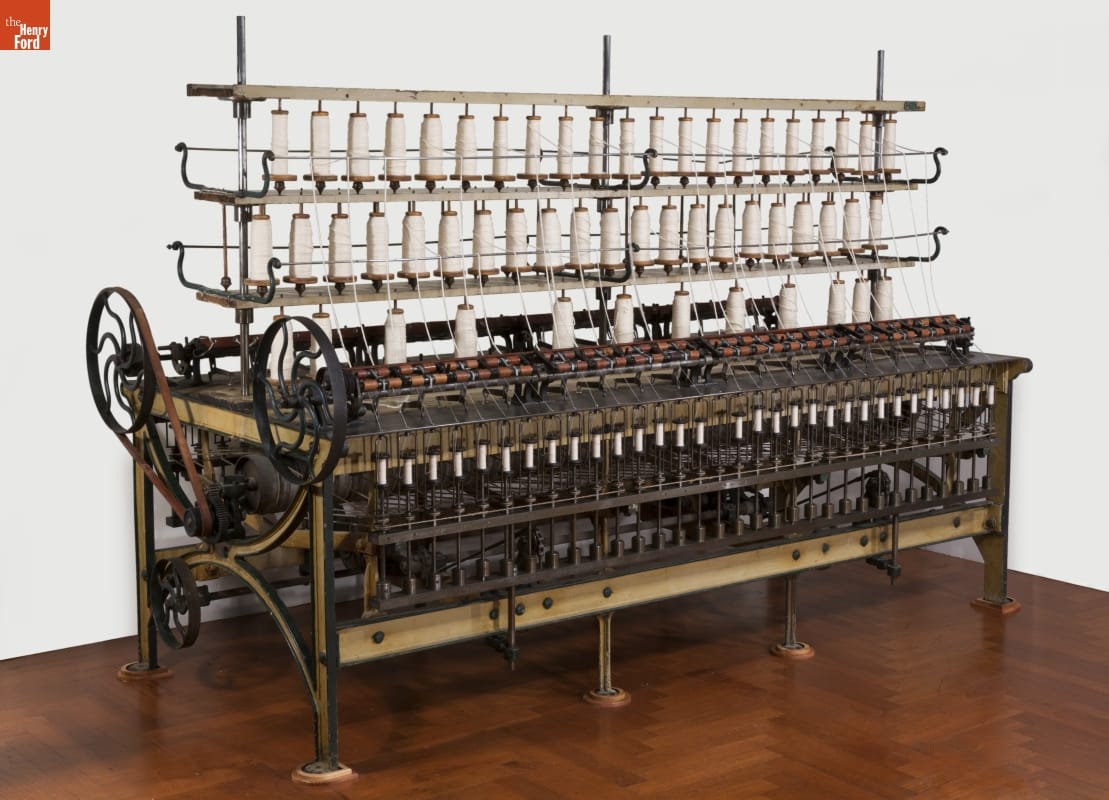
- 16 Artifacts
Spinning frames spin cotton fiber into yarn and then wind it onto a bobbin. This throstle spinning frame could simultaneously spin 64 strands of yarn. (Throstle -- an old name for a song thrush -- refers to the bird-like sounds the machine made.) Machines like this helped produce the large quantities of yarn that growing industrial weaving operations needed in the early and mid-1800s.