
Timing Slip From Oswego Dragway, Used with Buck & Thompson Slingshot Dragster, 1963
THF91622 / Timing Slip From Oswego Dragway, Used with Buck & Thompson Slingshot Dragster, 1963
01
Artifact Overview
Drag racing is racing in its simplest form. From a standing start, two cars race to the finish line one-quarter mile away. After the run, competitors receive a timing slip recording their top speed. Sam Buck and Bob Thompson received this slip at Oswego Dragway, near Chicago, in 1963. It verifies a top speed of 123.29 miles per hour.
Artifact Details
Artifact
Timing slip
Date Made
1963
Subject Date
1963
Collection Title
Location
Not on exhibit to the public.
Object ID
2007.45.4.2
Credit
From the Collections of The Henry Ford. Gift of Buck & Thompson Racing Team.
Material
Paper (Fiber product)
Technique
Handwriting
Printing (Process)
Color
Green
White (Color)
Dimensions
Height: 2.938 in
Width: 3.625 in
Inscriptions
Printed headings on front, with data handwritten in pencil opposite them: NUMBER 30 / CLASS D / ELASPED [sic] TIME 11:32 / MILES PER HOUR 123.29.
Printed at bottom: Oswego Dragway / OSWEGO, ILLINOIS / OFFICIAL TIME
Handwritten at top: D-DRAGSTER
Keywords |
|---|
02
Related Artifacts
 Artifact
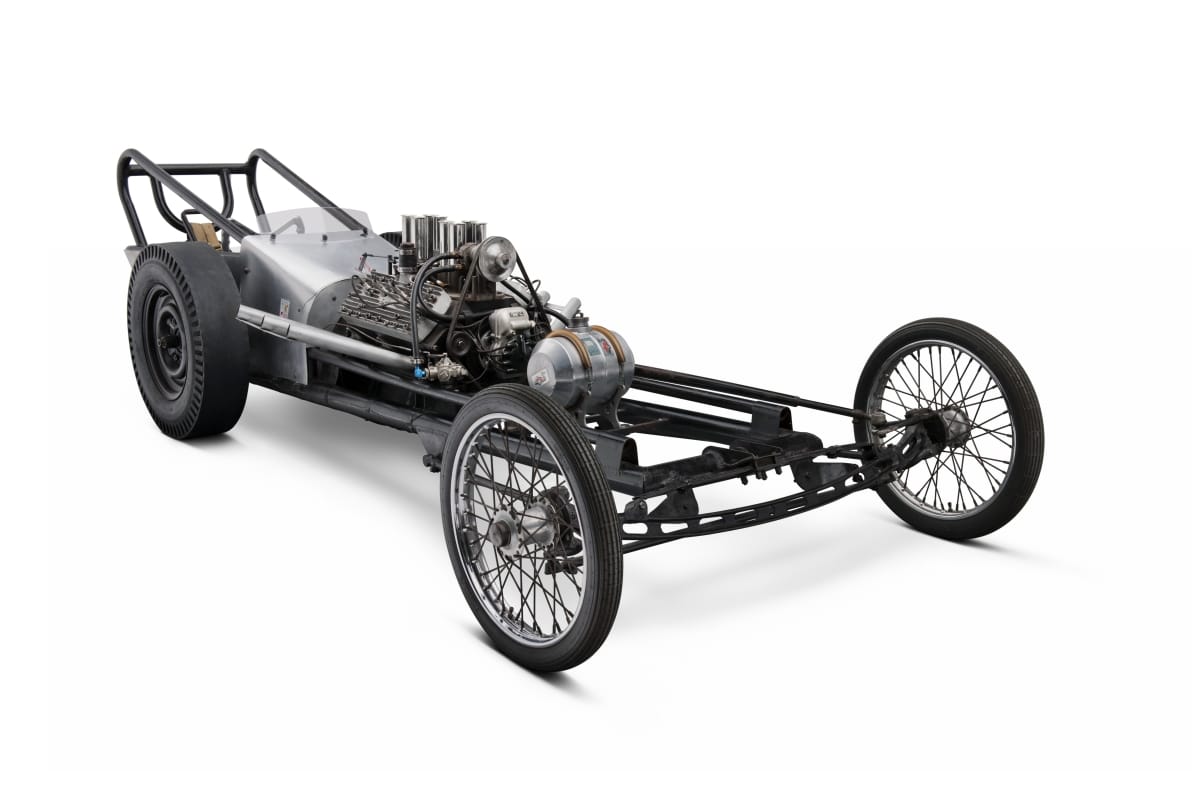
1960 Buck & Thompson Slingshot Dragster
Sam Buck and Bob Thompson built this car in 1960. They bought the chassis as a kit, and the 1948 Ford engine was highly modified with special cylinder heads, crank, pistons, magneto, camshaft, and fuel injectors. In this style of dragster, popular from the mid-1950s through the early 1970s, the driver sat behind the rear wheels "like a rock in a slingshot."
03
Related Content
 Set
SetRacing
- 50 Artifacts
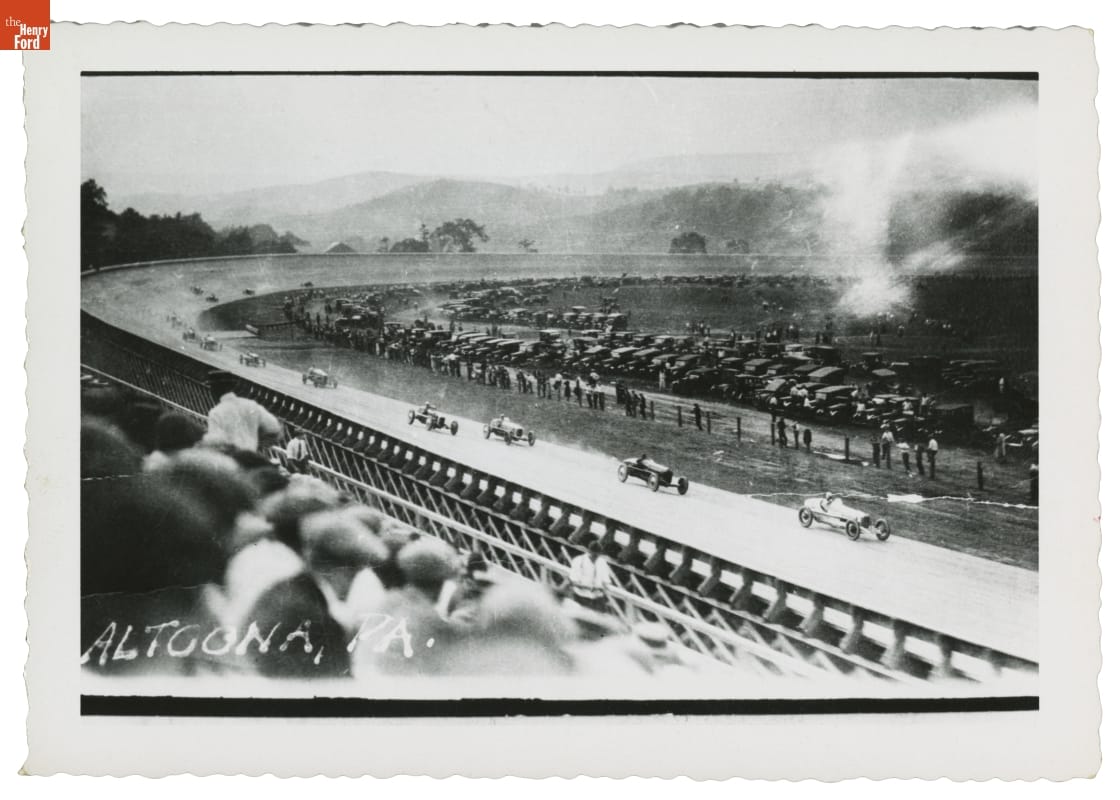
As automobile racing speeds increased, repurposed dirt horse tracks became inadequate. In the 1910s promoters turned to wooden boards, which provided a smooth road surface and were less expensive than bricks or concrete. But rotting wood required frequent replacement. Improvements in concrete and asphalt made board tracks obsolete in the 1930s. The 1.25-mile board track at Altoona, Pennsylvania, operated from 1923-1931.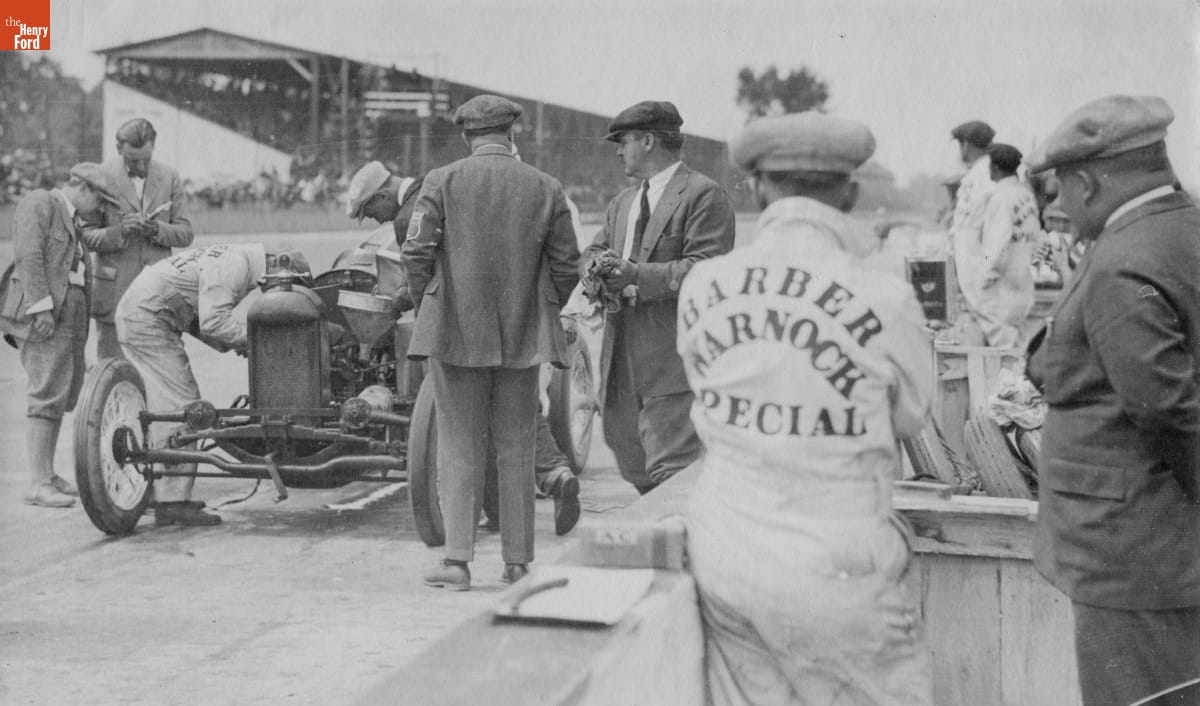 Set
SetLesson: The Study of Motion Using Artifacts
- 6 Artifacts
When did Fords use Chevrolet parts? In the 1920s, when brothers Louis and Arthur Chevrolet made special overhead valve cylinder heads for Model Ts. Sold under the brand name Frontenac, they helped racers triple the horsepower of the stock Model T engine. Such "Fronty-Fords" became terrors on the small dirt tracks and in 1923 and 1924 Indianapolis auto dealer Barber-Warnock Ford decided to enter Fronty-Ford powered cars in the Indianapolis 500. Here we see one of the 1924 cars being serviced in the pits. A mechanic with a funnel adds oil, while another mechanic on the opposite side of the car makes an adjustment. Arthur Chevrolet, wearing a tie and a flat cap, wipes his hands in the middle of the picture. Three men in suits, possibly race officials, observe the scene. The Barber-Warnock cars finished fifth in the 1923 race and 14th, 16th, and 17th in 1924.