
Start of the Indianapolis 500 Race, 1937
THF68313 / Start of the Indianapolis 500 Race, 1937
01
Artifact Overview
In 1937, the 25th running of the Indianapolis 500 saw 33 entrants and one of the closest margins of victory: 2.16 seconds for Wilbur Shaw. Note that these high-powered race cars still required a two-man team of a driver and a riding mechanic to keep the cars running at top speed.
Artifact Details
Artifact
Photographic print
Date Made
1937
Subject Date
1937
Creators
Collection Title
Location
By Request in the Benson Ford Research Center
Object ID
96.0.32.64
Credit
From the Collections of The Henry Ford.
Material
Paper (Fiber product)
Technique
Gelatin silver process
Toning (Photography)
Color
Brown
Dimensions
Height: 6.75 in
Width: 4.75 in
Inscriptions
Handwritten in ink on back:
Start Indianapolis / 1937 / Vencill
Keywords |
|---|
02
Related Content
 Set
SetLesson: Ground Effects, Innovations and Safety
- 6 Artifacts
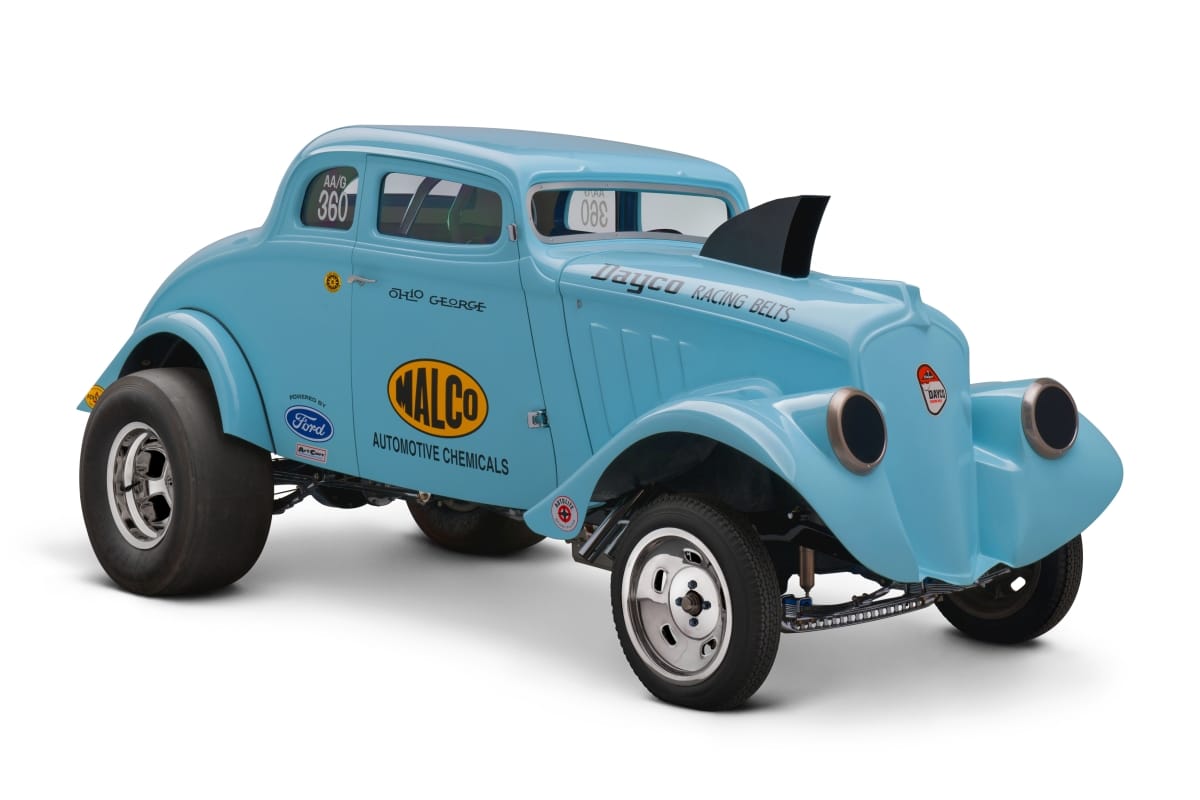
When machinist George Montgomery started racing in 1953, all drag racers were amateurs with "real jobs" supporting their hobby. This car helped change all that. Montgomery bought an old Willys in 1958 and built a dragster so successful that promoters started paying him to run at drag strips nationwide. In 1966, Montgomery became one of drag racing's first full-time professional drivers.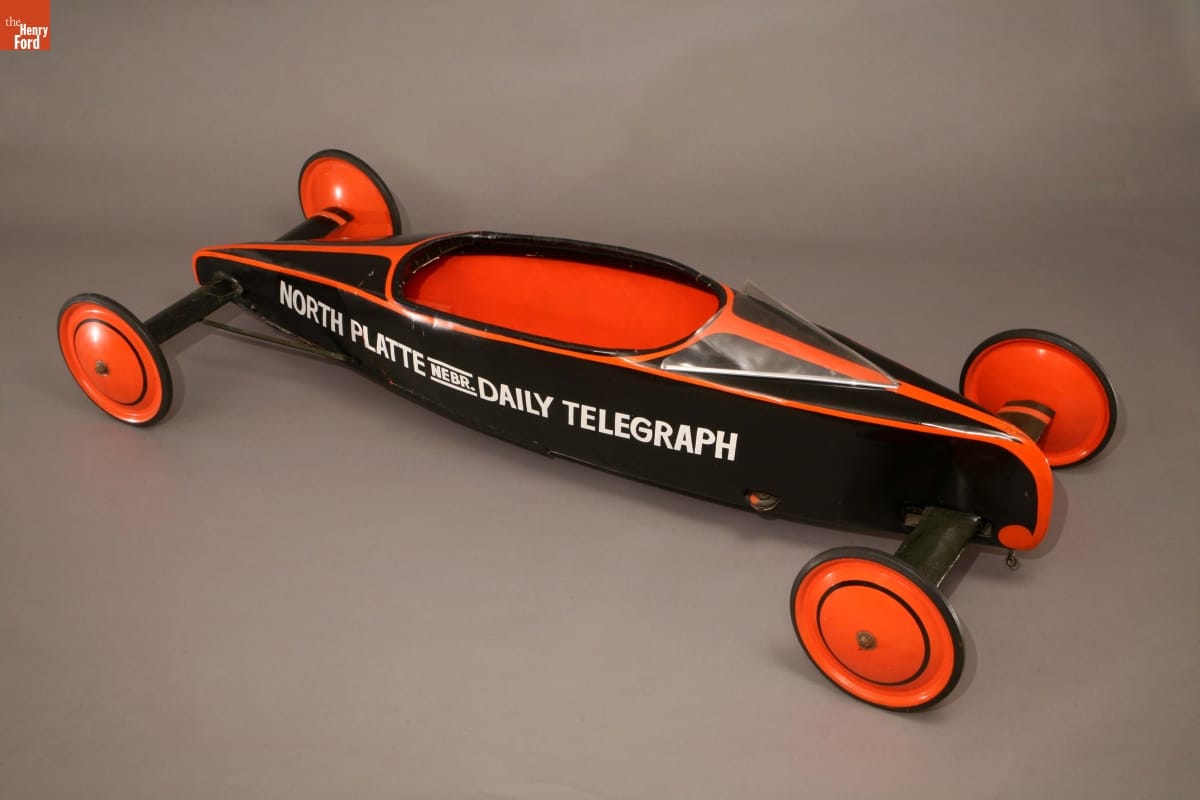 Set
SetLesson: Forces Involved in American Racing
- 12 Artifacts
Mason Colbert placed third with this car in the 1939 All-American Soap Box Derby national championship in Akron, Ohio. The first official derby was held in 1934. Young contestants built their cars from soap boxes, orange crates, and baby carriage wheels. Over the years, designs became more elaborate and materials more sophisticated. But the "fuel" remained the same -- gravity. Set
SetIndianapolis 500 Materials at The Henry Ford
- 25 Artifacts
When Carl Fisher and his partners opened Indianapolis Motor Speedway in 1909, the crushed stone and tar track surface quickly proved too dangerous. Fisher had the entire track resurfaced with 3.2 million paving bricks. The track was fully paved with asphalt by 1961, but a three-foot brick strip -- at the start/finish line -- remains, as does the speedway's nickname: the Brickyard.- Set
Lesson: Newton's Three Laws of Racing
- 10 Artifacts
When machinist George Montgomery started racing in 1953, all drag racers were amateurs with "real jobs" supporting their hobby. This car helped change all that. Montgomery bought an old Willys in 1958 and built a dragster so successful that promoters started paying him to run at drag strips nationwide. In 1966, Montgomery became one of drag racing's first full-time professional drivers.