
Susquehanna Plantation House at Its Original Site, St. Mary's County, Maryland, 1942
THF87945 / Susquehanna Plantation House at Its Original Site, St. Mary's County, Maryland, 1942
01
Artifact Overview
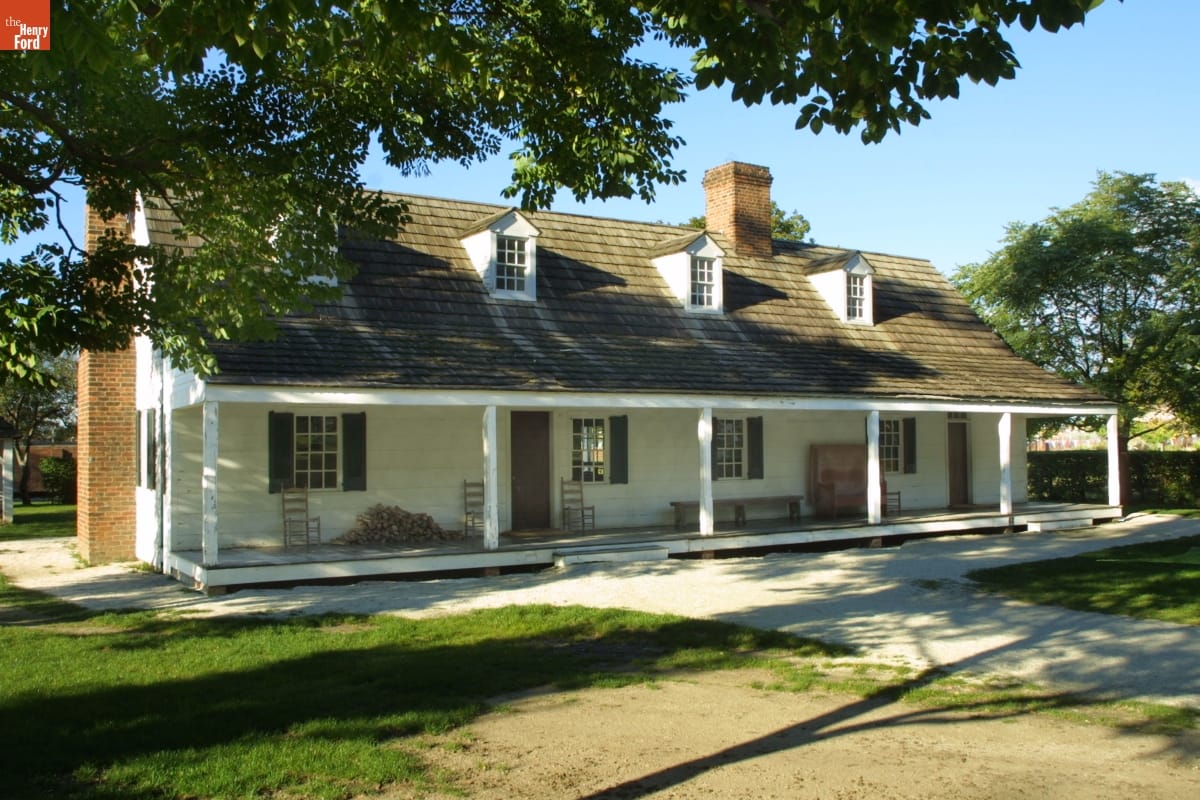
Susquehanna Plantation, home to the Carroll family, was one of the largest, most productive farms in southern Maryland during the 1800s. Its success was made possible through the labor of 75 enslaved African Americans. The Maryland plantation house on the Patuxent River--one room deep with long front and back porches designed for ventilation--is seen here at its original site.
Artifact Details
Artifact
Photographic print
Subject Date
1942
Collection Title
Location
By Request in the Benson Ford Research Center
Object ID
P.188.70087
Credit
From the Collections of The Henry Ford. Gift of Ford Motor Company.
Material
Linen (Material)
Paper (Fiber product)
Technique
Gelatin silver process
Color
Black-and-white (Colors)
Dimensions
Height: 7.375 in
Width: 10.875 in
Inscriptions
Handwritten into image in lower right hand corner: 70087
Keywords |
|---|
02
Related Artifacts
 Artifact
Susquehanna Plantation
Henry Carroll owned this Maryland house on the Patuxent River in the decades before and after the Civil War. Its form -- one room deep with porches -- invited cooling breezes in the warm, humid climate. In 1860, the Carrolls raised tobacco and wheat on their 700-acre plantation. Seventy-five enslaved African Americans provided the skill and labor that supported the Carroll family's comfortable life.
03
Related Content
- Set
Porches of Greenfield Village
- 12 Artifacts
During the 19th century, the front porch was a popular feature on many buildings in American towns, crossroads villages, and rural areas. Porches served a multitude of purposes--from providing cooling breezes to bringing friends and family members together to welcoming outside guests. The porches on Greenfield Village buildings represent many different styles, eras, and places.