
Ford Good Drivers League Publication, "How to Become a Skilled Driver," 1940
THF103529 / Ford Good Drivers League Publication, "How to Become a Skilled Driver," 1940
01
Artifact Overview
Ford Motor Company promoted safe driving skills by sponsoring the Ford Good Drivers League. The League, established in 1940, initially invited high school-aged boys throughout the country to participate--the League extended its invitation to girls the following year. After contestants signed up, they received a copy of How to Become a Skilled Driver.
Artifact Details
Artifact
Publication (Document)
Date Made
1940
Subject Date
1940
Creators
Collection Title
Location
By Request in the Benson Ford Research Center
Object ID
64.167.440.1
Credit
From the Collections of The Henry Ford. Gift of Ford Motor Company.
Material
Paper (Fiber product)
Color
Multicolored
Dimensions
Height: 7.563 in
Width: 5.25 in
Keywords |
|---|
02
Related Content
 Set
SetSafety
- 31 Artifacts
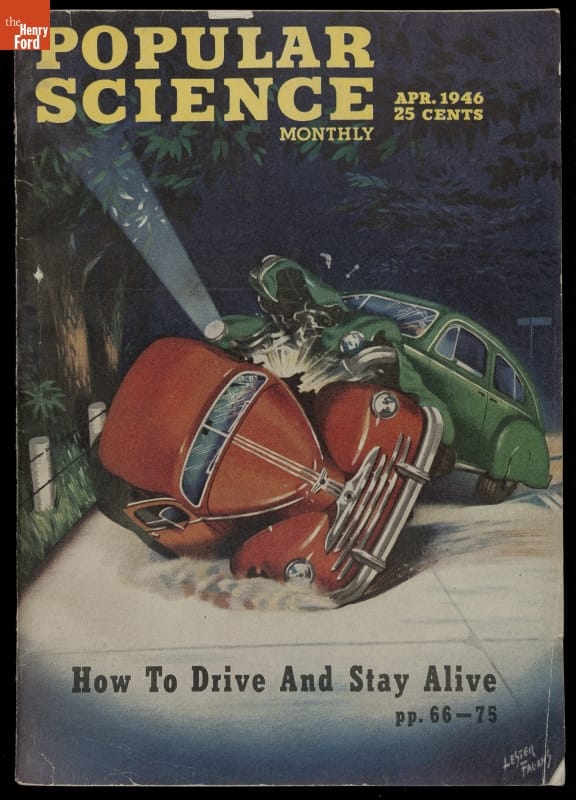
Popular Science provided information about scientific and technological advancements. In the early 1900s articles about the automobile -- and its driver -- became commonplace in the monthly's pages. Editors included a series of articles on automobile safety in this April 1946 issue. In one article, readers could test their knowledge of safe driving. Set
SetFord Good Drivers League
- 19 Artifacts
Ford Motor Company created the Good Drivers League in 1940. Headed by Edsel Ford, the League promoted safe driving habits among high school students through state and national championships. Though America's entry into World War II ended the program, the League impacted the driving habits of more than 200,000 teens. Inspired by the League's success, other community and safety organizations would institute driver safety contests after the war.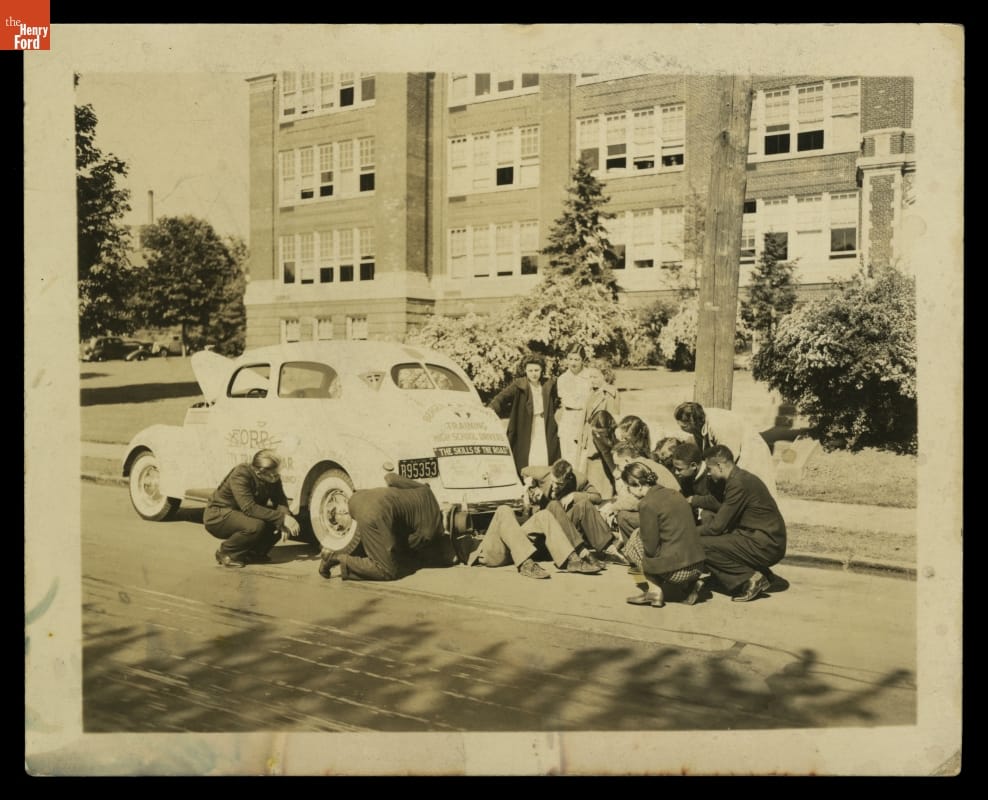 Set
SetDriver Education
- 21 Artifacts
Early driver education in the United States was loose and inconsistent. New drivers might learn from a car dealership, or from a civic organization like the YMCA. In the 1930s, driver education became a standard part of public high school instruction. Courses involved a blend of study behind the desk and practice behind the wheel. By the early 2000s, school budget concerns had shifted driver education back into the private sector.