
The Story of the Man Who Bought a Dinosaur" Sales Brochure for the 1957 Rambler
THF209303 / The Story of the Man Who Bought a Dinosaur" Sales Brochure for the 1957 Rambler
01
Artifact Overview
In the 1950s, Nash competed with Chrysler, Ford, and General Motors by offering something the Big Three didn't: small cars. The Nash Rambler station wagon was 10 inches shorter than its rivals, and its 30 mile-per-gallon fuel economy was twice that of bigger wagons. Nash portrayed the Big Three's cars as oversized dinosaurs by comparison.
Artifact Details
Artifact
Trade catalog
Date Made
1957
Subject Date
1957
Creators
Collection Title
Location
By Request in the Benson Ford Research Center
Object ID
64.167.184.66
Credit
From the Collections of The Henry Ford. Gift of Ford Motor Company.
Material
Paper (Fiber product)
Color
Black-and-white (Colors)
Dimensions
Height: 5 in
Width: 3.75 in (30" unfolded)
Keywords |
|---|
02
Related Content
 Set
SetCompact Cars
- 15 Artifacts
Big cars ruled American roads in the 1950s, but some drivers preferred smaller, more fuel-efficient vehicles. They turned to imports or the few American automakers willing to serve what was then a niche market. But soaring gas prices in the 1970s finally pushed compact cars into the mainstream.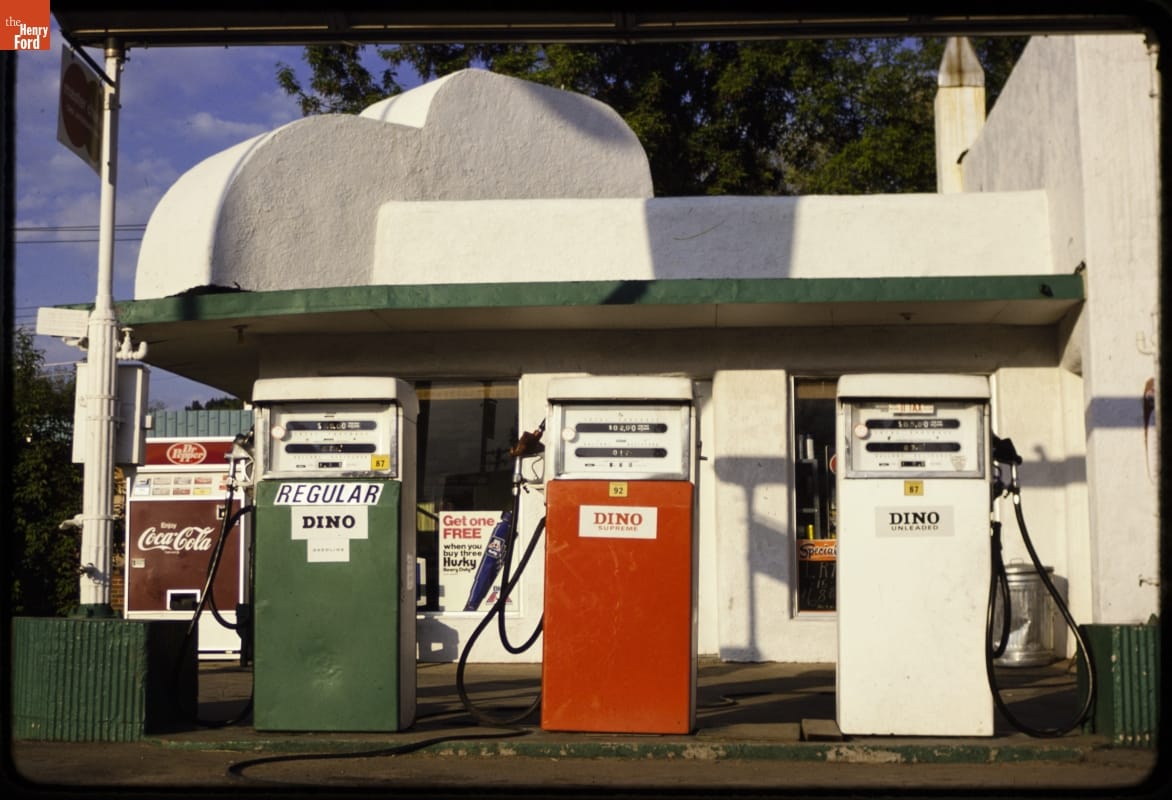 Set
SetDinosaurs in the Collections of The Henry Ford
- 9 Artifacts
What is a dinosaur? A "terrible lizard" -- the name given to a large group of reptiles, which died out approximately 65 million ago (though today's scientific community indicates modern birds are evolutionary relatives)? Or is a dinosaur something that is impractically large, old-fashioned, out-of-date, or obsolete? In 2024, curators at The Henry Ford found some fascinating "dinosaurs" lurking in our collections. article
1912 Rambler Knickerbocker Limousine: A Grand Car for Grand Living
Learn more about the stylish and luxurious 1912 Rambler Knickerbocker limousine in our collection.