
"Industries Within an Industry, Ford By-Products," Ford Motor Company, 1939
THF223236 / "Industries Within an Industry, Ford By-Products," Ford Motor Company, 1939
01
Artifact Overview
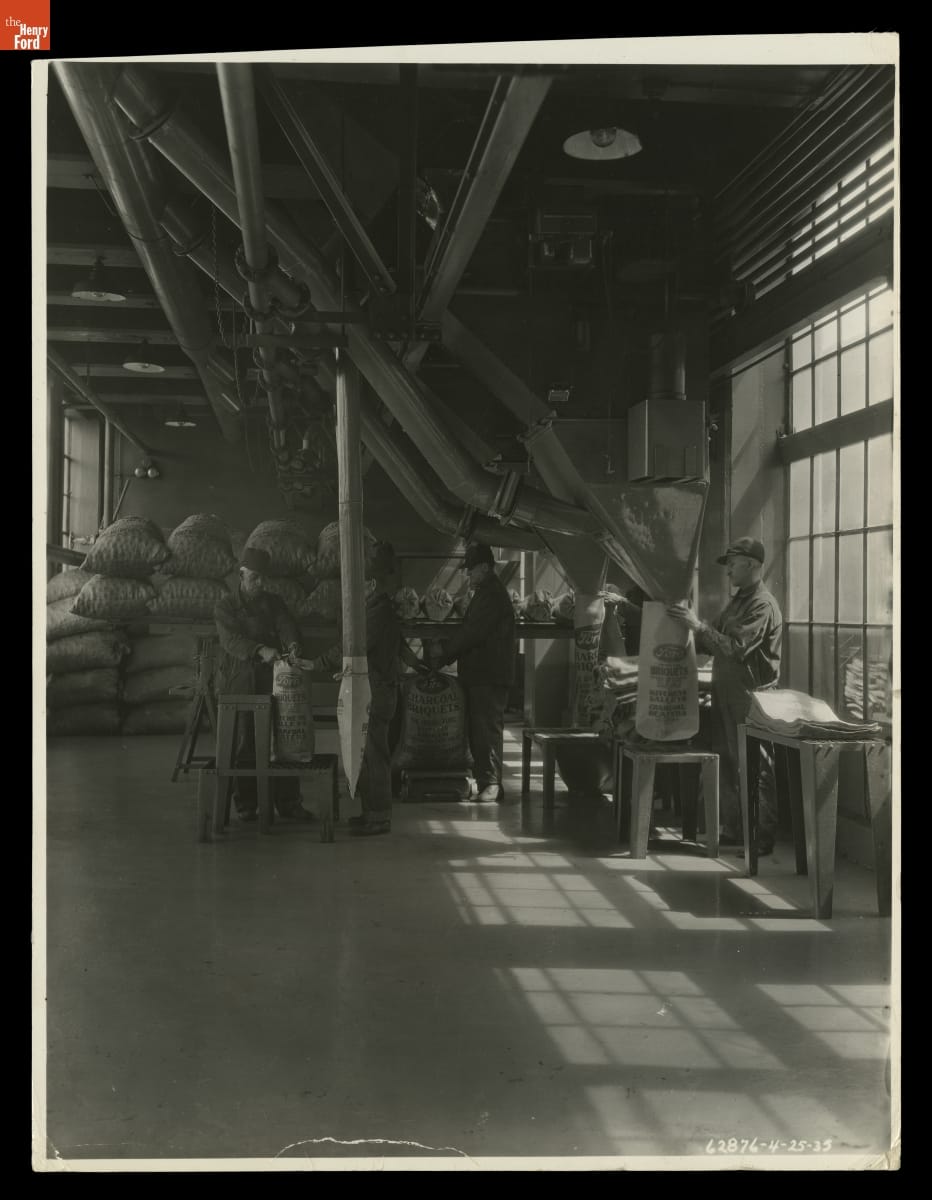
Henry Ford was careful about reducing and reusing waste products from his factories. Wasted materials meant wasted money, which led to higher prices for the customer. Illuminating gas was taken from coke ovens. Portland cement was made from blast furnace slag. Most famously, wood scraps from Ford's Kingsford, Michigan, sawmills were converted into charcoal briquettes.
Artifact Details
Artifact
Brochure
Date Made
1939
Subject Date
1939
Creators
Place of Creation
Collection Title
Location
By Request in the Benson Ford Research Center
Object ID
64.167.554.11
Credit
From the Collections of The Henry Ford. Gift of Ford Motor Company.
Material
Paper (Fiber product)
Color
Multicolored
Dimensions
Height: 7 in
Width: 4 in
Inscriptions
Text on front cover:
INDUSTRIES / WITHIN AN / INDUSTRY / FORD / BY-PRODUCTS
Keywords |
|---|
02
Related Content
 Set
SetFord Charcoal Briquets
- 34 Artifacts
Ford Motor Company sawmills created heaps of wood wastes. Some was used to produce steam for factory operations. The rest was carbonized and compressed into charcoal. Workers mixed charred hardwood chips with starch, forming nearly 100 tons of charcoal briquettes each day. Dealers sold branded barbecue accessories and packages of the popular briquettes in Ford dealerships across the country.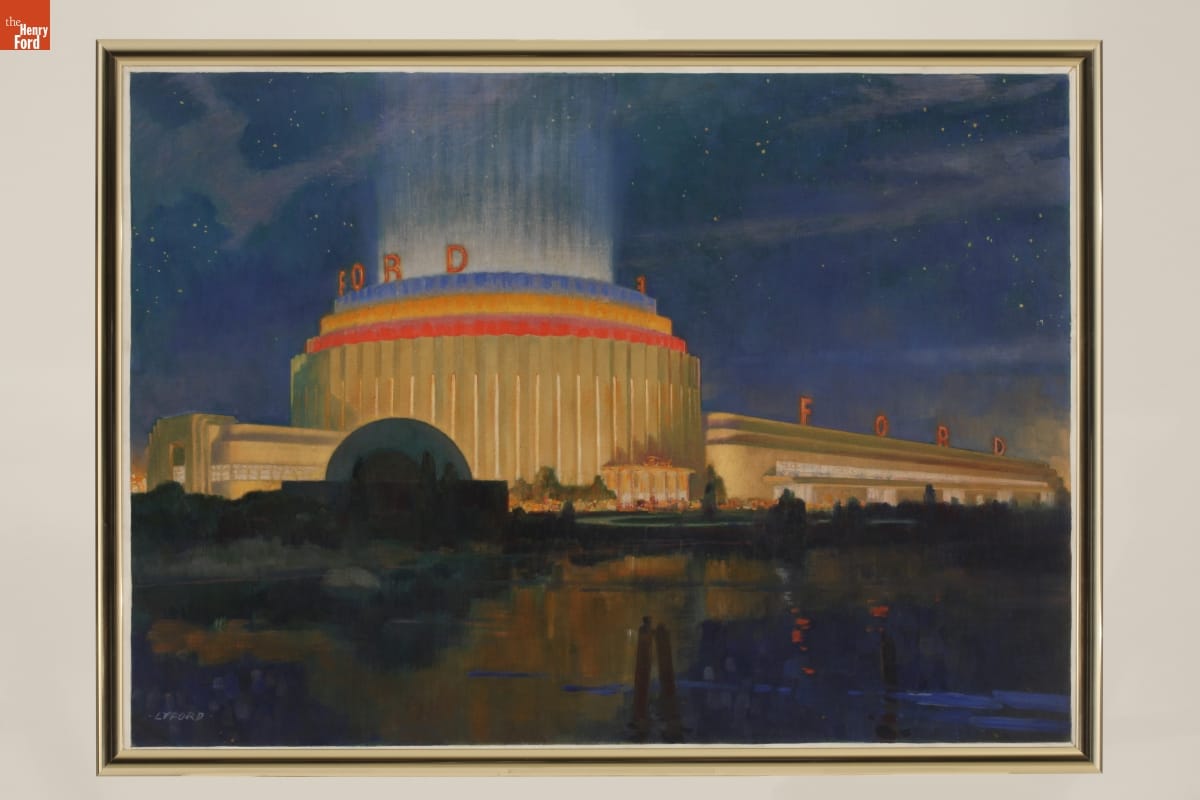 Set
SetFord at the Fair Exhibition
- 86 Artifacts
Chicago's 1933-34 Century of Progress Exposition used the theme of progress to encourage optimism during the Depression. The 11-acre Ford Motor Company exhibit became the most talked-about exhibit of 1934, featuring a central Rotunda designed to simulate graduated clusters of gears. After the fair, this building became an attraction at Ford headquarters in Dearborn, Michigan, until it burned down in 1962.