
Henry Ford Trade School Students "Learn by Doing" at New York World's Fair, 1939-1940
THF222380 / Henry Ford Trade School Students "Learn by Doing" at New York World's Fair, 1939-1940
01
Artifact Overview
Henry Ford firmly believed in the "practical educational value" of World's Fair exhibits. To help accomplish his education mission during the 1939-40 New York World's Fair, he highlighted the work of students attending his experimental schools. Here, boys from Henry Ford's Edison Institute Schools demonstrate miniature machine replicas based on Thomas Edison's Menlo Park Machine Shop.
Artifact Details
Artifact
Photographic print
Subject Date
1939-1940
Place of Creation
Collection Title
Location
By Request in the Benson Ford Research Center
Object ID
64.167.232.1772
Credit
From the Collections of The Henry Ford. Gift of Ford Motor Company.
Material
Paper (Fiber product)
Linen (Material)
Technique
Gelatin silver process
Color
Black-and-white (Colors)
Dimensions
Height: 11 in
Width: 7.5 in
Keywords |
|---|
02
Related Content
 Set
SetHenry Ford: Worlds Fair
- 24 Artifacts
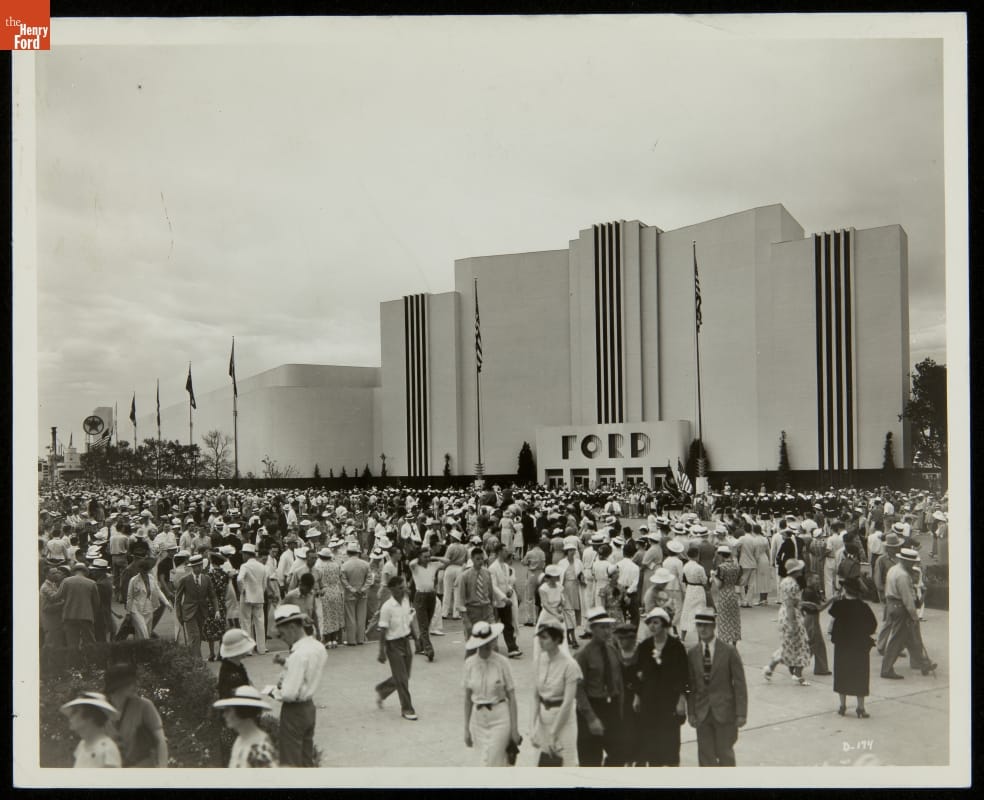
The Texas Centennial Exposition in Dallas celebrated the frontier past of Texas, especially its 1836 victory over Mexico. The Ford Motor Company Pavilion, among the largest of industrial firms' buildings at the fair, was designed by industrial designer Walter Dorwin Teague. Its interior displays focused on how agriculture and natural resources of the Southwest could be transformed into car parts.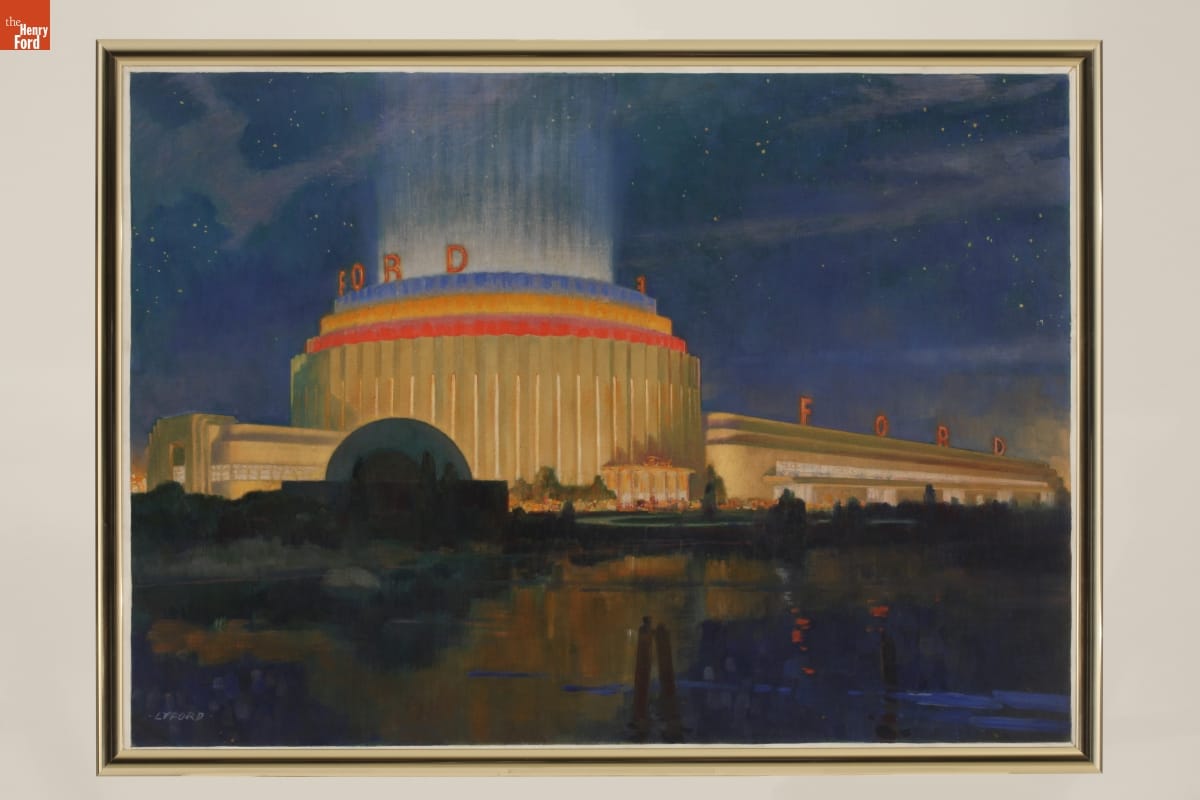 Set
SetFord at the Fair Exhibition
- 86 Artifacts
Chicago's 1933-34 Century of Progress Exposition used the theme of progress to encourage optimism during the Depression. The 11-acre Ford Motor Company exhibit became the most talked-about exhibit of 1934, featuring a central Rotunda designed to simulate graduated clusters of gears. After the fair, this building became an attraction at Ford headquarters in Dearborn, Michigan, until it burned down in 1962.