
Ford Tri-Motor Airplane NX4542 in March 1928, Later Flown by Admiral Byrd Over the South Pole
THF98767 / Ford Tri-Motor Airplane NX4542 in March 1928, Later Flown by Admiral Byrd Over the South Pole
01
Artifact Overview
Polar explorer and pioneering aviator Richard Byrd chose this rugged, dependable Ford Tri-Motor 4-AT to attempt the first flight over the South Pole. He named the plane Floyd Bennett, after the recently deceased pilot of his previous expeditions. Byrd and his crew of three successfully completed the momentous South Pole flight in late November 1929.
Artifact Details
Artifact
Photographic print
Subject Date
27 March 1928
Collection Title
Location
Not on exhibit to the public.
Object ID
EI.1929.P.B.8352
Credit
From the Collections of The Henry Ford.
Material
Paper (Fiber product)
Technique
Gelatin silver process
Color
Black-and-white (Colors)
Dimensions
Height: 8.25 in
Width: 10 in
Keywords |
|---|
02
Related Artifacts
 Artifact
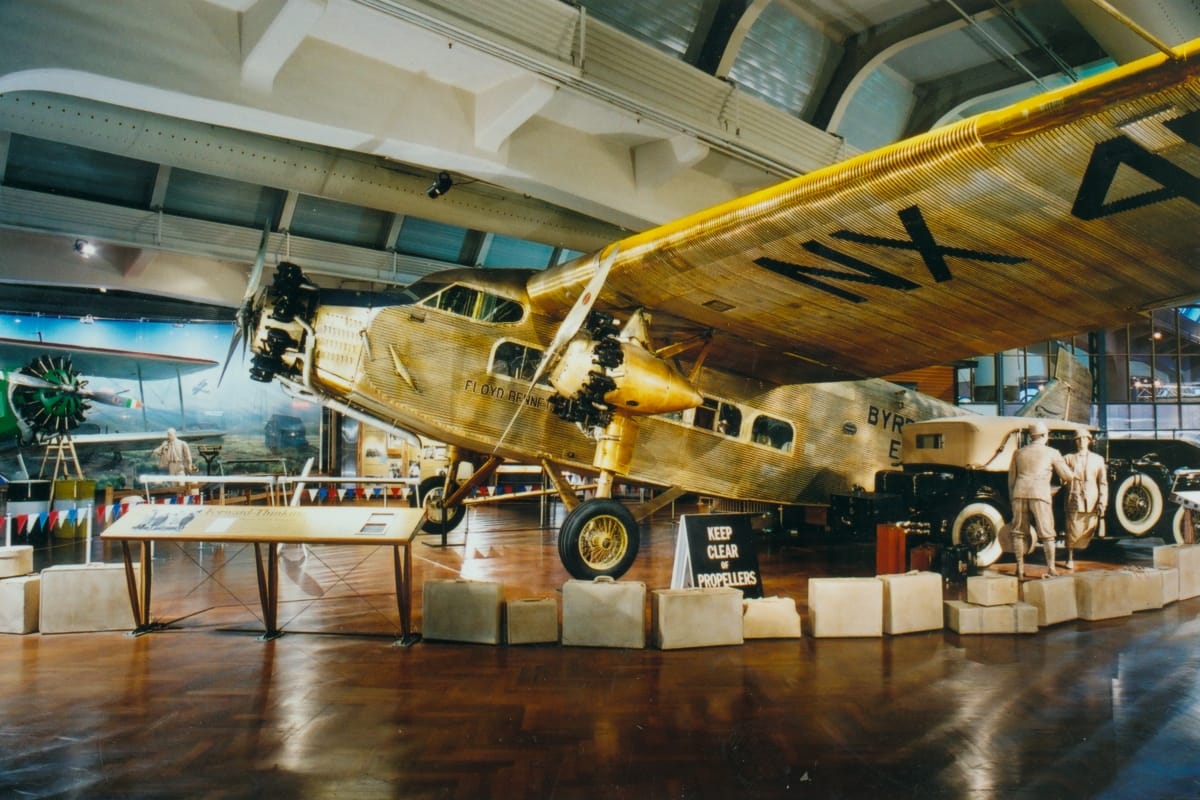
1928 Ford 4-AT-B Tri-Motor Airplane, "Floyd Bennett," Flown Over the South Pole by Richard E. Byrd
The Ford Tri-Motor was the most popular airliner of the late 1920s and early 1930s. Its rugged dependability led Richard Byrd to choose a Tri-Motor for his attempt to be the first person to fly over the South Pole. On November 28-29, 1929, Byrd and a crew of three achieved that goal in this plane.
03
Related Content
 Set
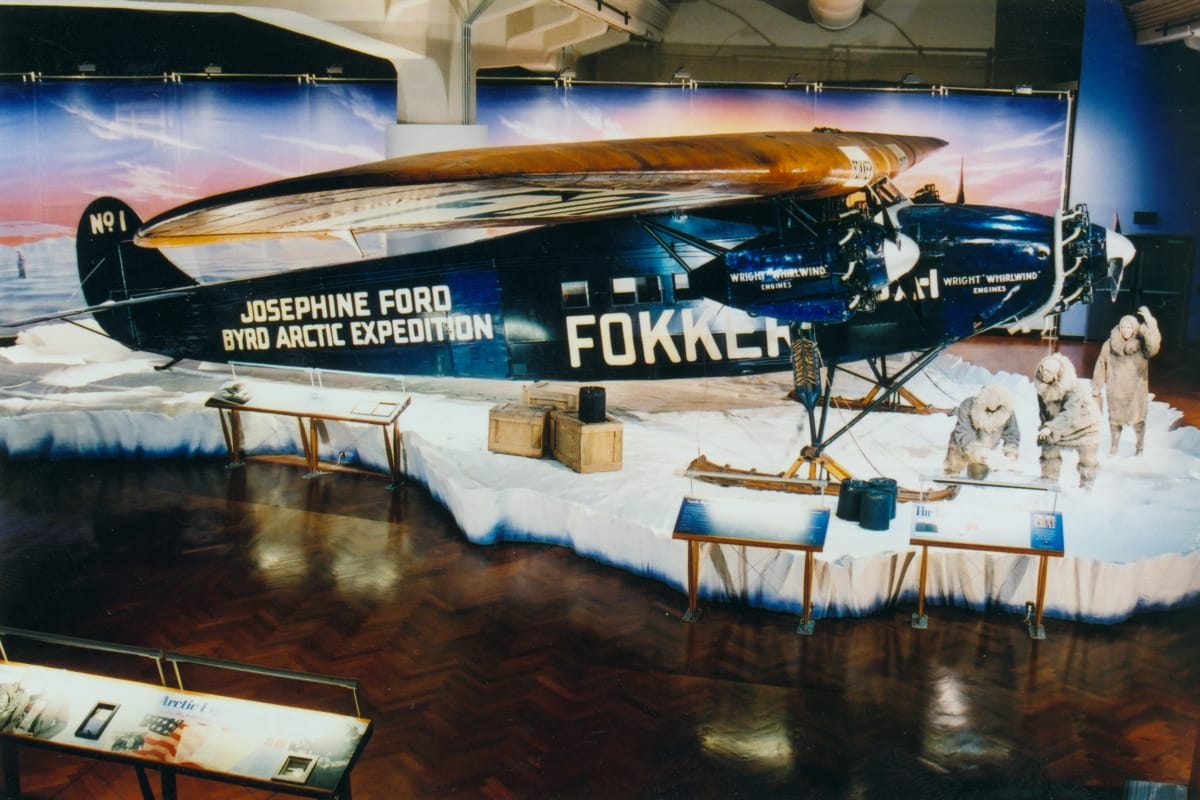
SetRichard Byrd’s North Pole Flight
- 25 Artifacts
On May 9, 1926, explorer Richard Byrd and pilot Floyd Bennett took off from Norway on a round-trip flight to the North Pole in their Fokker Tri-Motor airplane Josephine Ford. Though Byrd is generally credited with reaching the pole, controversy remains over whether he could have made the 1,350-mile journey in the 16 hours he and Bennett spent aloft. Whatever doubts remain today, Byrd was celebrated as a leading polar explorer of his time.