
Dry Goods Store, Ford Motor Company Plant, Pequaming, Michigan, 1926
THF93266 / Dry Goods Store, Ford Motor Company Plant, Pequaming, Michigan, 1926
01
Artifact Overview
Ford Motor Company opened its first employee commissary in 1919. By purchasing groceries, dry goods and over-the-counter medicines in bulk, Ford obtained better prices -- savings which it then passed on to employees through its company stores. The lumbering village of Pequaming, essentially a Ford company town, was especially dependent on its commissary; it was the only store in the area.
Artifact Details
Artifact
Photographic print
Date Made
16 February 1926
Subject Date
16 February 1926
Place of Creation
Collection Title
Location
By Request in the Benson Ford Research Center
Object ID
P.833.45961
Credit
From the Collections of The Henry Ford. Gift of Ford Motor Company.
Material
Paper (Fiber product)
Linen (Material)
Technique
Gelatin silver process
Color
Black-and-white (Colors)
Dimensions
Height: 7.875 in
Width: 11.125 in
Keywords |
|---|
02
Related Content
 Set
SetFord in Michigan’s Upper Peninsula
- 33 Artifacts
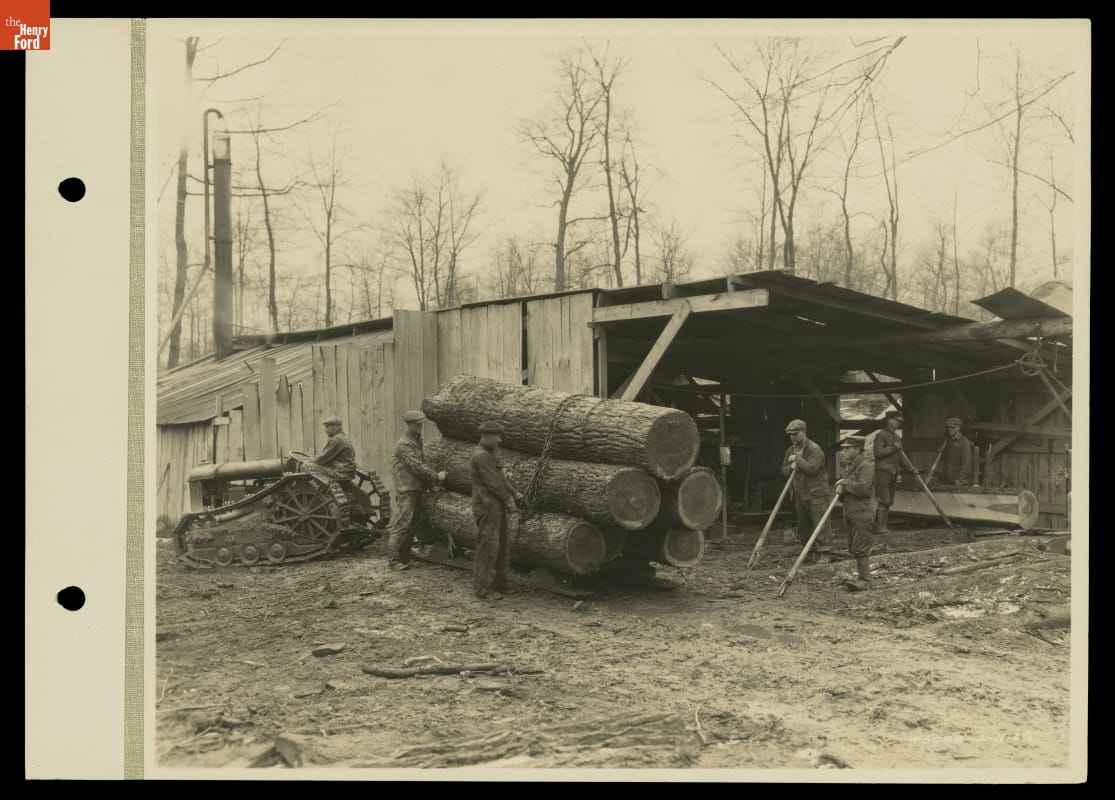
In 1919, Henry Ford began buying vast amounts of forestland in Michigan's Upper Peninsula. These prime hardwood forests supplied the lumber used to create vehicle bodies and parts. Other products such as railroad ties, shipping containers and chemical byproducts were also made -- all to support Ford's automobile operations and his goal of manufacturing self-sufficiency.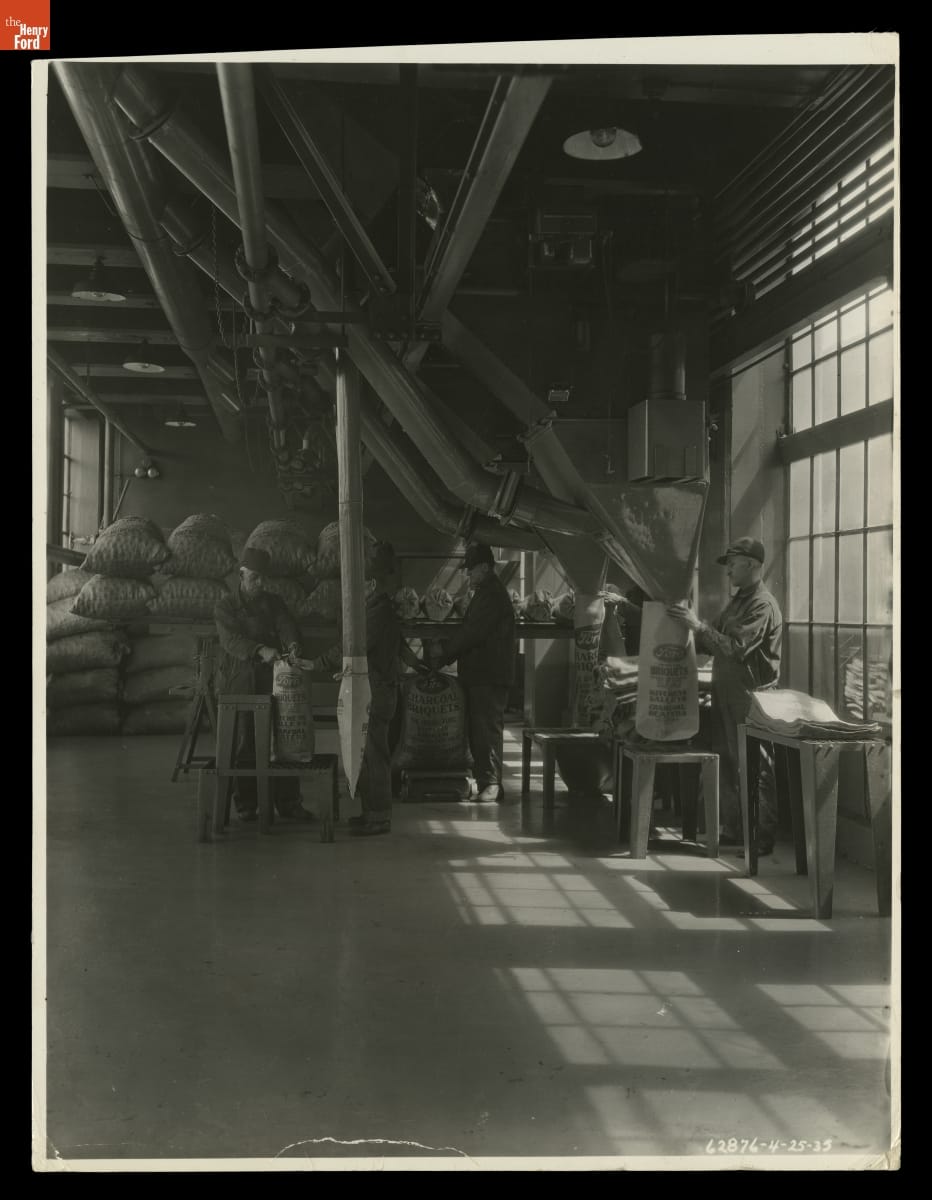 Set
SetFord Charcoal Briquets
- 34 Artifacts
Ford Motor Company sawmills created heaps of wood wastes. Some was used to produce steam for factory operations. The rest was carbonized and compressed into charcoal. Workers mixed charred hardwood chips with starch, forming nearly 100 tons of charcoal briquettes each day. Dealers sold branded barbecue accessories and packages of the popular briquettes in Ford dealerships across the country.