
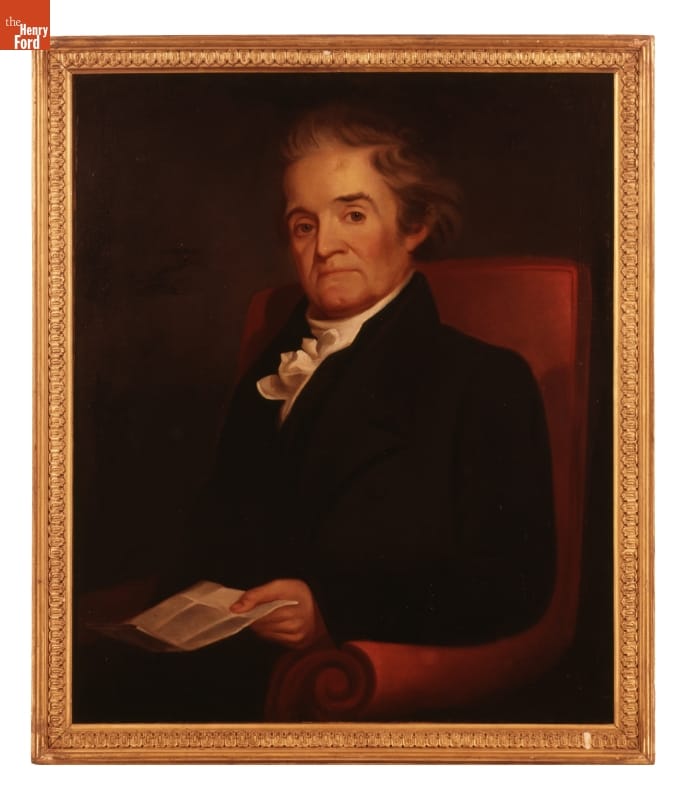
Portrait of Noah Webster, 1823, after a Painting by Samuel F.B. Morse, Photographed in Henry Ford Museum, January 1964
THF236415 / Portrait of Noah Webster, 1823, after a Painting by Samuel F.B. Morse, Photographed in Henry Ford Museum, January 1964
01
Artifact Overview
Noah Webster was an influential American educator and patriot. He is most famous for his American Dictionary of the English Language. But shortly after the American Revolution, and before the dictionary, Webster created an American spelling textbook to replace British and European books. Known as the "Blue-Backed Speller," the book was popular in American schools for more than a century.
Artifact Details
Artifact
Photographic print
Subject Date
1823
Collection Title
Location
Not on exhibit to the public.
Object ID
EI.1929.448
Credit
From the Collections of The Henry Ford.
Material
Paper (Fiber product)
Technique
Gelatin silver process
Color
Black-and-white (Colors)
Dimensions
Height: 10 in
Width: 8.125 in
Keywords |
|---|
02
Related Artifacts
 Artifact
Copy of Oil Portrait of Noah Webster, 1823-1835
Noah Webster was an influential American educator and patriot. He is most famous for his American Dictionary of the English Language. But shortly after the American Revolution, and before the dictionary, Webster created an American spelling textbook to replace British and European books. Known as the "Blue-Backed Speller," the book was popular in American schools for more than a century.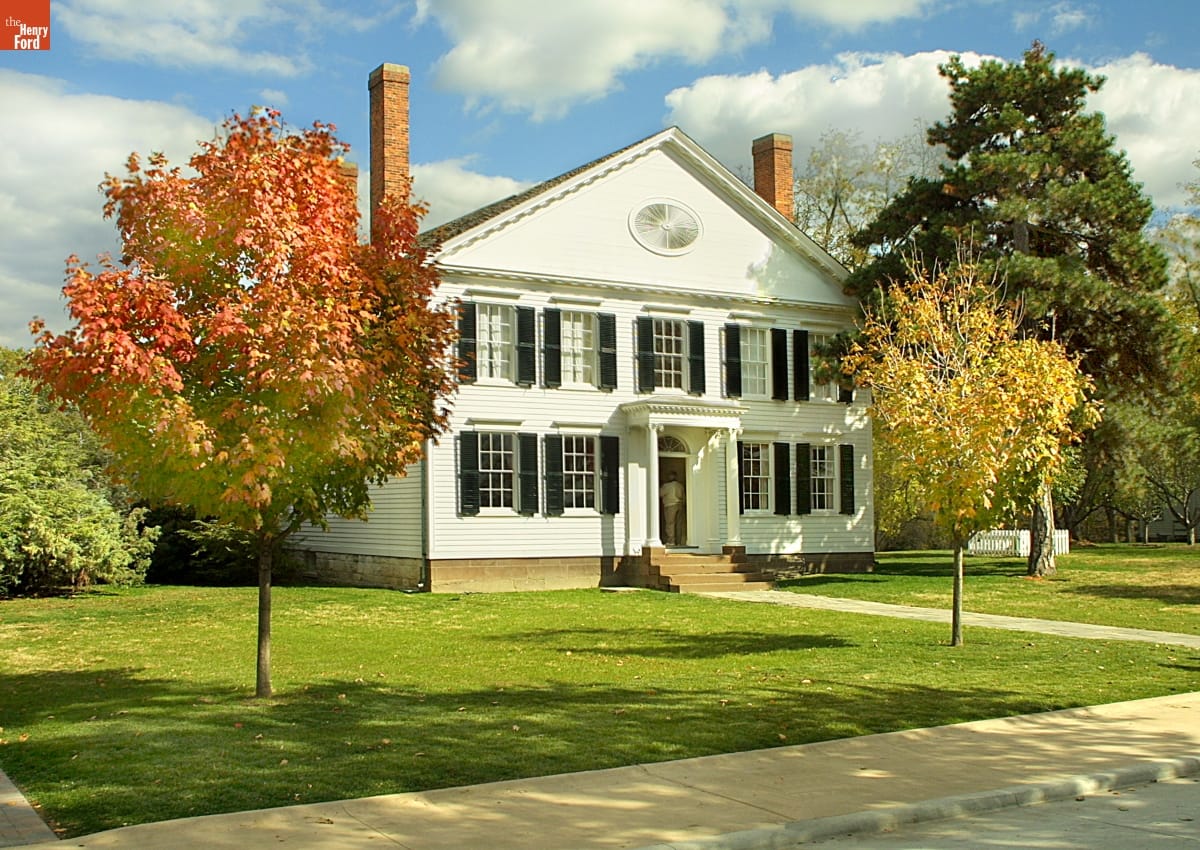 Artifact
Noah Webster Home
Noah Webster and his wife Rebecca had this comfortable New Haven, Connecticut, home built in their later years to be near family and friends, as well as the library at nearby Yale College. While living in this house, Webster published his famous American Dictionary of the English Language in 1828. His dictionary aimed to capture distinctively American words and spellings for the first time.