
Bell Laboratory Submarine Cable Amplifier, Type 175HQ, 1950-1970
THF159384 / Bell Laboratory Submarine Cable Amplifier, Type 175HQ, 1950-1970
01
Artifact Overview
This vacuum tube amplifier was designed to withstand severe conditions, as part of a submarine telephone cable. They were first installed and tested in 1950 as part of the Havana-Key West cable, and later the Newfoundland-Scotland transatlantic cable. Tubes like these turned weak signals into robust ones for over twenty years, aiding in reliable long-distance telephone communication.
Artifact Details
Artifact
Vacuum tube
Date Made
1950-1970
Creators
Location
Not on exhibit to the public.
Object ID
00.1366.77
Credit
From the Collections of The Henry Ford.
Material
Ceramic (Material)
Glass (Material)
Non-ferrous Metal
Rubber (Material)
Tungsten
Dimensions
Height: 4 in
Diameter: 1.25 in
Inscriptions
175HQ
AN337
Keywords |
|---|
02
Related Content
 Set
SetSignals Under the Ocean
- 15 Artifacts
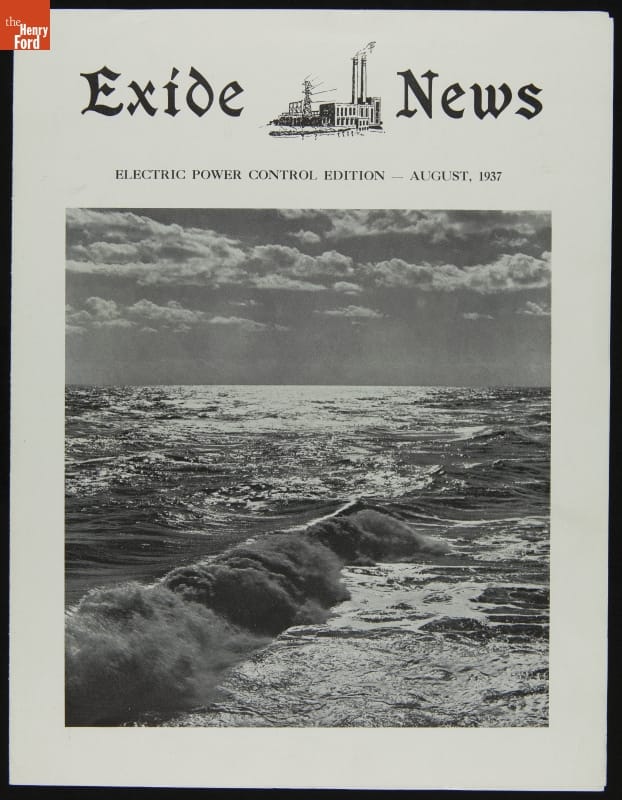
This publication contains the article "Trouble Shooting the Atlantic Telegraph Cables." It discusses the difficulty of maintaining the large network of undersea communication cables. Safety challenges include: uneven topography on the ocean floor, interference from marine life, and trawling fishing boats accidentally severing cables. Damaged cables are found using echolocation and electrical equipment and drawn to the surface for repair.