
Colonial Loom
THF189973 / Colonial Loom
01
Artifact Overview
This timber frame loom is the type used by American colonists to produce fabrics for clothing, table and bed linens, and utilitarian items like towels and sacks. Hand weaving was labor intensive, so these textiles were among the most valuable household items. Many weavers were professionals, weaving at home or in a small workshop, but some families also had looms to produce their own cloth.
Artifact Details
Artifact
Loom (Textile tool)
Location
at Greenfield Village in Weaving Shop (Cotton Gin Mill)
Object ID
2015.0.7.1
Credit
From the Collections of The Henry Ford.
Material
Wood (Plant material)
Metal
Color
Brown
Dimensions
Height: undefined undefined
Width: undefined undefined
Length: undefined undefined
Keywords |
|---|
02
Related Content
 Set
SetFeatured on The Henry Ford's Innovation Nation: Season 8
- 26 Artifacts
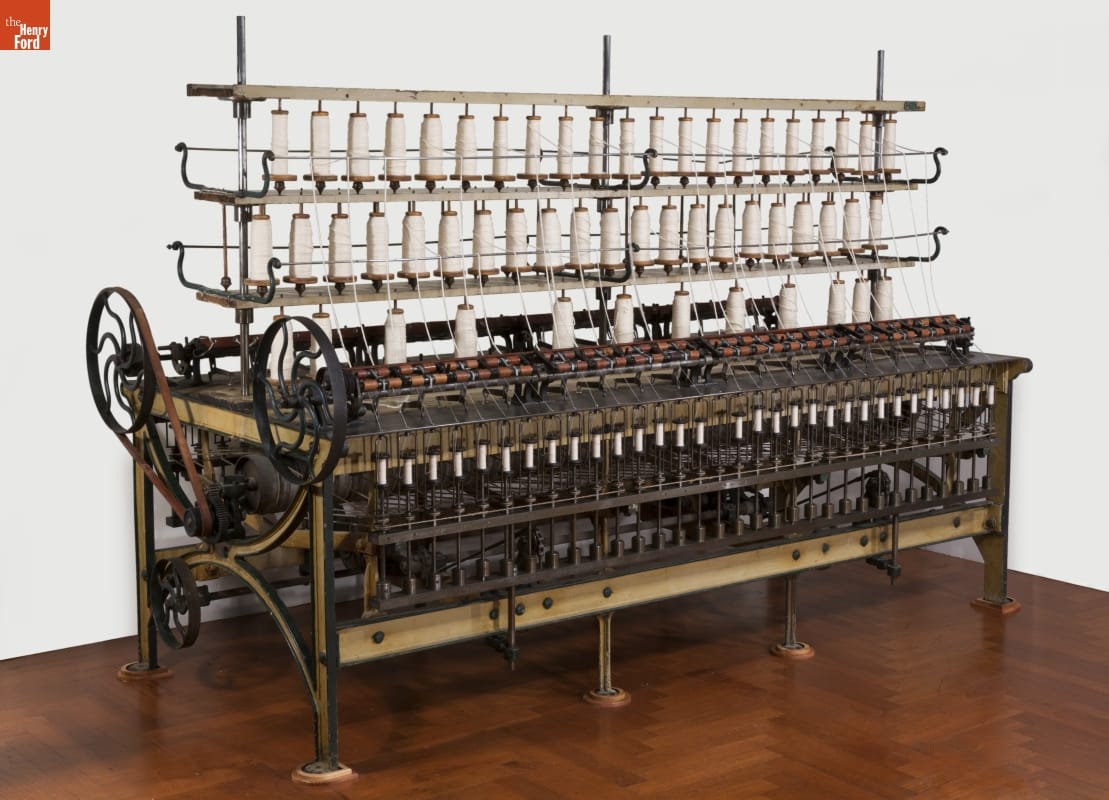
Spinning frames spin cotton fiber into yarn and then wind it onto a bobbin. This throstle spinning frame could simultaneously spin 64 strands of yarn. (Throstle -- an old name for a song thrush -- refers to the bird-like sounds the machine made.) Machines like this helped produce the large quantities of yarn that growing industrial weaving operations needed in the early and mid-1800s. Set
SetWorking Looms of Greenfield Village
- 8 Artifacts
The Greenfield Village Weaving Shop demonstrates the evolution of textile production from the colonial home and craft shop, through the Industrial Revolution to commercial factory. Housed in a converted 1840s Georgia cotton mill, the Weaving Shop contains a number of working looms, including one of the few operating mechanical Jacquard looms in North America.