
Florence Sewing Machine, 1860-1865
THF63456 / Florence Sewing Machine, 1860-1865
01
Artifact Overview
When new inventions like stoves, sewing machines and radios first came on the market, they seemed jarring and out of place next to people's furniture. Manufacturers learned that these devices would sell better if their mechanisms were hidden behind stylish cabinetry or fancy decoration. Fashionable parlor furniture inspired the ornately scrolled and pierced iron legs of this elaborately decorated sewing machine.
Artifact Details
Artifact
Sewing machine (Equipment)
Date Made
1860-1865
Creators
Place of Creation
Creator Notes
Made by the Florence Sewing Machine Company, Florence, Massachusetts.
Location
at Henry Ford Museum in Fully Furnished
Object ID
00.3.10048
Credit
From the Collections of The Henry Ford.
Material
Cast iron
Wood (Plant material)
Color
Black (Color)
Gold (Color)
Dimensions
Height: 34.5 in
Width: 30.5 in
Length: 19.5 in
Inscriptions
On machine: FLORENCE/SEWING MACHINE CO./PATENTED/AUG.22, 1855 TO JULY 18, 1863/19723
Keywords |
|---|
02
Related Content
 Set
SetFeatured on The Henry Ford’s Innovation Nation: Season 9
- 26 Artifacts
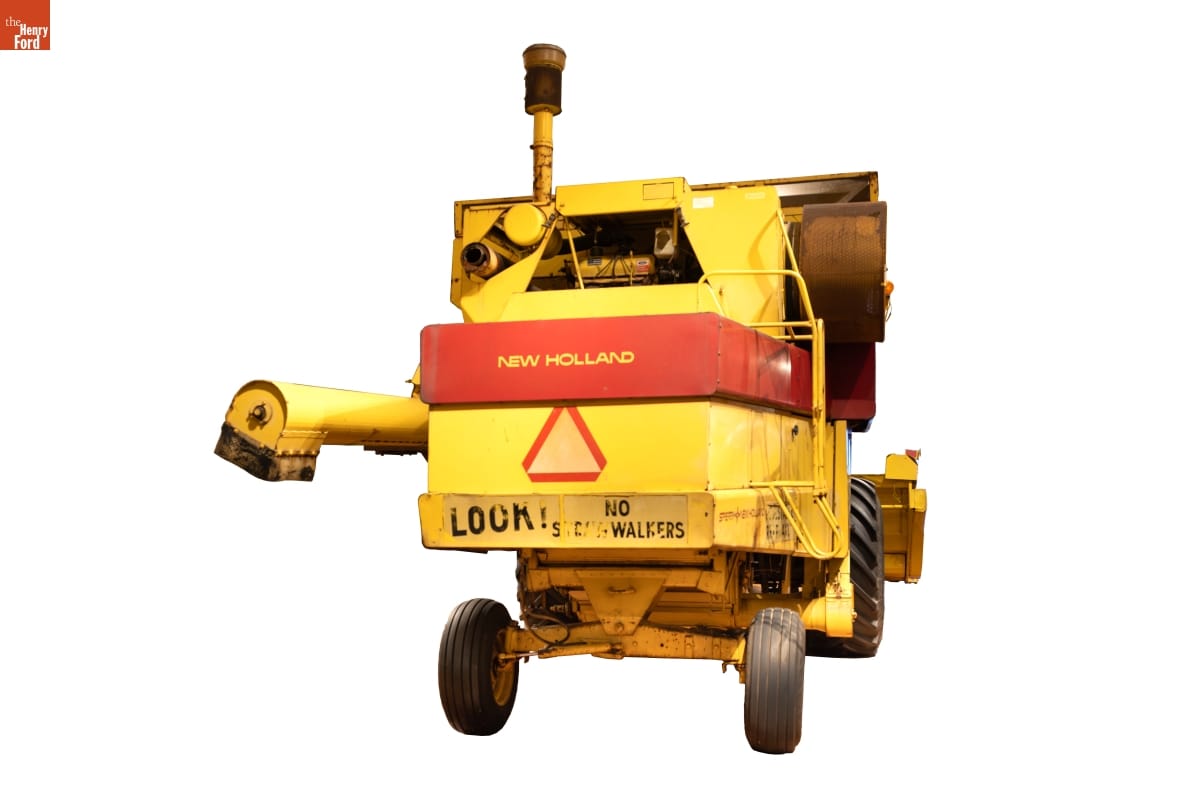
Engineers designed the TR70 as a compact machine suitable for hilly terrain. The twin rotors (TR) shelled corn or threshed grain and moved it through the combine's body. Setting the rotors at an angle (axial) shortened the machine. Farmers changed the front-end attachment to harvest corn, beans, or wheat. Stencils on this prototype, exhibited at trade shows, explained additional features. Set
SetTurning Technology into Furniture
- 7 Artifacts
The first heating stoves, sewing machines, radios, and televisions seemed out of place next to furniture, so designers used cabinetry to conceal functional parts and make them blend into their environments. Set
SetDesign and Making
- 50 Artifacts
This 1937 Sparton radio was designed by Walter Dorwin Teague, a designer renowned for his use of streamlined forms. A study in contrasts -- the blue mirrored finish and curved sled-like base suggest speed while the five jutting parallel panels appear almost architectural -- this expensive and glamorous radio had a limited market during the Great Depression.