
Cockpit of the 1939 Douglas DC-3 Airplane, Photographed in 2003
THF15960a / Cockpit of the 1939 Douglas DC-3 Airplane, Photographed in 2003
01
Artifact Overview
The Douglas DC-3, first flown in 1935, made use of several advancements in aircraft design. Internal bracing for the wings allowed for streamlined surfaces. Engine cowlings and retractable landing gear reduced drag. Improved engines increased range. The result was a rugged, stable airplane easy for pilots to handle. By 1939, DC-3 planes carried 75 percent of U.S. air travelers.
Artifact Details
Artifact
Digital image
Subject Date
2003
Collection Title
Location
By Request in the Benson Ford Research Center
Object ID
EI.1929.1310
Credit
From the Collections of The Henry Ford.
Technique
Digital imaging
Color
Multicolored
Keywords |
|---|
02
Related Artifacts
 Artifact
1939 Douglas DC-3 Airplane
The Douglas DC-3, introduced in 1936, carried 21 passengers -- enough to fly profitably without relying on subsidies from air mail contracts. While the DC-3's economy appealed to airlines, its rugged construction and comfortable cabin attracted passengers. More than any other aircraft, the DC-3 ushered in the era of dependable, long-distance air travel in the United States.
03
Related Content
 Set
SetThe DC-3: Changing Passengers’ Expectations
- 12 Artifacts
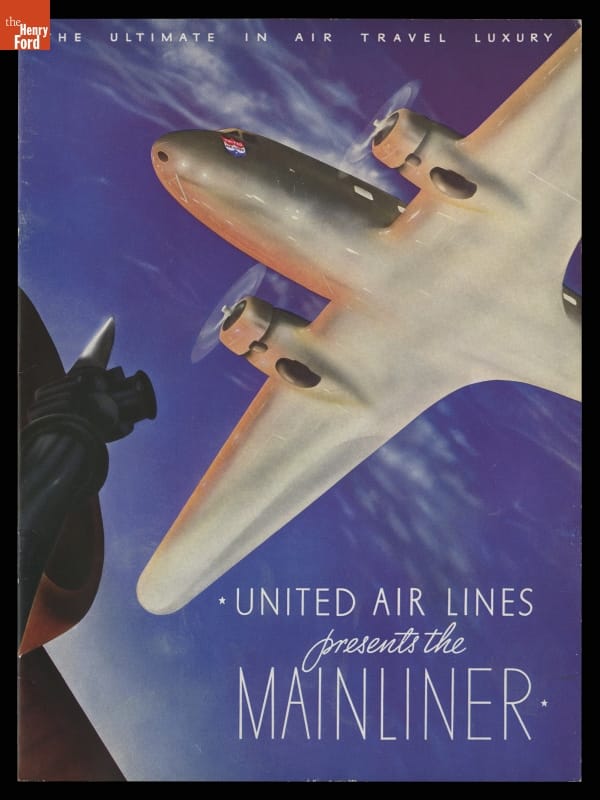
United Airlines promoted its new Douglas DC-3 "Mainliners" in this 1937 brochure. With a range of 1,500 miles, the Mainliners flew from New York to San Francisco in less than 16 hours with only three stops along the way. The planes came in three configurations: standard 21-passenger coaches, sleepers with folding berths for 14, and "Skylounges" with deluxe swiveling seats.