
Scot Towels, circa 1937
THF163277 / Scot Towels, circa 1937
01
Artifact Overview
Paper towels, like paper cups, were first promoted for public use as a health measure, adopted for public washrooms during the early 20th century. By the 1950s, disposable paper towels made increasing inroads in the American kitchen, offering more convenience, cleanliness, and less maintenance than cloth. Yet, to some, disposable paper products would come to represent waste--and a threat to the environment.
Artifact Details
Artifact
Paper towel
Date Made
circa 1937
Creators
Place of Creation
Location
Not on exhibit to the public.
Object ID
2015.53.1
Credit
From the Collections of The Henry Ford.
Material
Paper (Fiber product)
Color
White (Color)
Blue
Dimensions
Height: 11 in
Diameter: 4 in
Inscriptions
On front of paper wrapper:
ScotTowels/ FOR KITCHEN USE/ [...]/ 11 X 7 1/2 inches
On repeated pattern: Thirsty Fibre
On back of paper wrapper:
10 Ways to Save Time, Laundry with ScotTowels./ Drying or Wiping Hands; Cleaning Pots and Pans; Draining Foods--Bacon, etc.; Wiping Up Spilled Liquids; Wiping Off Stove; Wiping Out Sink; Scraping Plates; Wiping Windshield; Drying Foods/ Cleaning Glassware
Keywords |
|---|
02
Related Content
 Set
SetSocial Transformation
- 50 Artifacts
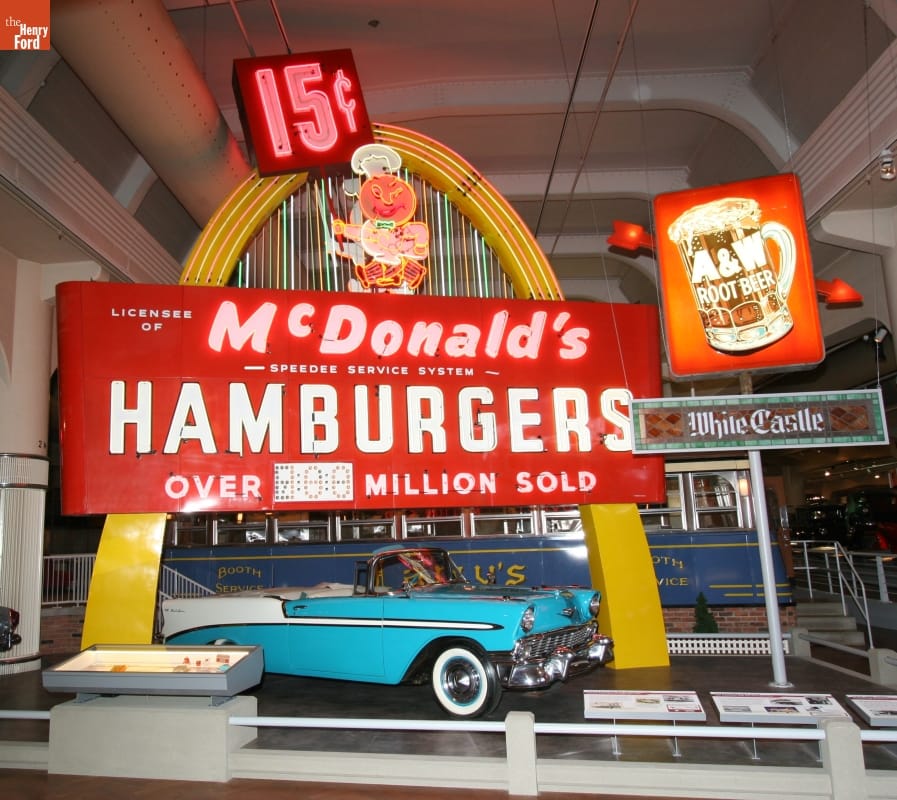
In 1948, the McDonald brothers transformed their Southern California drive-in restaurant with their radical new "Speedee Service System"--assembly-line production of a limited menu at drastically reduced prices. Richard McDonald created this sign design in 1952. In 1955, milkshake machine salesman Ray Kroc franchised the McDonald's concept--prompting numerous imitators and ultimately turning America into a "fast food nation."