
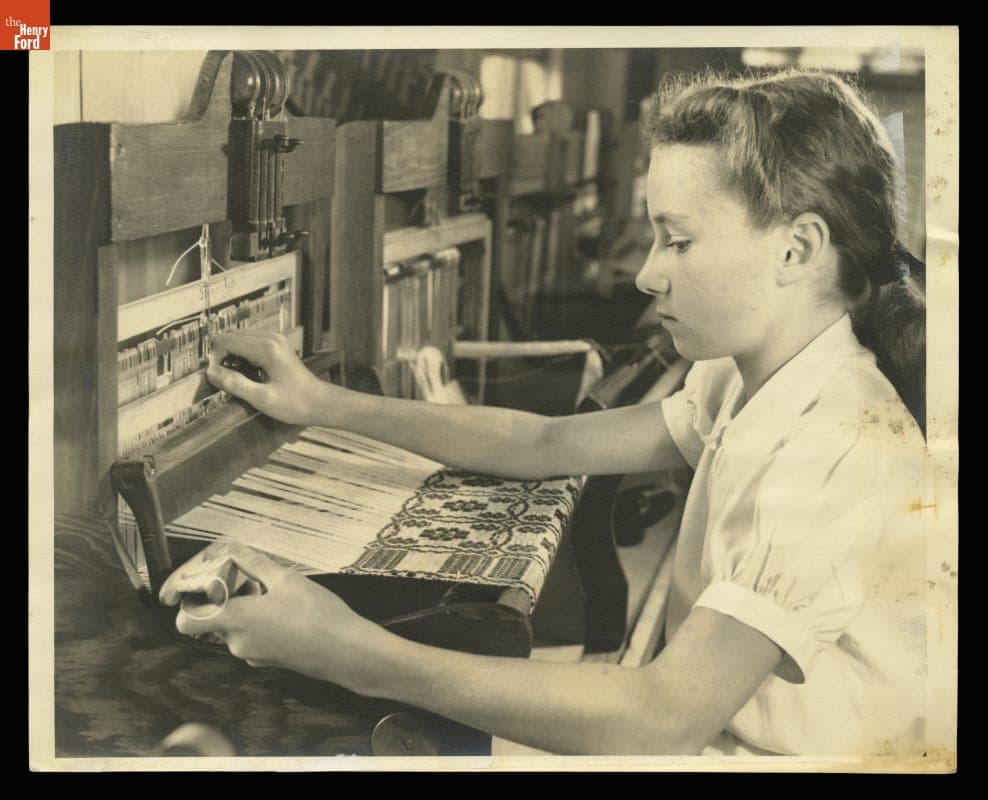
Weaving Demonstration in Plymouth Carding Mill (now Gunsolly Carding Mill), Greenfield Village, circa 1935
THF243120 / Weaving Demonstration in Plymouth Carding Mill (now Gunsolly Carding Mill), Greenfield Village, circa 1935
01
Artifact Overview
Craftspeople have presented weaving demonstrations at Greenfield Village since it opened to the public in 1933. Over the years, weavers have used several historic and refurbished looms located in the Plymouth Carding Mill (now Gunsolly Carding Mill) to create hand-crafted textiles. These presentations and resulting products help tell the story of textile production in America.
Artifact Details
Artifact
Photographic print
Subject Date
circa 1935
Collection Title
Location
Not on exhibit to the public.
Object ID
EI.1929.1493
Credit
From the Collections of The Henry Ford.
Material
Paper (Fiber product)
Technique
Gelatin silver process
Color
Black-and-white (Colors)
Dimensions
Height: 8.125 in
Width: 10.000 in
Keywords |
|---|
02
Related Artifacts
 Artifact
Gunsolly Carding Mill
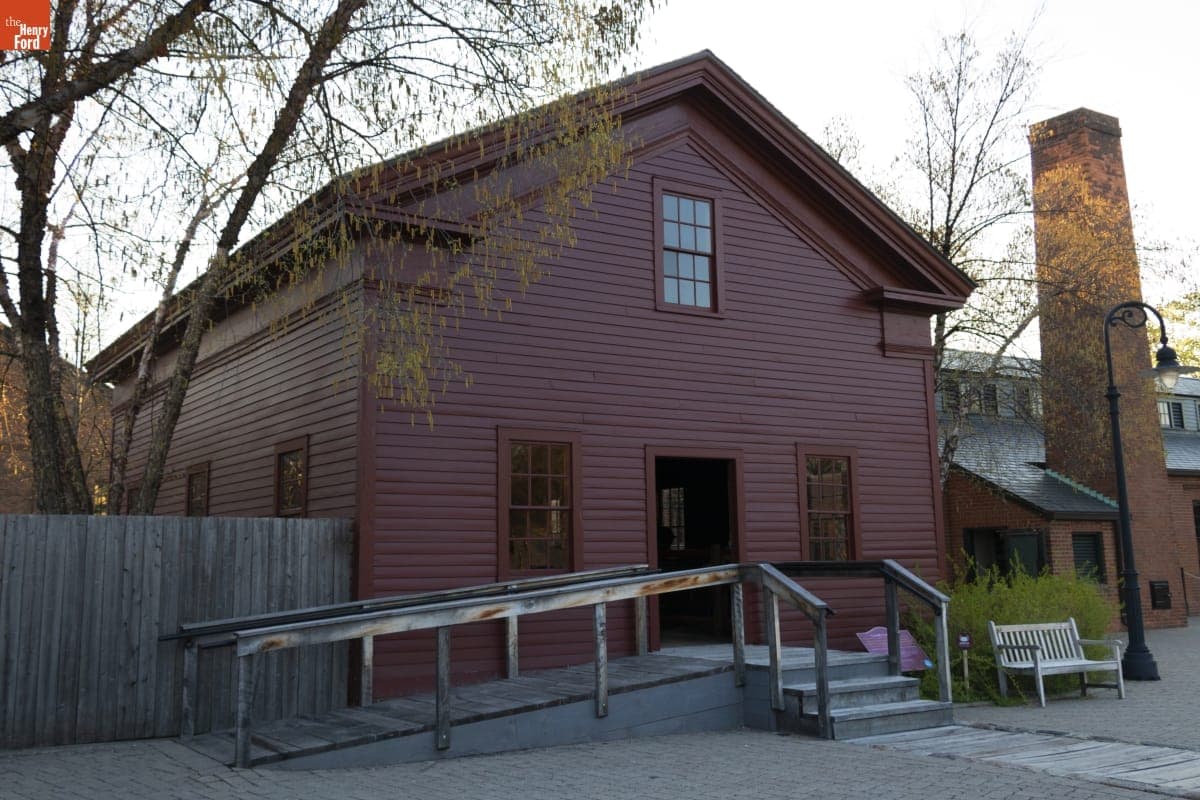
John Gunsolly operated this water-powered carding mill as well as a saw and cider mill on the Middle Rouge River near Plymouth, Michigan, beginning in the 1850s. Area farmers brought their wool to this mill to have it carded (combed) so it could be spun into thread.
03
Related Content
 Set
SetWeaving in Greenfield Village
- 20 Artifacts
Henry Ford believed in "learning by doing." Students enrolled in the Edison Institute Schools located on the grounds of Ford's Greenfield Village had ample opportunities for practical, hands-on training. Students, if they desired, could learn to weave. Beginners used small tabletop looms. As they progressed students created woven materials using larger looms located in Greenfield Village's Plymouth Carding Mill and Weaving Shed.