
"Allegheny" and "DeWitt Clinton" Locomotives in Greenfield Village, July 1956
THF133495 / "Allegheny" and "DeWitt Clinton" Locomotives in Greenfield Village, July 1956
01
Artifact Overview
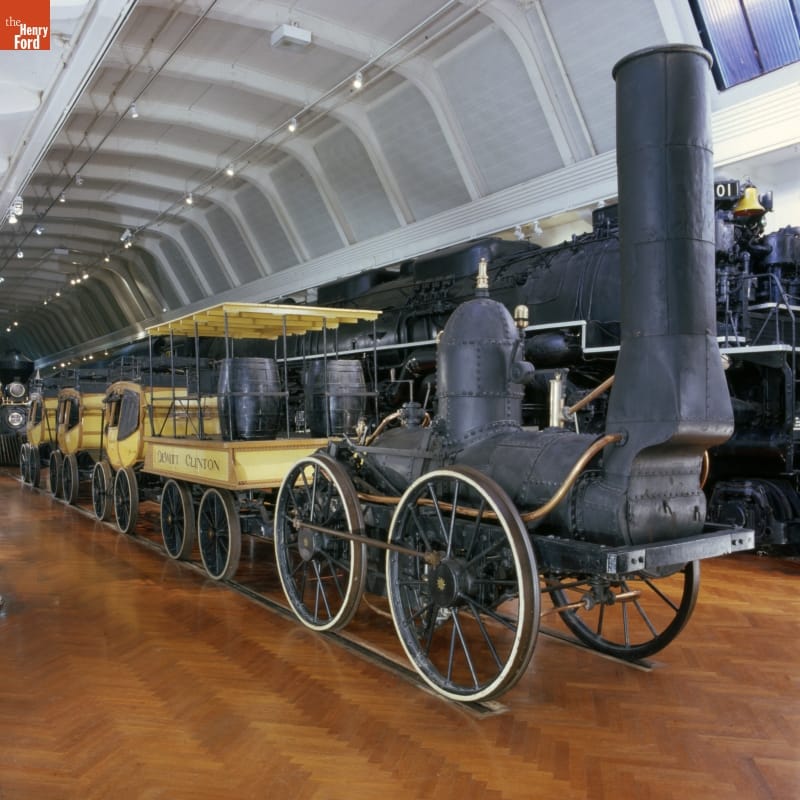
More than a century of steam locomotive development separated the 1831 DeWitt Clinton (represented by the 1893 replica at right) from the 1941 Allegheny. But each locomotive was built in the same basic pattern: a horizontal boiler mounted atop driving wheels, with those driving wheels connected directly to the cylinders.
Artifact Details
Artifact
Negative (Photograph)
Date Made
July 1956
Subject Date
July 1956
Collection Title
Location
By Request in the Benson Ford Research Center
Object ID
EI.1929.N.B.12959
Credit
From the Collections of The Henry Ford.
Color
Black-and-white (Colors)
Dimensions
Height: 4 in
Width: 5 in
Keywords |
|---|
02
Related Artifacts
 Artifact
Replica of 1831 "DeWitt Clinton" Steam Locomotive
The New York Central Railroad built this replica of the DeWitt Clinton for the 1893 World's Columbian Exposition in Chicago. The original locomotive was built in 1831 and operated on the Mohawk & Hudson Railroad, an NYC predecessor. The replica traveled to fairs, expositions, and promotional events across the NYC system into the 1950s.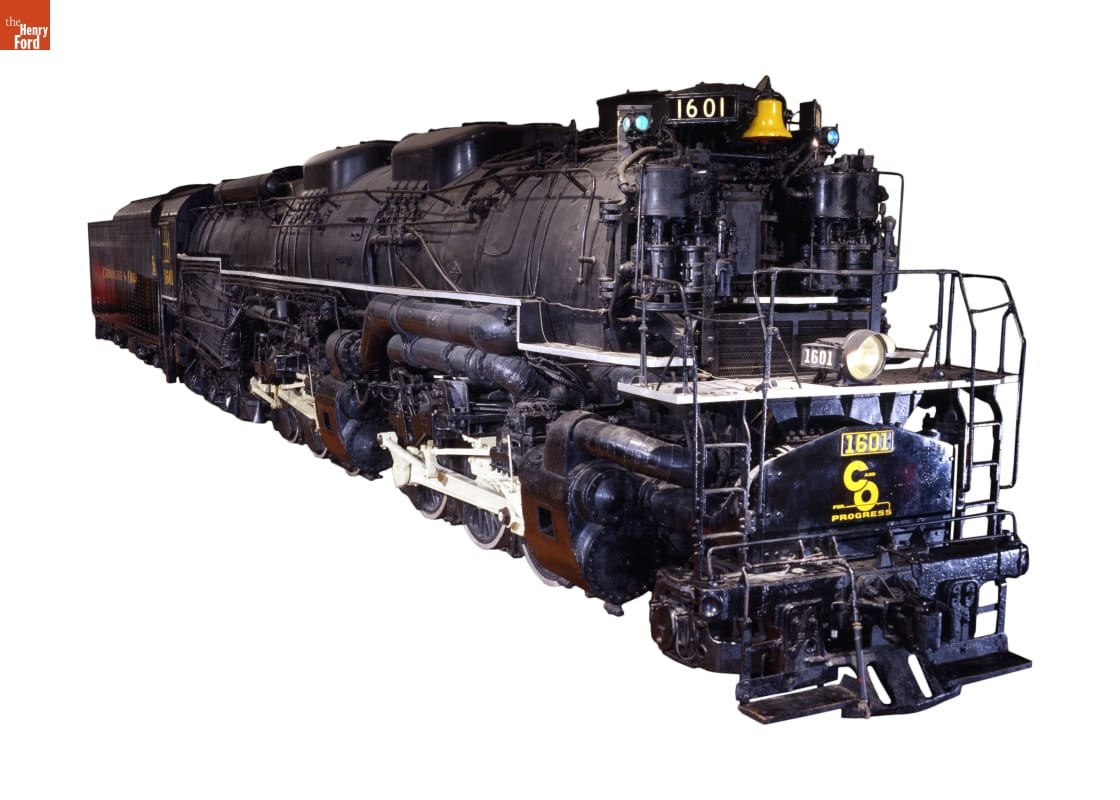 Artifact
Allegheny Steam Locomotive, 1941
The Chesapeake & Ohio Railway's massive Allegheny, introduced in 1941, represents the peak of steam railroad technology. Among the largest and most powerful steam locomotives ever built, it weighed 1.2 million pounds with its tender and could generate 7,500 horsepower. Just 11 years later, C&O began pulling these giants from service. Diesel-electric locomotives proved more flexible and less expensive.