
Bates Numbering Machine, 1919-1925
THF170611 / Bates Numbering Machine, 1919-1925
01
Artifact Overview
The Bates numbering machine helped organize and manage business paperwork. Office workers used it to stamp consecutive numbers or numbers in a repeated pattern onto pages of documents. The mechanism -- an improvement patented by Edwin G. Bates in 1891 -- automatically changed the number, making quick work for staff.
Artifact Details
Artifact
Rubber stamp
Date Made
1919-1925
Place of Creation
Location
Not on exhibit to the public.
Object ID
2017.0.34.33
Credit
From the Collections of The Henry Ford.
Material
Metal
Wood (Plant Material)
Felt (Textile)
Rubber (Material)
Dimensions
Height: 5.75 in
Width: 2.375 in
Length: 1.875 in
Inscriptions
on front:
BATES / SEVEN MOVEMENT / AUTOMATIC NUMBERING / MACHINE / PATENTED / MARCH 13, 1908 JULY 6, 1919 / NUMBER 50083 / BATES MANUFACTURING CO. / SOLE MAKERS / ORANGE N.J. U.S.A.
on back:
THIS IS A GENUINE / BATES NUMBERING MACHINE / MANUFACTURED ONLY BY / BATES MANUFACTURING CO. / ORANGE N.J. U.S.A. / 5 WHEELS STYLE G
Keywords |
|---|
02
Related Content
 Set
SetExposed Collections—2017-2020 IMLS Grant Project
- 20 Artifacts
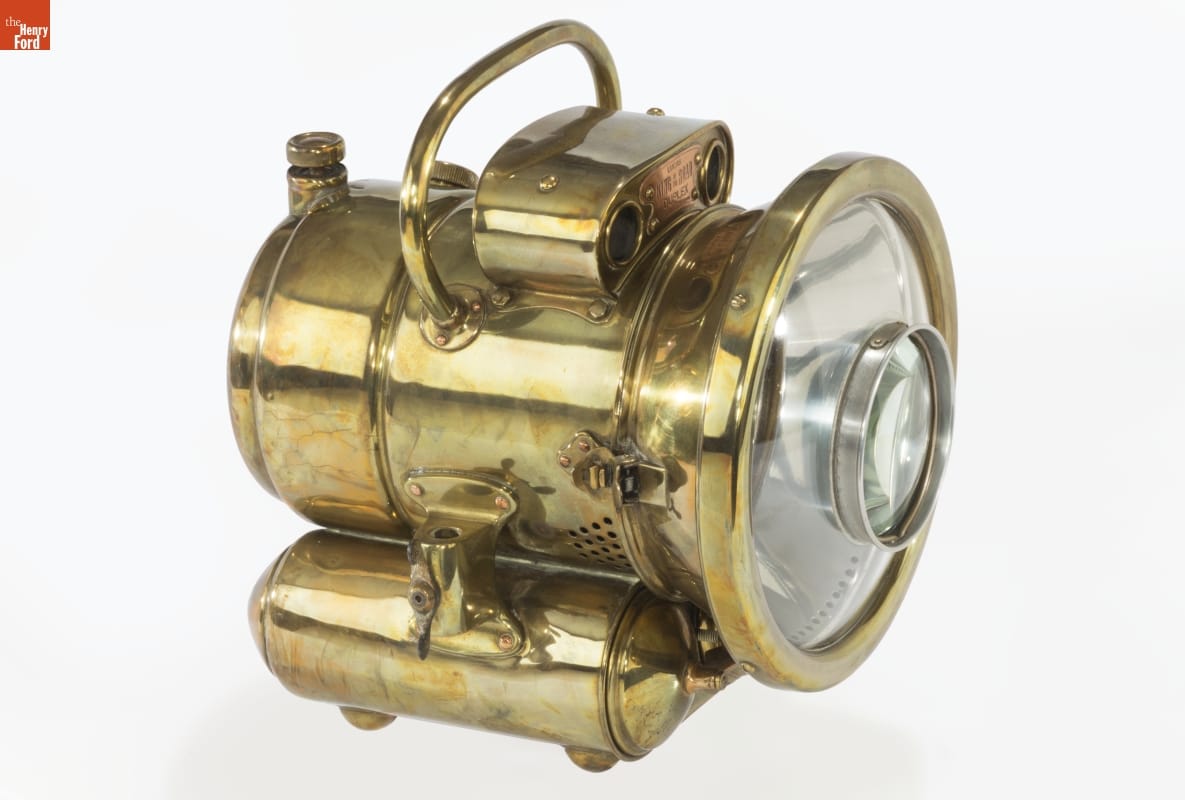
Drivers in the early 1900s attached headlights to their automobiles to help light their way at night. To use this "King of the Road" model, automobilists filled the chambers with calcium carbide and then added water creating acetylene gas. Igniting the gas burner produced a strong white light. The lamp's lens and parabolic reflector cast a broad beam lighting the road ahead.