
Ballot Box, 1930-1960
THF181528 / Ballot Box, 1930-1960
01
Artifact Overview
As a physical manifestation of the American political system, the ballot box has become an icon of democracy itself. Over time, improvements in ballot box design helped secure accurate election results. Narrow openings and locking mechanisms prevented dishonest voters or election officials from tampering with ballots.
Artifact Details
Artifact
Ballot box
Date Made
1930-1960
Place of Creation
Location
at Greenfield Village in Dr. Sullivan & Mrs. Richie Jean Sherrod Jackson Home
Object ID
2018.114.1
Credit
From the Collections of The Henry Ford.
Material
Metal
Color
Gray (Color)
Dimensions
Height: 14.5 in
Diameter: 12 in
Inscriptions
on top:
BALLOT BOX NO.
on front:
ELECTION PCT. NO. / CAMERON COUNTY
Keywords |
|---|
02
Related Content
 Set
SetThe Long March to Voting Rights
- 24 Artifacts
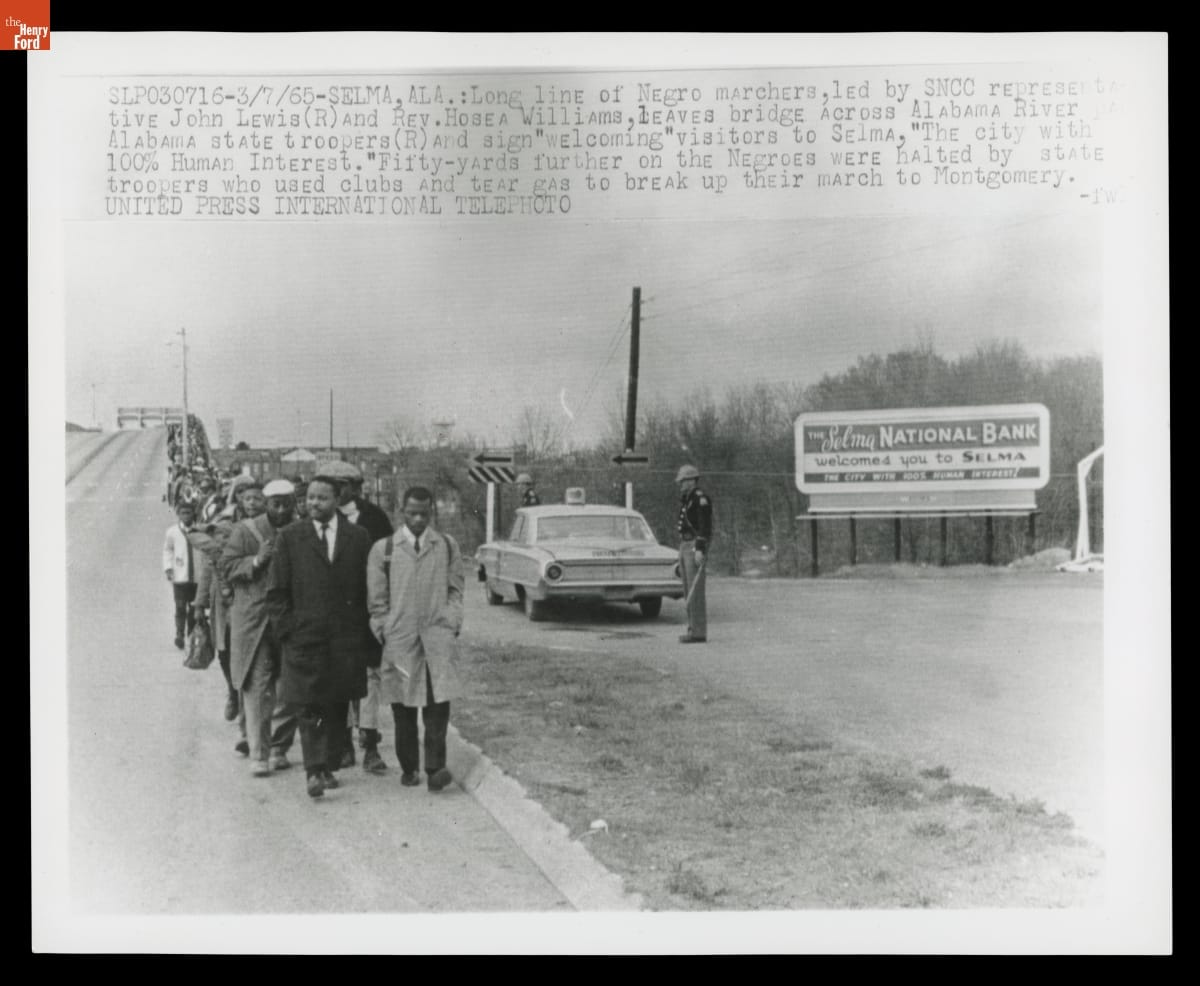
In 1965, all eyes turned to Selma, Alabama, as the next stage in the fight for civil rights. Dr. Martin Luther King, Jr., the Student Nonviolent Coordinating Committee, the Southern Christian Leadership Conference, and other activists planned a series of marches from Selma to Montgomery to draw attention to the continued struggle for voting rights for Black Americans. Set
SetVoting in America
- 21 Artifacts
From the founding of the nation, there has never been a common American voting experience. Methods vary across states, counties, and municipalities, reflecting differing and ever-evolving ideas about how to vote — and who should participate. Because changes that address problems with voting systems invariably create new ones, the story of voting in America is one of constant reform.
 article
Old Enough to Vote
In 1971, the 26th Amendment lowered the voting age from 21 to 18, taking less than four months to be ratified. Though this constitutional victory may seem relatively quick, it wasn't.