
Bagley Avenue during the Greenfield Village Restoration Project, March 2003
01
Artifact Overview
By 2000, Greenfield Village began showing its age. Buildings and crumbling infrastructure desperately needed repair. Museum planners envisioned a revitalized village. They created themed "Historic Districts" by relocating and refurbishing the historic structures. Workers repaved streets and upgraded water, sewer, electric, and gas lines. In June 2003, nine months after restoration began, visitors passed through a new entrance into a reborn Greenfield Village.
Artifact Details
Artifact
Digital photograph
Date Made
March 2003
Subject Date
March 2003
Collection Title
Location
By Request in the Benson Ford Research Center
Object ID
EI.1929.5958
Credit
From the Collections of The Henry Ford.
Color
Multicolored
Dimensions
Height: undefined in
Width: undefined in
Keywords |
|---|
02
Related Artifacts
 Artifact
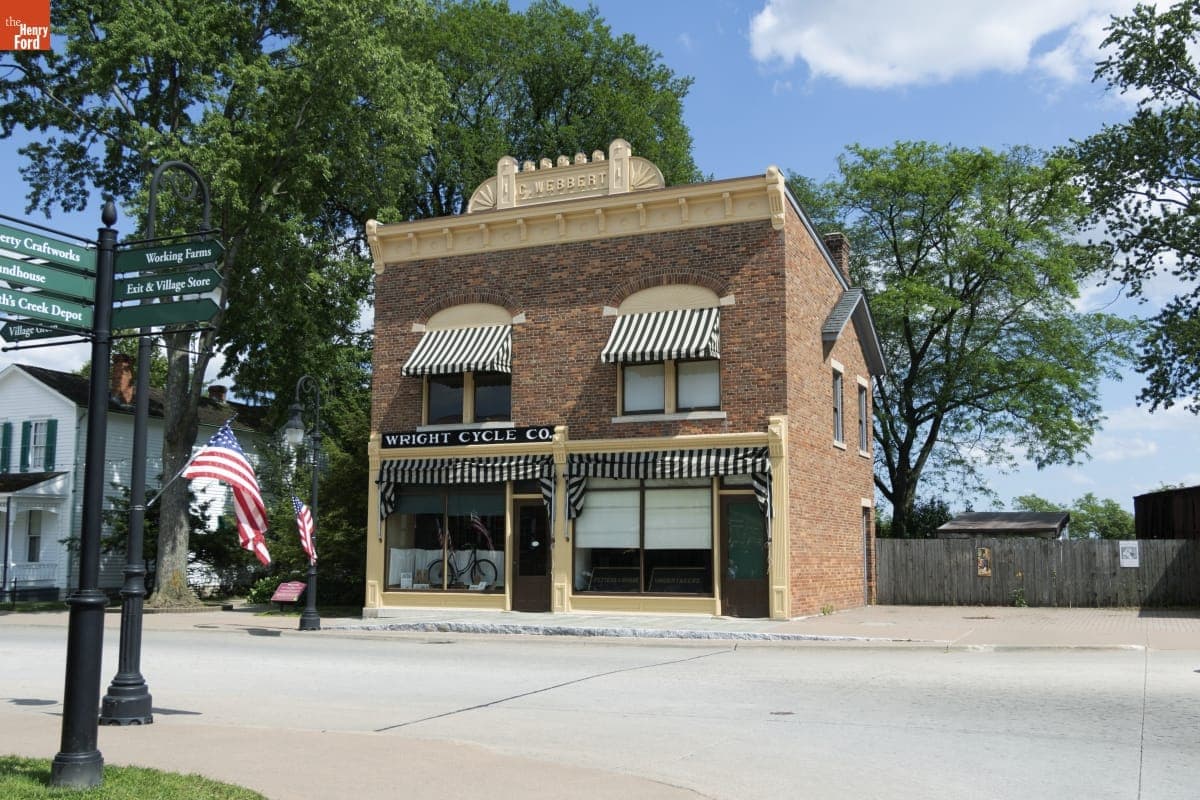
Wright Cycle Shop
Wilbur and Orville Wright operated their bicycle business in this building from 1897 to 1908 in Dayton, Ohio. The brothers sold and repaired bikes, and they even produced models under their own brands. It was also in this shop that the Wright brothers built their earliest flying machines, including the 1903 Flyer that became the first successful heavier-than-air, powered, controlled aircraft.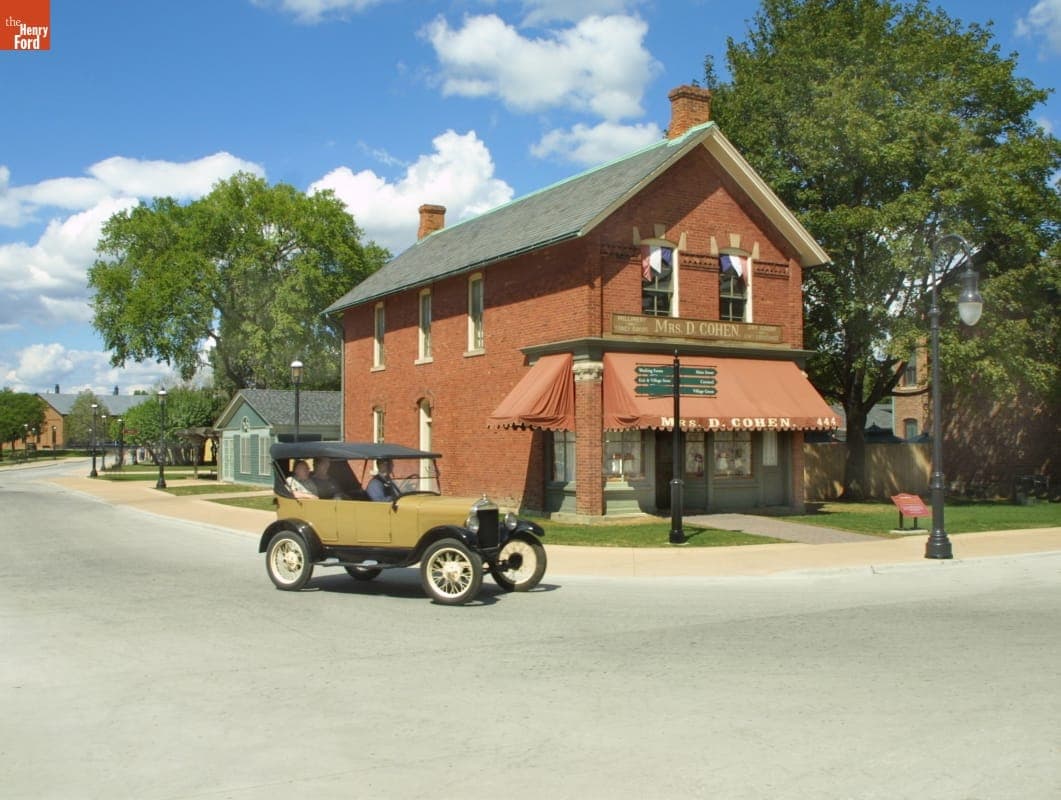 Artifact
Cohen Millinery
Specialized retail stores like this one served the needs of city dwellers in the late 19th century. During the 1880s, a series of shops selling fancy goods, groceries, dry goods, and flour and feed occupied the building. In the mid-1890s, widow Elizabeth Cohen operated a millinery shop here, offering customers fashionable headwear while supporting her young family. Like other shopkeepers, Mrs. Cohen lived above her store.