
Mill Pond Construction during the Greenfield Village Restoration Project, March 2003
THF10348 / Mill Pond Construction during the Greenfield Village Restoration Project, March 2003
01
Artifact Overview
By 2000, Greenfield Village began showing its age. Buildings and crumbling infrastructure desperately needed repair. Museum planners envisioned a revitalized village. They created themed "Historic Districts" by relocating and refurbishing the historic structures. Workers repaved streets and upgraded water, sewer, electric, and gas lines. In June 2003, nine months after restoration began, visitors passed through a new entrance into a reborn Greenfield Village.
Artifact Details
Artifact
Digital photograph
Date Made
March 2003
Subject Date
March 2003
Collection Title
Location
By Request in the Benson Ford Research Center
Object ID
EI.1929.6071
Credit
From the Collections of The Henry Ford.
Color
Multicolored
Dimensions
Height: undefined in
Width: undefined in
Keywords |
|---|
02
Related Artifacts
 Artifact
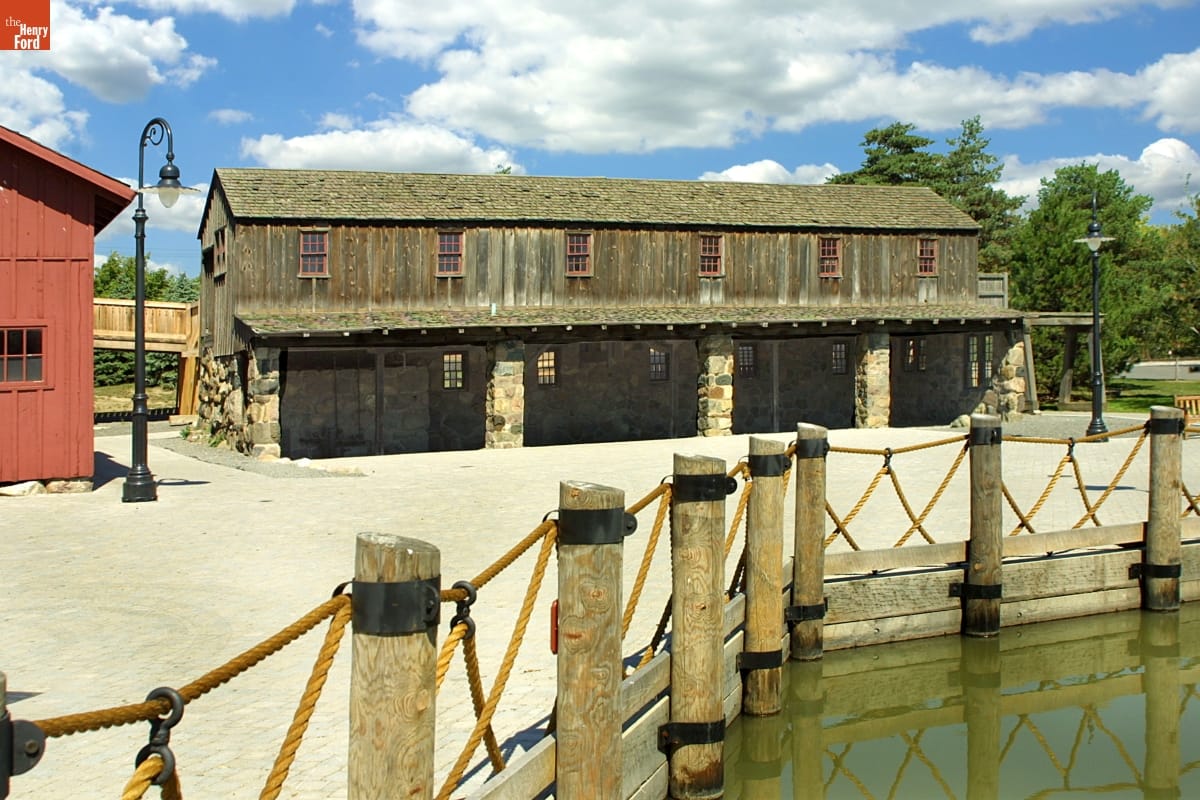
Spofford Sawmill
Sawmills were among the first mills in new settlements, supplying lumber for people's homes and barns. Henry Ford had this mill built in Greenfield Village to house early up-and-down sawmill machinery. One of the large beams holding up the building came from a water-powered sawmill that George Spofford operated in Georgetown, Massachusetts, back in the 1600s.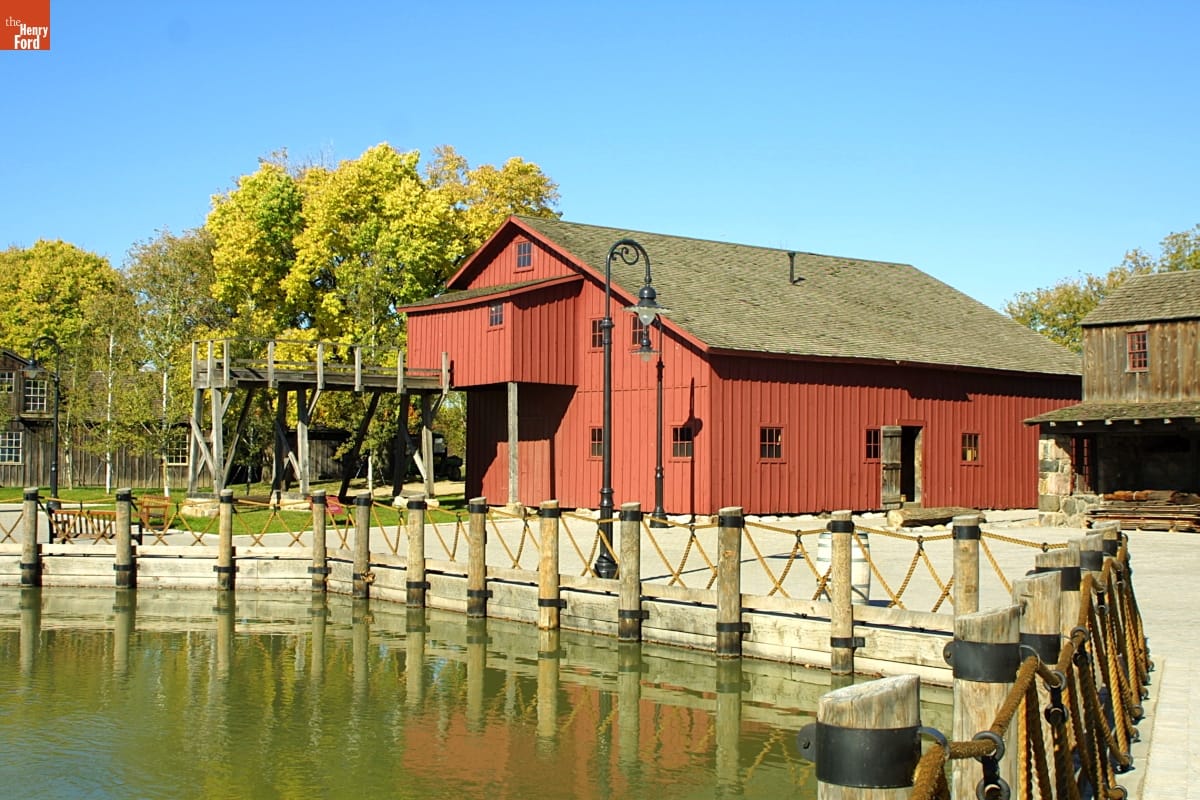 Artifact
Tripp Sawmill
Small sawmills played a fundamental role in rural communities in nineteenth century America, processing locally-logged wood to provide sawn lumber for construction in the immediate area. While many such mills were water powered, this was steam-powered from the outset. It was simple but refined -- a modest, self-sufficient industrial operation (water and fuel was available onsite), comfortably wedded to its rural location.