
Hanks Silk Mill Seen from Newly-Paved Washington Boulevard, Greenfield Village Restoration Project, April 2003
THF10714 / Hanks Silk Mill Seen from Newly-Paved Washington Boulevard, Greenfield Village Restoration Project, April 2003
01
Artifact Overview
By 2000, Greenfield Village began showing its age. Buildings and crumbling infrastructure desperately needed repair. Museum planners envisioned a revitalized village. They created themed "Historic Districts" by relocating and refurbishing the historic structures. Workers repaved streets and upgraded water, sewer, electric, and gas lines. In June 2003, nine months after restoration began, visitors passed through a new entrance into a reborn Greenfield Village.
Artifact Details
Artifact
Digital photograph
Date Made
April 2003
Subject Date
April 2003
Collection Title
Location
By Request in the Benson Ford Research Center
Object ID
EI.1929.6437
Credit
From the Collections of The Henry Ford.
Color
Multicolored
Dimensions
Height: undefined in
Width: undefined in
Keywords |
|---|
02
Related Artifacts
 Artifact
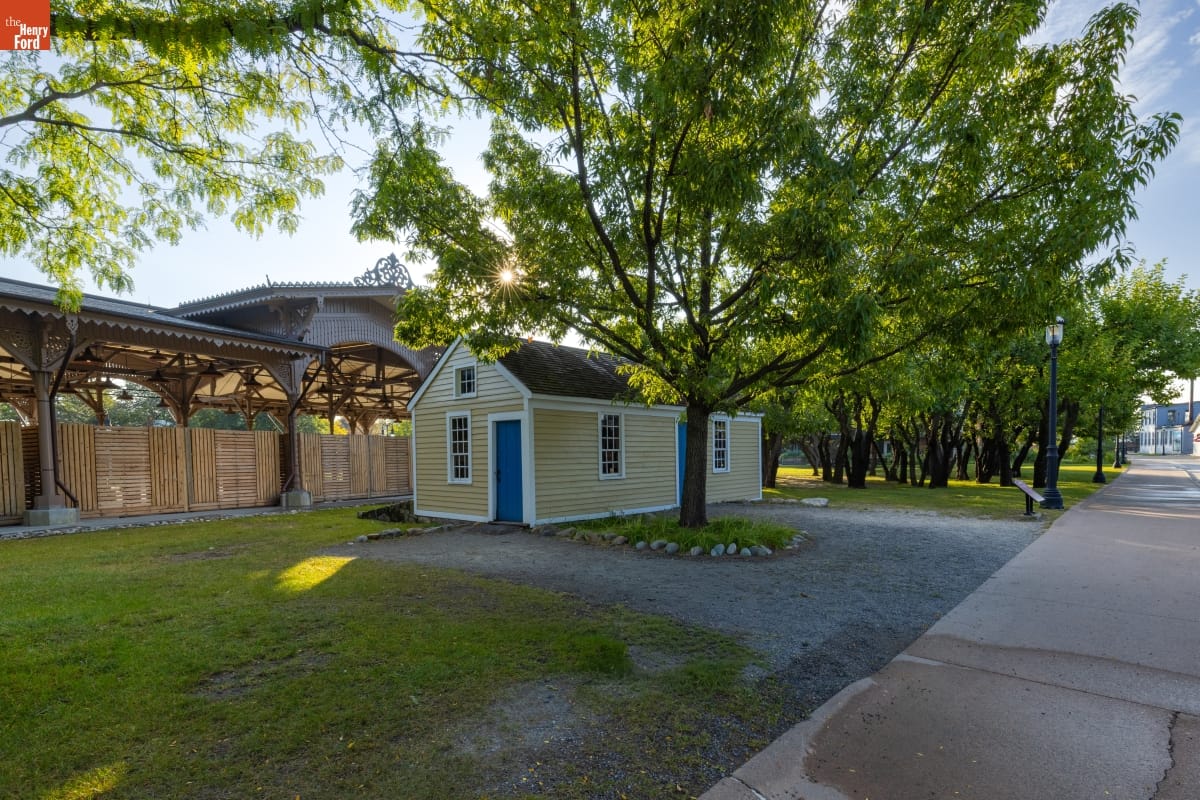
Hanks Silk Mill
As America was taking its first steps towards industrialization, the Hanks family of Mansfield, Connecticut, made early attempts to mechanize the production of silk thread. Rodney Hanks and his nephew Horatio Hanks built this mill in 1810. It was the first silk mill in America, producing some of the first silk with machines that were powered by a waterwheel.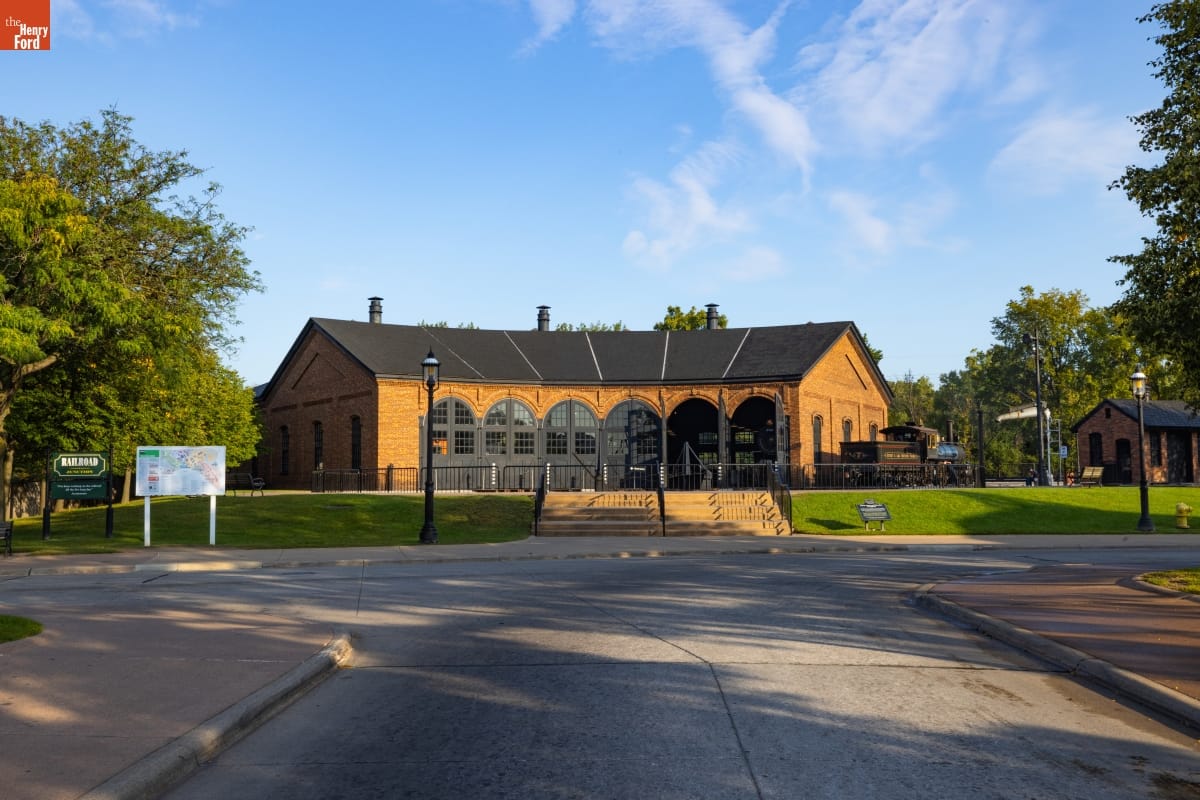 Artifact
Detroit Toledo & Milwaukee Roundhouse
Steam locomotives required constant maintenance from an army of skilled and unskilled workers, and the roundhouse is where that work took place. This roundhouse was built in 1884 in Marshall, Michigan, for the Detroit, Toledo & Milwaukee Railroad. Today it services the locomotives and equipment of Greenfield Village's Weiser Railroad.