
Armchair Used by Martin Luther King, Jr. in the Jackson Home, Selma, Alabama
THF804175 / Armchair Used by Martin Luther King, Jr. in the Jackson Home, Selma, Alabama / view
01
Artifact Overview
On March 15, 1965, Rev. Dr. Martin Luther King Jr. and several of his lieutenants gathered in the Selma, Alabama, home of Dr. Sullivan and Richie Jean Sherrod Jackson to watch President Lyndon Johnson address the nation. Dr. King sat in this chair as President Johnson declared federal protection for Black voters. That support would become the Voting Rights Act of 1965.
Artifact Details
Artifact
Chair (Furniture form)
Date Made
circa 1962
Creators
Place of Creation
Location
at Greenfield Village in Dr. Sullivan & Mrs. Richie Jean Sherrod Jackson Home
Object ID
2023.50.76.1
Credit
From the Collections of The Henry Ford.
Material
Linen (Material)
Cotton (Fiber)
Metal
Wood (Plant material)
Color
Multicolored
Dimensions
Height: 30.5 in
Width: 28.5 in
Length: 32.75 in
Inscriptions
main chair below cushion:
Globe / furniture / [company logo]
Keywords |
|---|
02
Related Artifacts
 Artifact
Dr. Sullivan & Mrs. Richie Jean Sherrod Jackson Home
The home of Dr. Sullivan and Richie Jean Jackson, originally located in Selma, Alabama, is a Civil Rights Movement landmark. The home served as a refuge where Dr. Martin Luther King, Jr. and other leaders worked, collaborated, strategized, and planned the 1965 Selma-to-Montgomery marches. These marches led to the signing of the Voting Rights Act on August 6, 1965.
03
Related Content
 Set
SetJackson Home: The House by the Side of the Road
- 18 Artifacts
The Jackson Home, originally located in Selma, Alabama, provided refuge and solace for Dr. Martin Luther King Jr. and others who worked, collaborated, strategized, and planned the Selma-to-Montgomery marches of 1965. The marches led to the signing of the Voting Rights Act on August 6, 1965, enshrining voting equality for all Americans as law.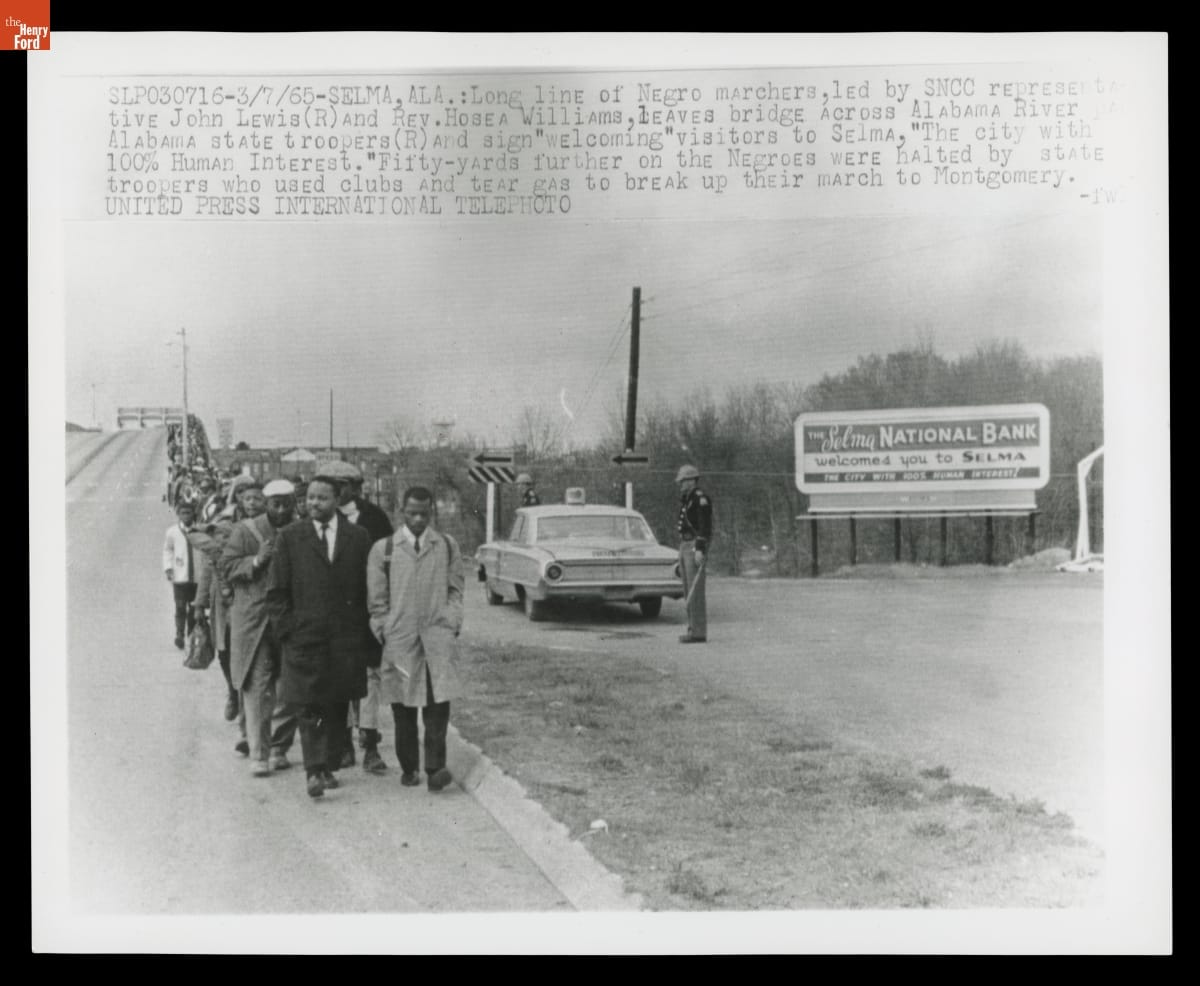 Set
SetThe Long March to Voting Rights
- 24 Artifacts
In 1965, all eyes turned to Selma, Alabama, as the next stage in the fight for civil rights. Dr. Martin Luther King, Jr., the Student Nonviolent Coordinating Committee, the Southern Christian Leadership Conference, and other activists planned a series of marches from Selma to Montgomery to draw attention to the continued struggle for voting rights for Black Americans.