
IBM Selectric Typewriter, 1961
THF802461 / IBM Selectric Typewriter, 1961
01
Artifact Overview
The 1961 IBM Selectric typewriter was one of the most popular electric typewriters ever produced. On a technological level, the Selectric anticipated computer desktop publication with its interchangeable "type balls." Industrial designer Eliot Noyes created the Selectric’s sleek, die-cast case in eight color options. Now considered a legendary design, this machine visually modernized the office landscape.
Artifact Details
Artifact
Electric typewriter
Date Made
1961
Place of Creation
Creator Notes
Designed in 1961 by Eliot Noyes. Produced by International Business Machines Corporation (IBM) of Armonk, New York. Sold by Ron's Office Equipment, Roswell, New Mexico.
Location
Not on exhibit to the public.
Object ID
2024.104.5
Credit
From the Collections of The Henry Ford. Gift of The Liliane and David M. Stewart Collection, donated to the Stewart Collection by the George R. Kravis II Collection.
Material
Aluminum (Metal)
Plastic
Color
Red
Black (Color)
Silver (Color)
Dimensions
Height: 6.75 in
Width: 18.5 in
Length: 14 in
Inscriptions
on top and on back:
IBM / SELECTRIC
on side:
RON'S OFFICE EQUIPMENT / "Service is our Specialty" / 127 W. 4th St. Roswell, NM 88201 / Phone 622-0756
Keywords |
|---|
02
Related Content
 Set
SetSelections from the Stewart Collection
- 12 Artifacts
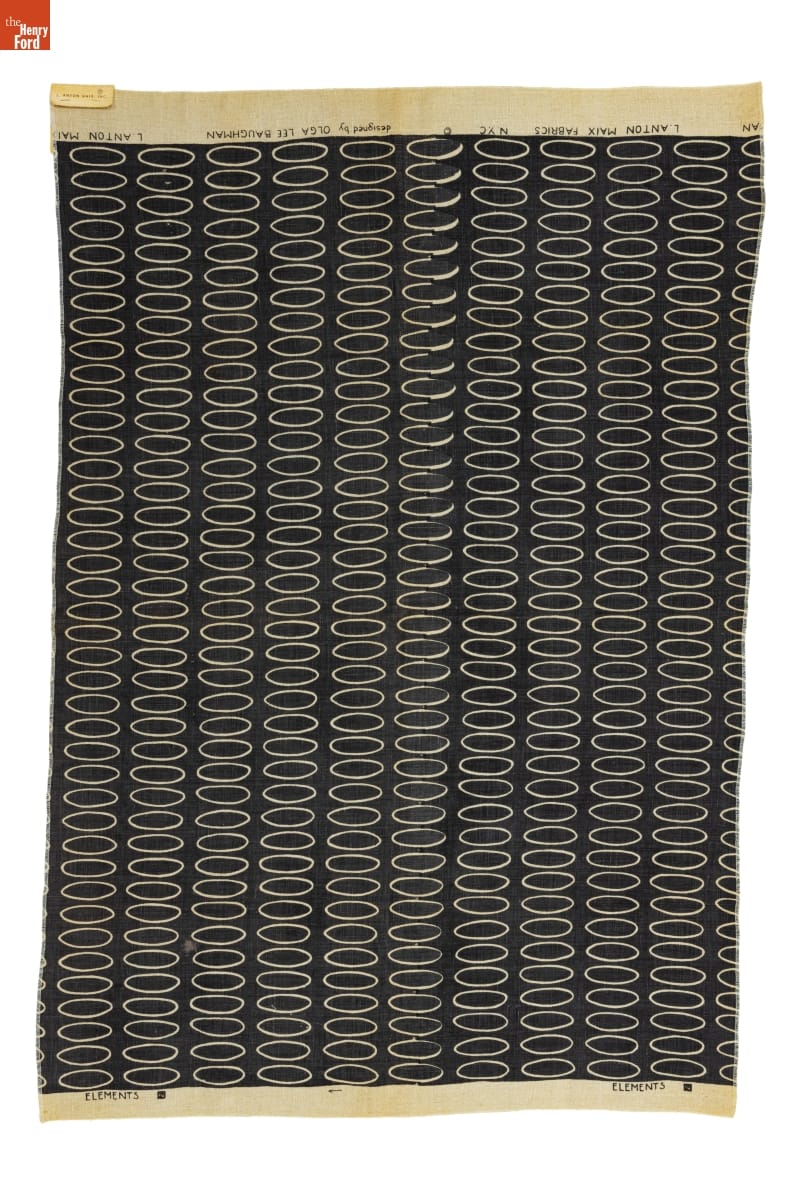
Olga Lee studied interior and industrial design at the prestigious Chouinard Art Institute in Los Angeles, where she met furniture designer Milo Baughman. They married in 1949 and divorced in 1954. She established herself as a leading designer and her designs for New York-based textile studio L. Anton Maix were especially successful. This variation of her "Elements" design features repeating, irregular ovals on linen. article
A Motherlode of Design: Acquisition of the Stewart Collection
In August 2024, a monumental design collection arrived at the doors of The Henry Ford after an international journey nearing 600 miles. The collection was donated by the Stewart Program for Modern Design in Montreal, Canada, and represents decades of collecting by founder and philanthropist Liliane Stewart alongside her incredible staff, especially curator David Hanks and registrar Angéline Dazé.