
Kennedy Presidential Limousine
| Written by | |
|---|---|
| Published | 12/15/2025 |

Kennedy Presidential Limousine
| Written by | |
|---|---|
| Published | 12/15/2025 |
What was the car's make and model?
Why was it called "X-100"?
Who built the car?
What did the car cost to build?
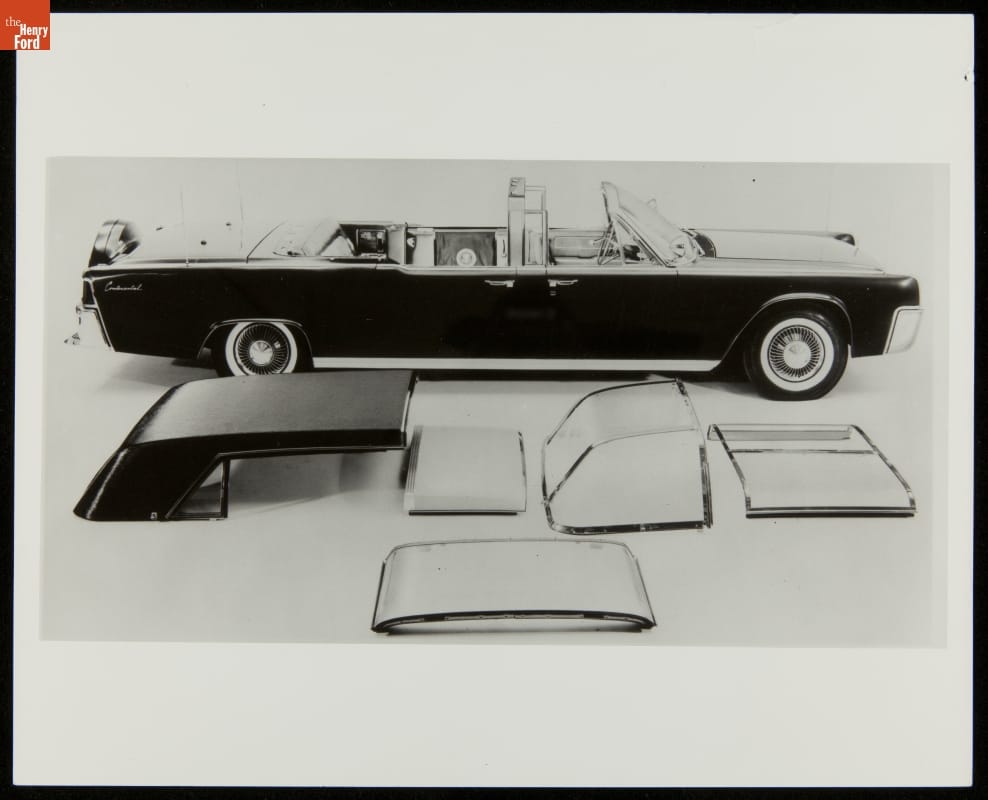
What were some of the car's special features?
Special features on the 1961 limousine included:
- Removable steel and transparent plastic roof panels
- Hydraulic rear seat that could be raised 10½" to elevate the president
- Massive heating and air conditioning system with auxiliary blowers and 2 control panels
- Dark blue broadcloth lap robes with gray plush lining and hand-embroidered presidential seals in special door pockets
- Four retractable steps for Secret Service agents
- Two steps on rear bumper for additional agents
- Flashing red lights, siren
- Blue Mouton rug in rear
- Indicator lights when door was ajar or steps out
- Two flagstaffs, two spotlights
- Auxiliary jump seats for extra passengers
- Two radio telephones
- Interior floodlights
In 1963 the car's grille was replaced by one from a 1962 model and 'sombrero'-style wheel covers like those of the 1957 Lincoln Premiere were added. Trunk lid grab handles for Secret Service agents were affixed as well.
What happened to the car after President Kennedy's assassination?
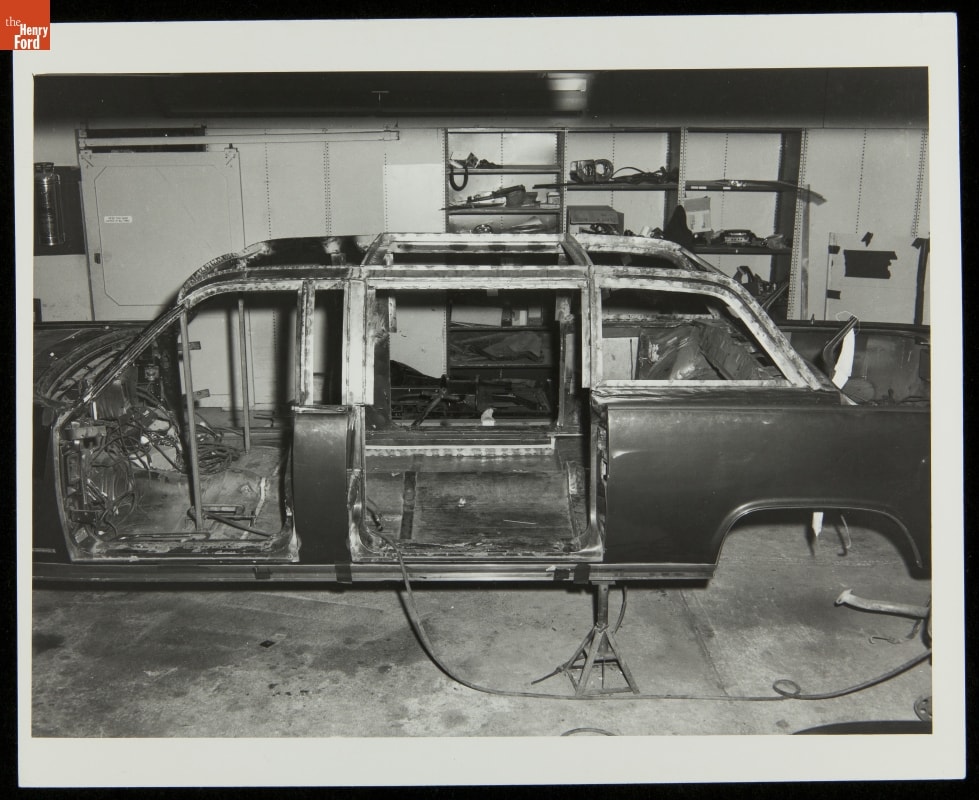
What was "Project D-2" or the "Quick Fix"?
Following the assassination of President Kennedy, a committee was formed (originally comprised of thirty people) of six people representing the Secret Service, Army Materials Research Center, Hess & Eisenhardt and Pittsburgh Plate Glass Company. The White House approved a plan for a revamp of the X-100 around December 12, 1963. Work was completed May 1, 1964 and extensive testing was performed in Cincinnati, Ohio and Dearborn, Michigan before the car was delivered to the White House in June. Costs have been estimated to exceed $500,000 and were shared by Ford Motor Company, some Ford suppliers and the federal government.
Basic elements of the revamp included:
- Complete re-armoring of rear passenger compartment
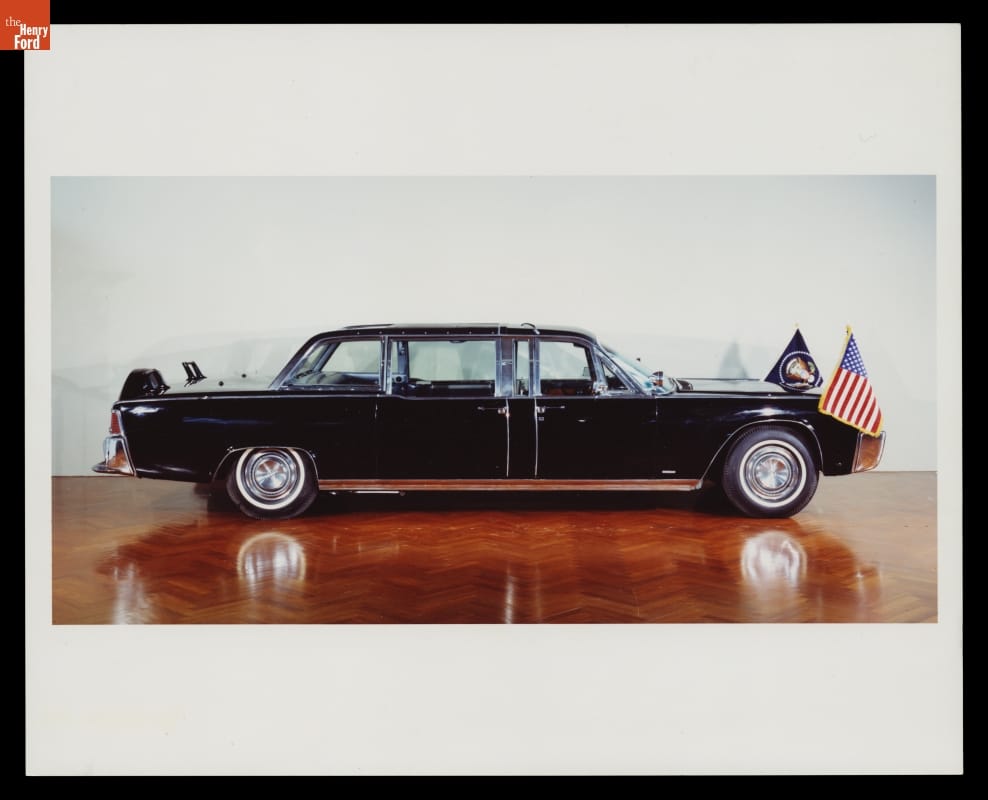
- Addition of permanent non-removable top ("greenhouse") to accommodate transparent armor
- Replacement of engine with hand-built, high compression unit, providing approximately 17 percent more power
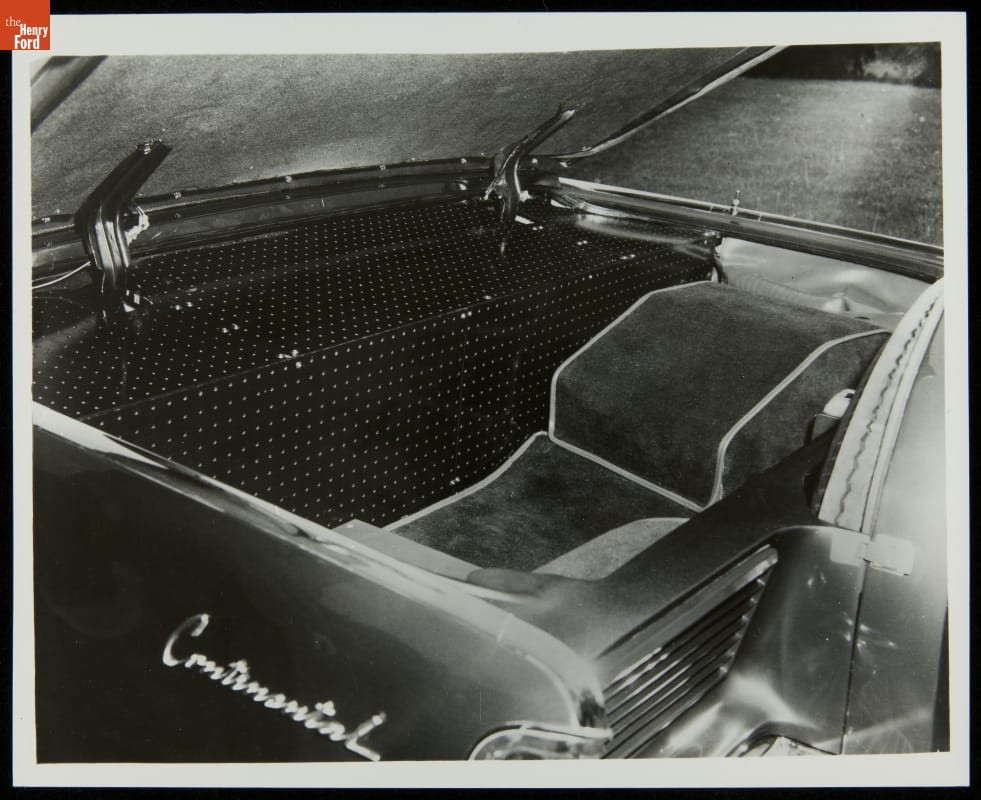
- Addition of second air conditioning unit in trunk
- Addition of certain electronic communication devices
- Reinforcement of some mechanical and structural components, e.g. front wheel spindles and door hinges, to accommodate additional weight
- Complete re-trimming of rear compartment, eliminating damage resulting from the assassination
- New paint treatment, "regal Presidential Blue Metallic with silver metallic flakes that glitter under bright lights and sunshine" (May 1, 1964 report by Willard C. Hess of Hess & Eisenhardt)
What was "Project R-2"?
The X-100 underwent major modifications again in January 1967. These were also completed by Hess & Eisenhardt and included:
- Revision of air conditioning system for greater cooling capacity
- Conversion of right rear door, which had been 1 13/16” bullet-proof glass, to drop-glass actuated by heavy duty power regulator assembly
- Reinforcement of deck lid with fiberglass to accommodate additional weight
- Stripping of entire car to bare metal in order to remove dents and repaint body
- Minor changes, such as addition of roof mounted grab handles
In the following ten years, other minor modifications were made as well. Front bumper guards were added and their built-in red flasher lights were replaced with red lights in the grille. During President Nixon’s stay in office, the large one-piece glass roof was replaced with one with a smaller glass area and a hinged panel. This would permit the president to stand during parades.
When was the car retired?
Although other presidential parade cars were built in 1968 and 1972, it was used occasionally by Presidents Johnson, Nixon, Ford and Carter. The X-100 remained in service until early 1977. The car is now exhibited to the public at the Henry Ford Museum of American Innovation in Dearborn, Michigan.
Related Artifacts
Lincoln Continental Presidential Limousine, Customized with Convertible Roof Options, 1961
1961 Lincoln Continental Presidential Limousine, Rebuilding Body during "Quick Fix," 1964
1961 Lincoln Continental Presidential Limousine on Exhibit in Henry Ford Museum, 1981
1961 Lincoln Continental Presidential Limousine Trunk after "Quick Fix," 1964
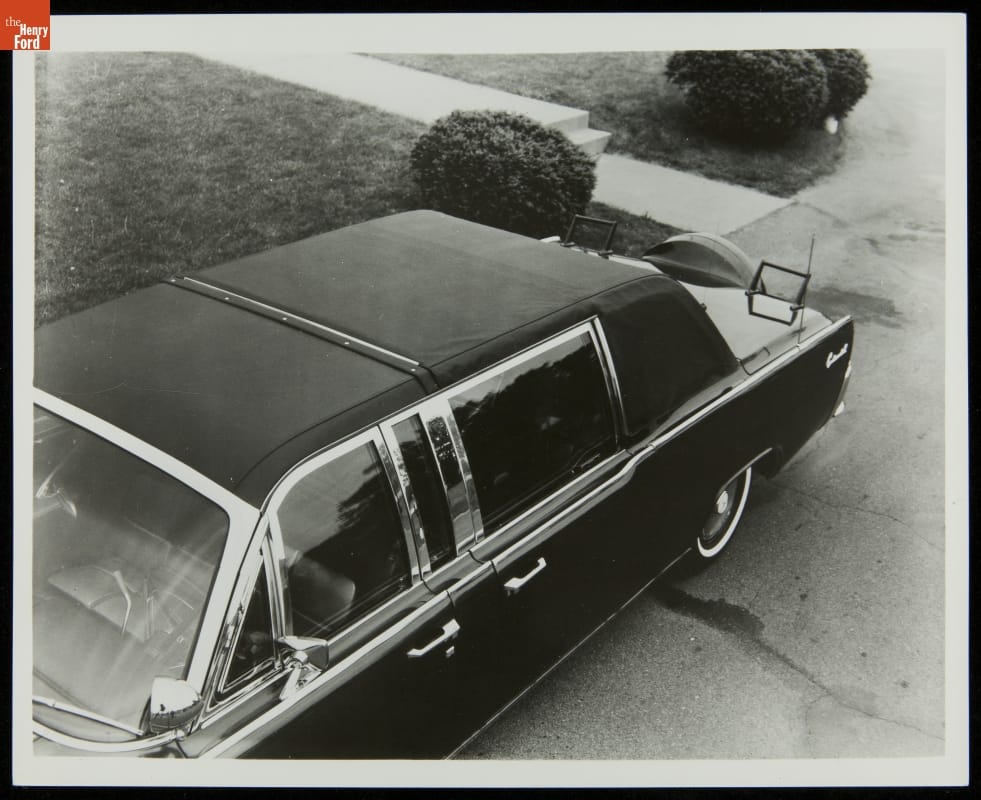
1961 Lincoln Continental Presidential Limousine with Sunshade for Non-Parade Use, after "Quick Fix," 1964
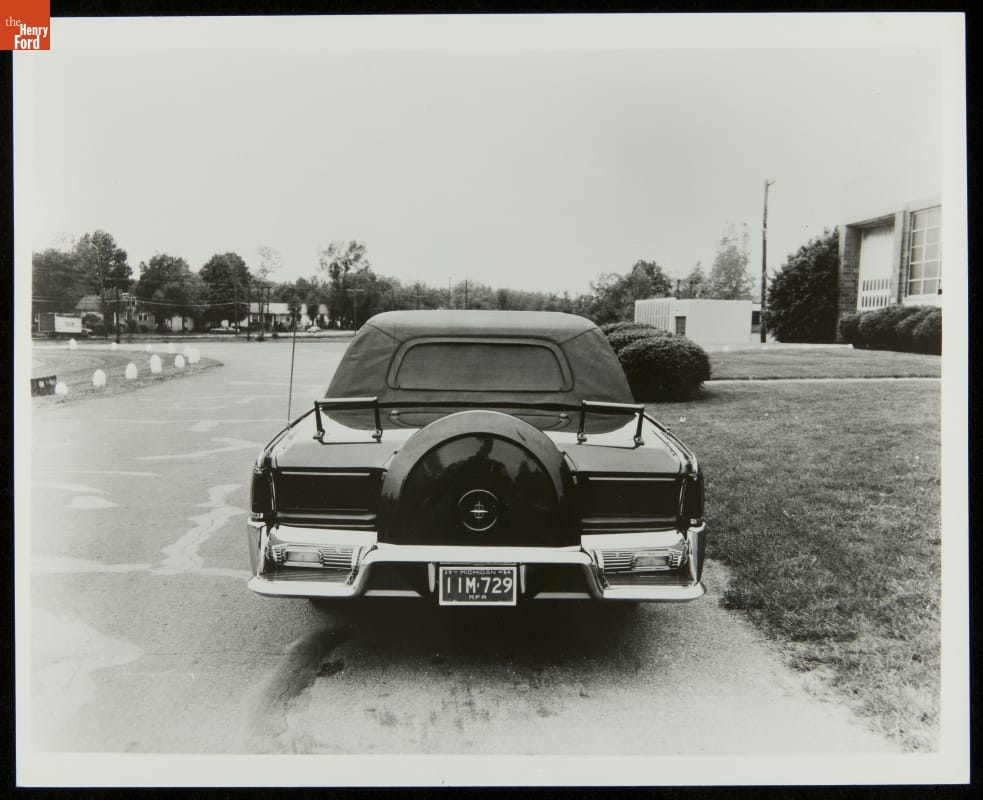
1961 Lincoln Continental Presidential Limousine with Sunshade after "Quick Fix," 1964
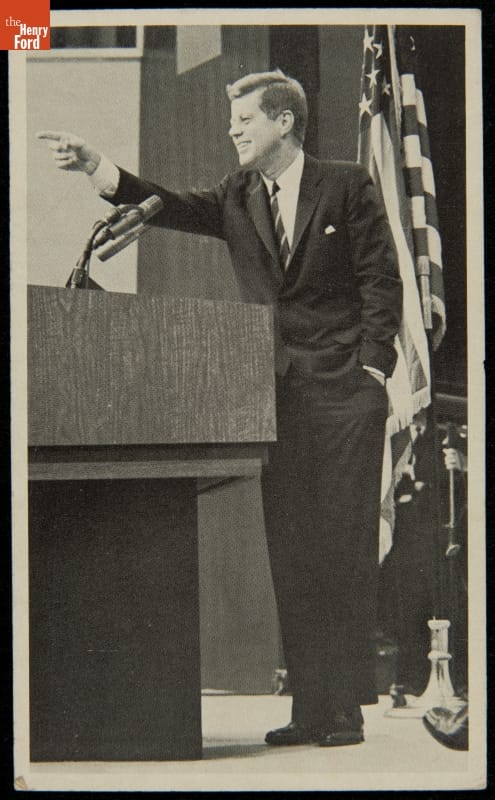
Souvenir Card, President John F. Kennedy at Televised Press Conference, April 3, 1963
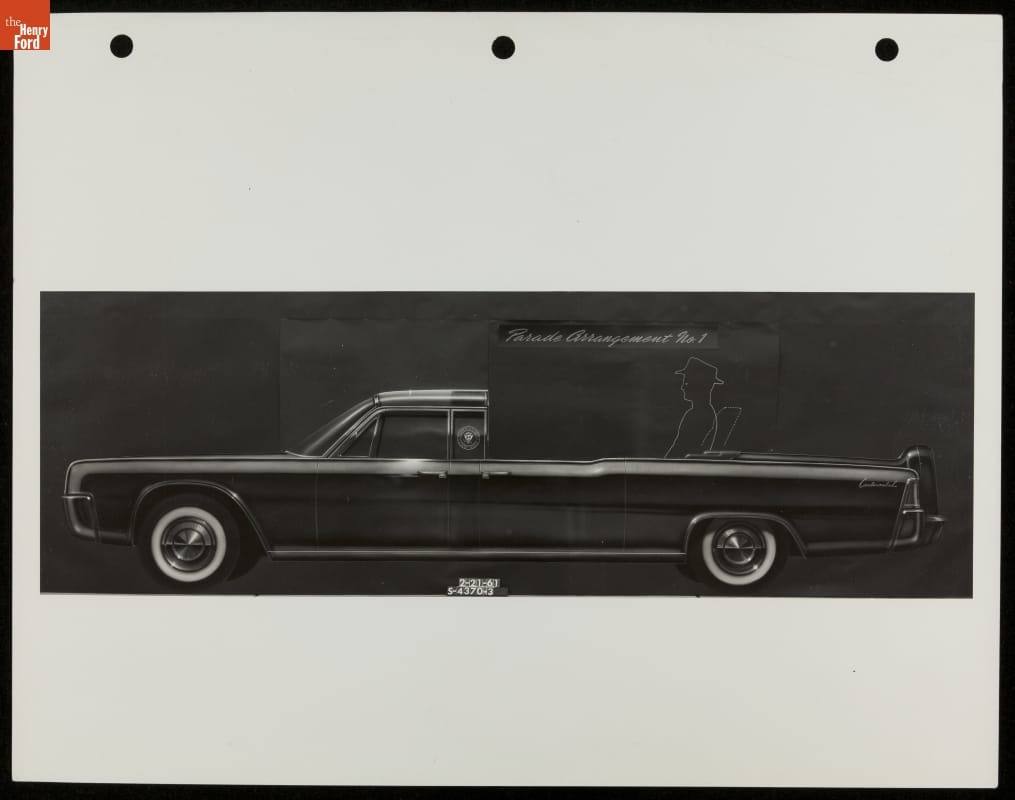
Design Drawing for President John F. Kennedy's 1961 Lincoln Continental Limousine
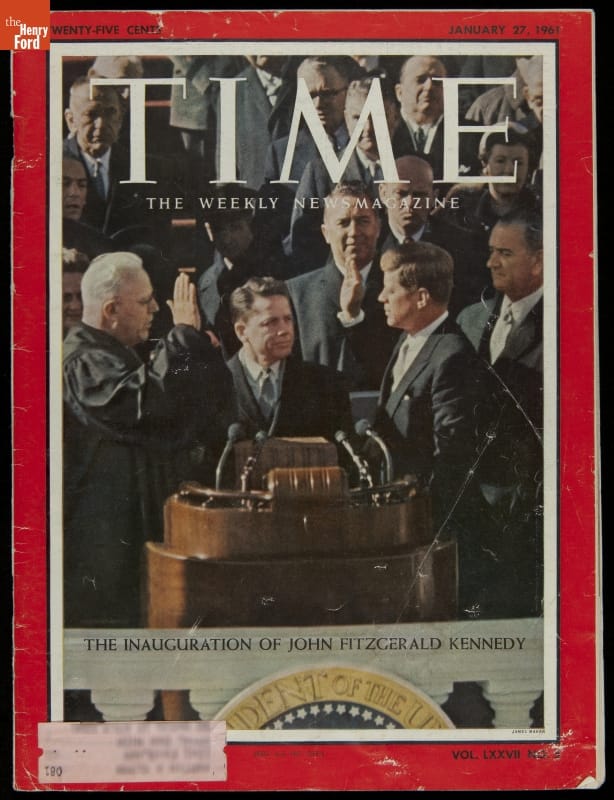
Time Magazine for January 27, 1961, "The Inauguration of John Fitzgerald Kennedy"
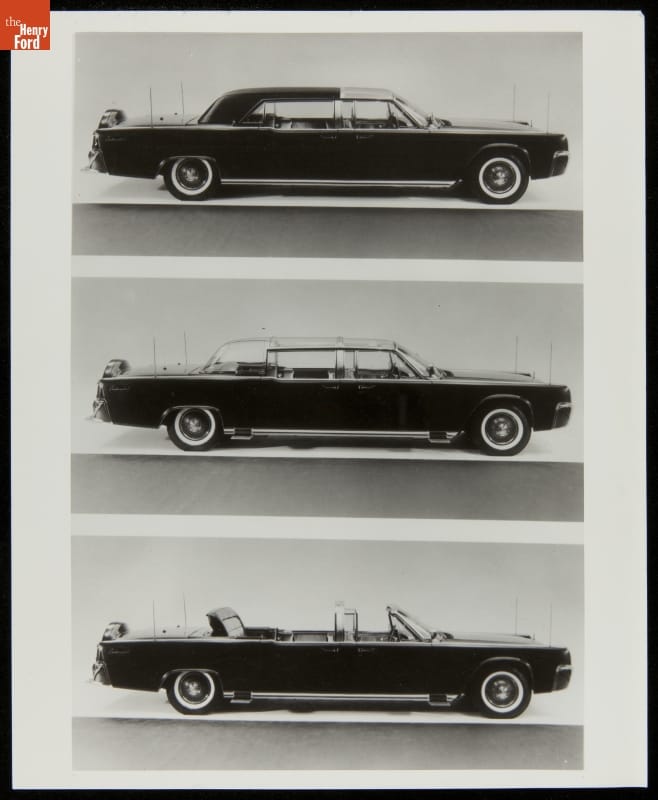
1961 Lincoln Continental Presidential Limousine with Customized Convertible Roof Options, 1961
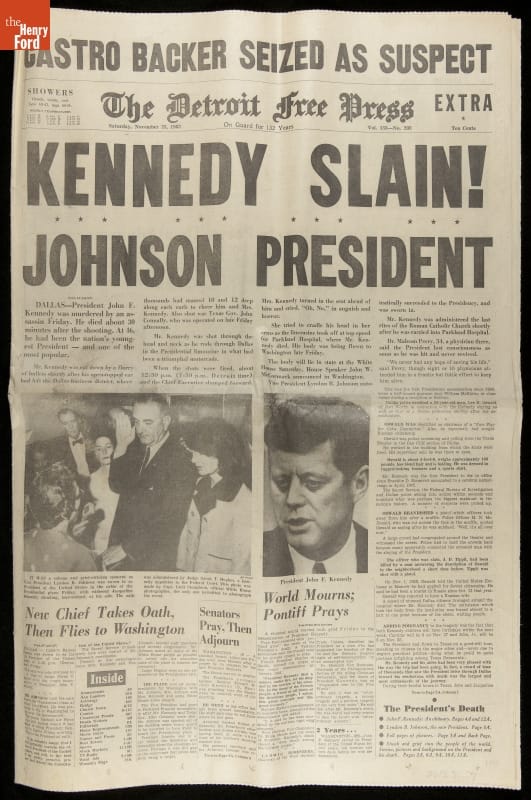
Detroit Free Press Newspaper for November 23, 1963, "Kennedy Slain! Johnson President"
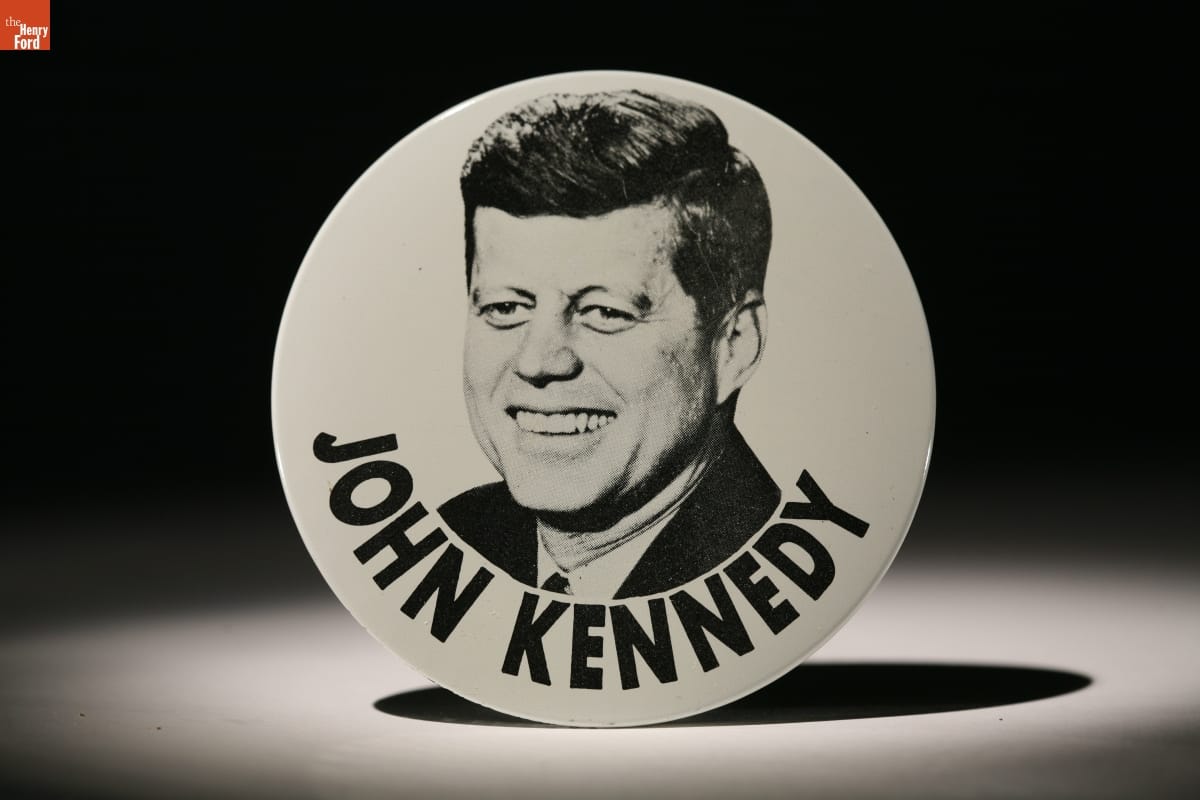
John F. Kennedy Political Campaign Button, 1960
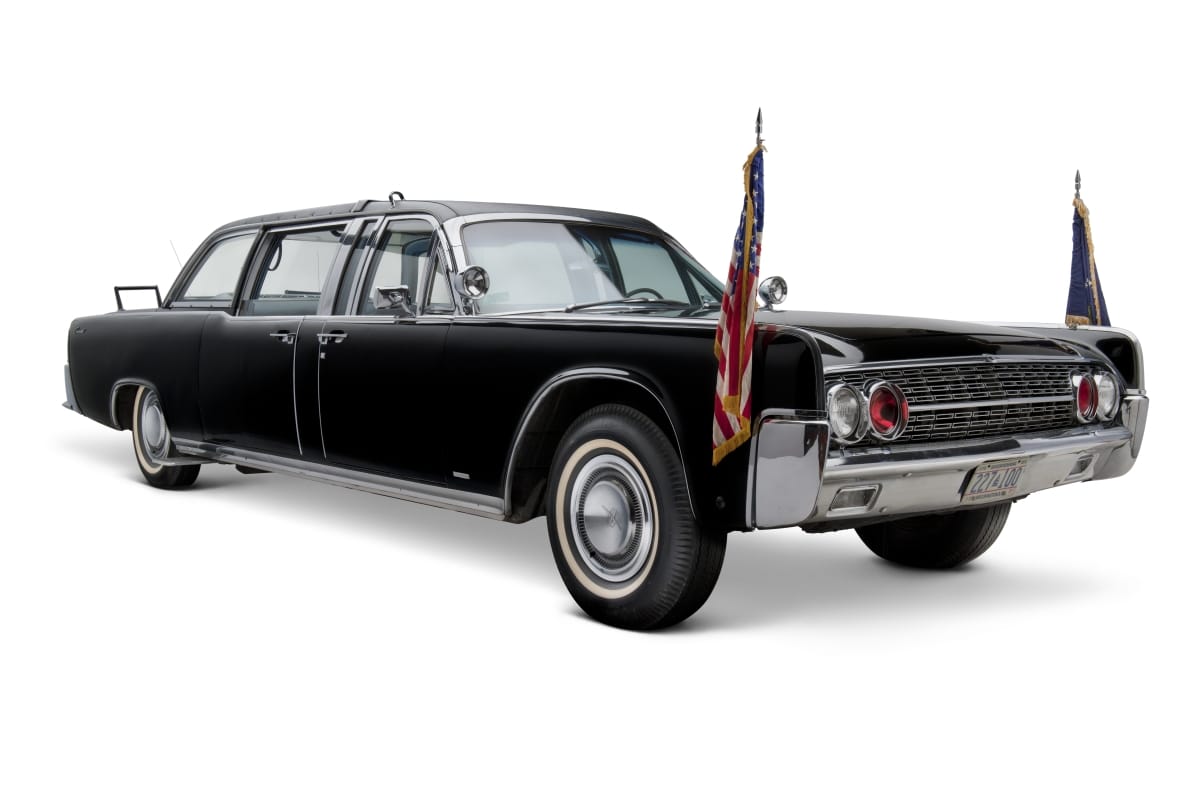
1961 Lincoln Continental Presidential Limousine Used by John F. Kennedy
Keywords | |
|---|---|
Themes |