
Lesson: Ground Effects, Innovations and Safety
Share
share
Lesson 5 of "Science, Life Skills and Innovations in American Automobile Racing"
THF90712
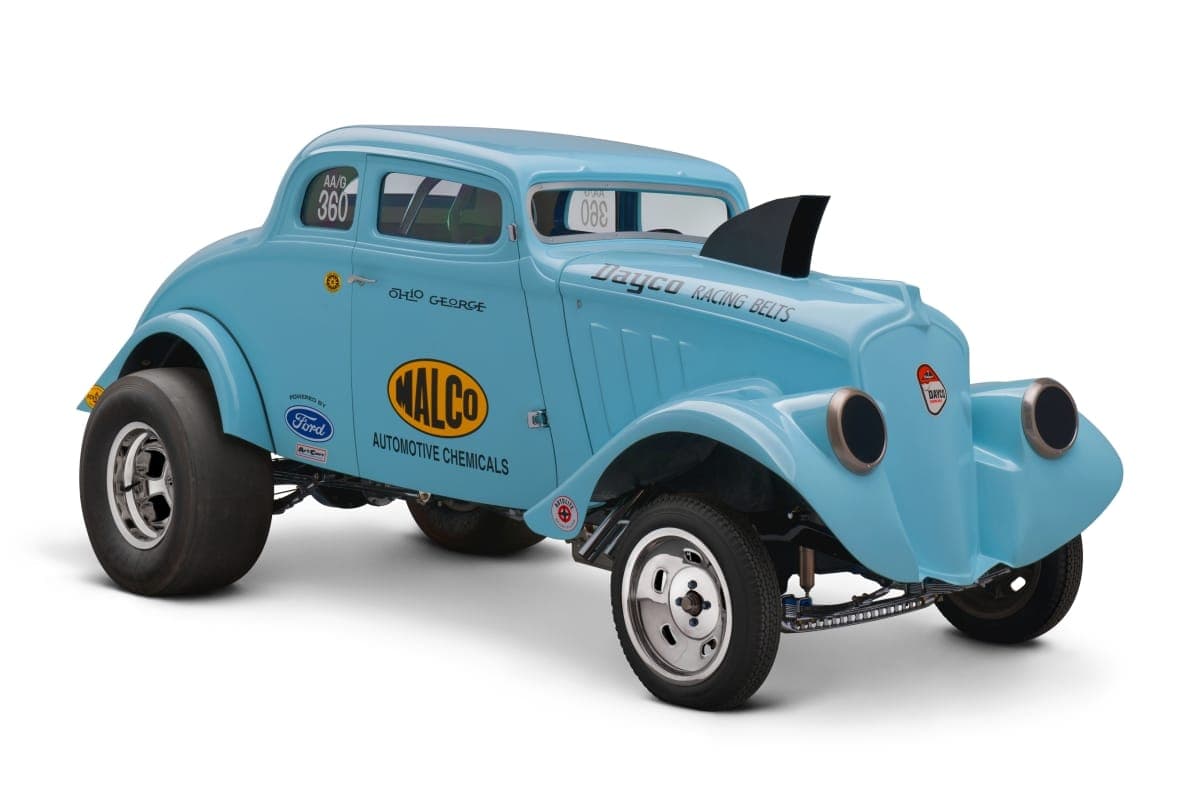
1933 Willys Drag Racer
When machinist George Montgomery started racing in 1953, all drag racers were amateurs with "real jobs" supporting their hobby. This car helped change all that. Montgomery bought an old Willys in 1958 and built a dragster so successful that promoters started paying him to run at drag strips nationwide. In 1966, Montgomery became one of drag racing's first full-time professional drivers.
View ArtifactTHF109775
Henry Ford Driving the 999 Race Car Against Harkness at Grosse Pointe Racetrack, 1903
Image originally published in the May 1903 issue of Munsey's Magazine captioned, "At full speed a trial brush between Messers [Henry] Ford (car to the left of the picture) and [Harry] Harkness." Less than a month before Ford Motor Company's founding, Henry Ford was still interested in automobile racing and the benefits to be gained in experimenting with parts of chassis, bodies, and engines that could be integrated into his future automobiles. Ford used trial races like this to test his experimental ideas.
View ArtifactTHF58671
Lyn St. James Suited Up in Racecar Giving a "Thumbs-Up," 2008
A true innovator in her own right, Lyn St. James's success stemmed from her drive and determination. She secured corporate sponsors required to race in international events and not only became the first woman to win the Indianapolis 500 Rookie of the Year, but also became the only woman to win an IMSA GT race driving solo at Watkins Glen in 1985.
View ArtifactTHF90128
1987 Ford Thunderbird Stock Car, Raced by Bill Elliott
Bill Elliott set NASCAR's all-time speed record with this car when he qualified for the 1987 Winston 500 at Talladega at 212.809 miles per hour. By the 1980s, "stock cars" only looked stock. Underneath this Thunderbird sheet metal is a purpose-built steel tube frame, racing suspension and brakes, and a racing engine that no Ford dealer ever sold.
View ArtifactTHF68313
Start of the Indianapolis 500 Race, 1937
In 1937, the 25th running of the Indianapolis 500 saw 33 entrants and one of the closest margins of victory: 2.16 seconds for Wilbur Shaw. Note that these high-powered race cars still required a two-man team of a driver and a riding mechanic to keep the cars running at top speed.
View ArtifactTHF90258
1984 March 84C-Cosworth Race Car
Tom Sneva set the fastest qualifying lap at the 1984 Indianapolis 500 with this car, but a broken rear suspension forced him out early during the actual race. The car's front and rear wings and underbody ground effects represent the aerodynamic advances that increasingly shaped race cars in the 1970s -- and continue to do so today.
View Artifact

