
Lesson: Urbanization
Share
share
Lesson 2 of "Early 20th-Century Migration"
THF96452
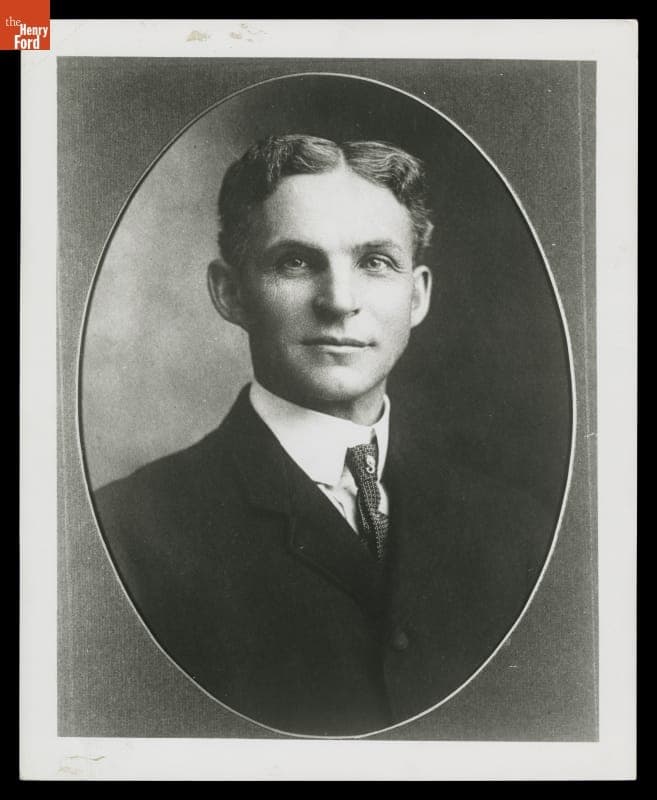
First Official Ford Motor Company Portrait of Henry Ford, 1904
Henry Ford sat for the official Ford Motor Company portrait in 1904. The company was his third. Ford had success in building cars, but his first company failed and he was forced out of the second. By the time this portrait was taken, Ford Motor Company had survived its first year and was selling its first cars, the Model A.
View ArtifactTHF94858
Crowd of Applicants outside Highland Park Plant after Five Dollar Day Announcement, January 1914
Ford workers disliked the new assembly line methods so much that by late 1913, labor turnover was 380 percent. The company's announcement to pay five dollars for an eight-hour day compared to the previous rate of $2.34 for a nine-hour day made many workers willing to submit to the relentless discipline of the line in return for such high wages.
View ArtifactTHF38312
Hay Wagon Coming up from a Meadow, Flushing, New York, circa 1900
This photographic negative gives a glimpse of farm life circa 1900. Most farms were family operations and everyone, including children, had a job to do. People and horses were the primary power sources for most farm work. But technology, like electricity, was becoming more widely available, even in rural in farmhouses.
View ArtifactTHF72058
Fordson Tractor, 1917-1918, Used by Luther Burbank
The Fordson tractor, manufactured by Henry Ford and Son, Inc., was the first lightweight, mass-produced tractor that was affordable to the average farmer. Through this and other efforts, Henry Ford sought to relieve farmers of the burden of heavy labor. Ford gave this Fordson, the first production model, to fellow innovator Luther Burbank, creator of hundreds of new plant varieties.
View ArtifactTHF72059
Time Clock, Used by the Shelby Division of Copperweld Corporation
The Shelby Division of Copperweld, in Shelby, Ohio, used this time recording punch clock. The numbered wheel can be rotated, which activates the time recording mechanism, causing the employee number and time to be printed on paper tape fixed to the drum at the rear of the mechanism. The clock is an electrically activated slave unit connected to a master clock. Such time clocks both regulated employees' workdays and helped insure accurate calculation of their pay.
View ArtifactTHF68734
Mattox Family Home
Amos and Grace Mattox -- descended from enslaved African Americans -- raised their two children in this rural Georgia farmhouse during the Great Depression of the 1930s. Amos farmed, cut hair, made shoes, and preached at the local church, while Grace sewed, canned, cooked, and helped needy neighbors. Although life was hard, the family proudly affirmed that there was "always enough."
View ArtifactTHF18671
Highland Park Plant Engine- Generator, 1915-1916
Ford's Model T mass production system would not have been practical without electricity; by 1919 nine of these Ford-designed hybrid internal combustion/steam engines generated the power needed by the Highland Park plant's assembly lines and associated machinery. By 1926 the engines were rendered obsolete when electricity was fed from the power plant at Ford's River Rouge plant ten miles away.
View Artifact

