
Online Aviation Collection
Share
share
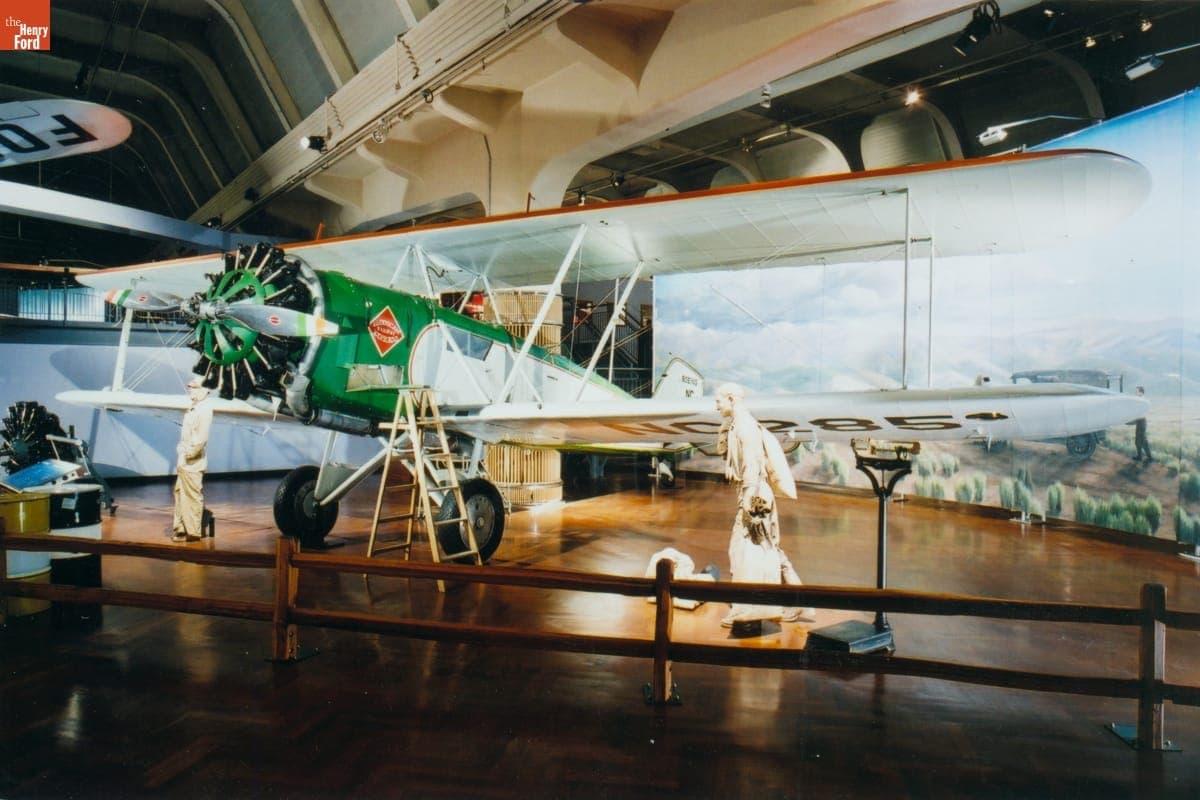
THF39667
1927 Boeing Model 40-B2 Biplane
Subsidies from the federal government for air mail encouraged the development of improved long-distance aircraft like the Boeing 40. The key to the Boeing's success was the use of a lightweight air-cooled radial engine which allowed it to carry the mail and two paying passengers. This plane flew between Chicago and San Francisco, making 12 fuel stops along the way.
View ArtifactTHF2638
1939 Douglas DC-3 Airplane
The Douglas DC-3, introduced in 1936, carried 21 passengers -- enough to fly profitably without relying on subsidies from air mail contracts. While the DC-3's economy appealed to airlines, its rugged construction and comfortable cabin attracted passengers. More than any other aircraft, the DC-3 ushered in the era of dependable, long-distance air travel in the United States.
View ArtifactTHF80584
Wright Family Writing Desk, 1890-1900
This ladies' writing desk is the starting point for a transportation revolution. On May 30, 1899, a Dayton, Ohio, bicycle shop owner named Wilbur Wright sat down at his sister's desk and wrote a letter to the secretary of the Smithsonian Institution. Wilbur's letter sparked a series of events that led to the world's first powered airplane flight in 1903.
View Artifact

