
Shearing the Merino Sheep of Firestone Farm
Share
share
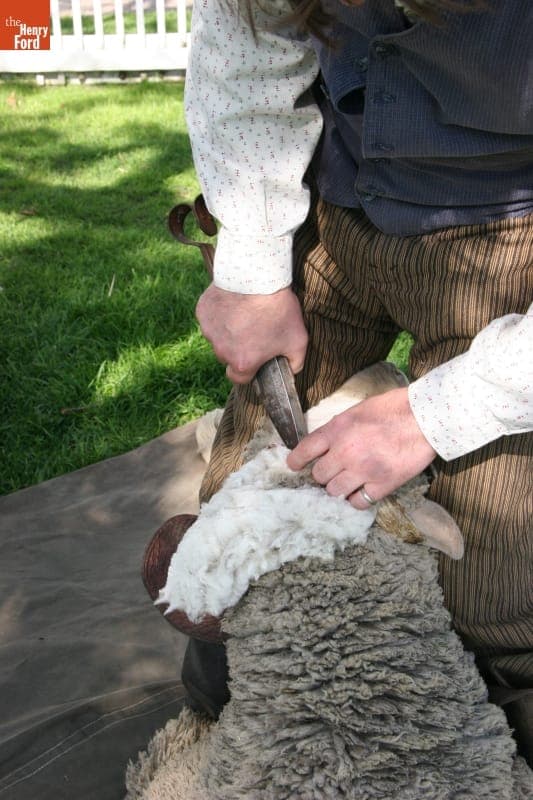
In springtime at Greenfield Village, presenters carefully shear sheep by hand, using blade shears. They demonstrate the same tools and techniques used by shearers on Benjamin Firestone’s farm in 1880s Columbiana County, Ohio.
THF119123
Demonstrating Blade-Shearing of Merino Sheep in Greenfield Village, April 2010
Heavy coats of fine wool made Merino sheep a popular breed among nineteenth-century wool producers. Every spring, shearers carefully navigated blade shears to remove each sheep's thick fleece -- a process that could take several hours. More than a century later, presenters demonstrate this labor-intensive blade-shearing process at Firestone Farm in Greenfield Village.
View ArtifactTHF119125
Demonstrating Blade-Shearing of Merino Sheep in Greenfield Village, April 2010
Heavy coats of fine wool made Merino sheep a popular breed among nineteenth-century wool producers. Every spring, shearers carefully navigated blade shears to remove each sheep's thick fleece -- a process that could take several hours. More than a century later, presenters demonstrate this labor-intensive blade-shearing process at Firestone Farm in Greenfield Village.
View ArtifactTHF119131
Demonstrating Blade-Shearing of Merino Sheep in Greenfield Village, April 2010
Heavy coats of fine wool made Merino sheep a popular breed among nineteenth-century wool producers. Every spring, shearers carefully navigated blade shears to remove each sheep's thick fleece -- a process that could take several hours. More than a century later, presenters demonstrate this labor-intensive blade-shearing process at Firestone Farm in Greenfield Village.
View ArtifactTHF119133
Demonstrating Blade-Shearing of Merino Sheep in Greenfield Village, April 2010
Heavy coats of fine wool made Merino sheep a popular breed among nineteenth-century wool producers. Every spring, shearers carefully navigated blade shears to remove each sheep's thick fleece -- a process that could take several hours. More than a century later, presenters demonstrate this labor-intensive blade-shearing process at Firestone Farm in Greenfield Village.
View ArtifactTHF119134
Demonstrating Blade-Shearing of Merino Sheep in Greenfield Village, April 2010
Heavy coats of fine wool made Merino sheep a popular breed among nineteenth-century wool producers. Every spring, shearers carefully navigated blade shears to remove each sheep's thick fleece -- a process that could take several hours. More than a century later, presenters demonstrate this labor-intensive blade-shearing process at Firestone Farm in Greenfield Village.
View ArtifactTHF119136
Demonstrating Blade-Shearing of Merino Sheep in Greenfield Village, April 2010
Heavy coats of fine wool made Merino sheep a popular breed among nineteenth-century wool producers. Every spring, shearers carefully navigated blade shears to remove each sheep's thick fleece -- a process that could take several hours. More than a century later, presenters demonstrate this labor-intensive blade-shearing process at Firestone Farm in Greenfield Village.
View ArtifactTHF119137
Demonstrating Blade-Shearing of Merino Sheep in Greenfield Village, April 2010
Heavy coats of fine wool made Merino sheep a popular breed among nineteenth-century wool producers. Every spring, shearers carefully navigated blade shears to remove each sheep's thick fleece -- a process that could take several hours. More than a century later, presenters demonstrate this labor-intensive blade-shearing process at Firestone Farm in Greenfield Village.
View ArtifactTHF119145
Demonstrating Blade-Shearing of Merino Sheep in Greenfield Village, April 2010
Heavy coats of fine wool made Merino sheep a popular breed among nineteenth-century wool producers. Every spring, shearers carefully navigated blade shears to remove each sheep's thick fleece -- a process that could take several hours. More than a century later, presenters demonstrate this labor-intensive blade-shearing process at Firestone Farm in Greenfield Village.
View ArtifactTHF119155
Demonstrating Blade-Shearing of Merino Sheep in Greenfield Village, April 2010
Heavy coats of fine wool made Merino sheep a popular breed among nineteenth-century wool producers. Every spring, shearers carefully navigated blade shears to remove each sheep's thick fleece -- a process that could take several hours. More than a century later, presenters demonstrate this labor-intensive blade-shearing process at Firestone Farm in Greenfield Village.
View ArtifactTHF119184
Demonstrating Blade-Shearing of Merino Sheep in Greenfield Village, April 2010
Heavy coats of fine wool made Merino sheep a popular breed among nineteenth-century wool producers. Every spring, shearers carefully navigated blade shears to remove each sheep's thick fleece -- a process that could take several hours. More than a century later, presenters demonstrate this labor-intensive blade-shearing process at Firestone Farm in Greenfield Village.
View ArtifactTHF119109
Demonstrating Blade-Shearing of Merino Sheep in Greenfield Village, April 2012
Heavy coats of fine wool made Merino sheep a popular breed among nineteenth-century wool producers. Every spring, shearers carefully navigated blade shears to remove each sheep's thick fleece -- a process that could take several hours. More than a century later, presenters demonstrate this labor-intensive blade-shearing process at Firestone Farm in Greenfield Village.
View ArtifactTHF119102
Demonstrating Blade-Shearing of Merino Sheep in Greenfield Village, May 2005
Heavy coats of fine wool made Merino sheep a popular breed among nineteenth-century wool producers. Every spring, shearers carefully navigated blade shears to remove each sheep's thick fleece -- a process that could take several hours. More than a century later, presenters demonstrate this labor-intensive blade-shearing process at Firestone Farm in Greenfield Village.
View ArtifactTHF119171
Lanolin from Merino Sheep Wool on Shearer's Hands, Greenfield Village, April 2010
The skin of Merino sheep secretes an excess of lanolin. Clumps of this protective waxy substance often remain in the fleece after shearing. A warm, soapy wash of the fleece removes lanolin, along with dirt and matted wool, before raw wool is processed into yarn or fabric.
View ArtifactTHF119188
Lanolin in Wool from Merino Sheep-Shearing, Greenfield Village, April 2010
The skin of Merino sheep secretes an excess of lanolin. Clumps of this protective waxy substance often remain in the fleece after shearing. A warm, soapy wash of the fleece removes lanolin, along with dirt and matted wool, before raw wool is processed into yarn or fabric.
View ArtifactTHF119190
Lanolin in Wool from Merino Sheep-Shearing, Greenfield Village, April 2010
The skin of Merino sheep secretes an excess of lanolin. Clumps of this protective waxy substance often remain in the fleece after shearing. A warm, soapy wash of the fleece removes lanolin, along with dirt and matted wool, before raw wool is processed into yarn or fabric.
View ArtifactTHF119110
Merino Sheep in Greenfield Village during Sheep-Shearing Season, April 2008
Nineteenth-century wool producers preferred wrinkled Merino sheep. More skin yielded more wool, which shearers carefully cut away using blade shears. Ultimately, electrically powered mechanical shears became more practical. Shearers operating these much faster tools had difficulty navigating around wrinkles, and farmers began breeding out the now undesirable trait. The Merino sheep at Greenfield Village have been selectively bred back to resemble their wrinkly ancestors.
View ArtifactTHF119103
Merino Sheep Ready for Shearing at Firestone Farm in Greenfield Village, April 2014
Nineteenth-century wool producers preferred wrinkled Merino sheep. More skin yielded more wool, which shearers carefully cut away using blade shears. Ultimately, electrically powered mechanical shears became more practical. Shearers operating these much faster tools had difficulty navigating around wrinkles, and farmers began breeding out the now undesirable trait. The Merino sheep at Greenfield Village have been selectively bred back to resemble their wrinkly ancestors.
View ArtifactTHF119199
Skirting the Wool Fleece from Merino Sheep-Shearing Demonstration, Greenfield Village, April 2010
Heavy, yet fine fleeces made Merino sheep a popular breed among nineteenth-century wool producers. Every spring, after carefully navigating blade shears to cut away each sheep's thick fleece, farmers removed especially dirty or coarse sections of wool. This process, called skirting, helped maximize profit, as farmers and wool buyers negotiated a price per pound of wool based on fleece quality.
View ArtifactTHF119200
Skirting the Wool Fleece from Merino Sheep-Shearing Demonstration, Greenfield Village, April 2010
Heavy, yet fine fleeces made Merino sheep a popular breed among nineteenth-century wool producers. Every spring, after carefully navigating blade shears to cut away each sheep's thick fleece, farmers removed especially dirty or coarse sections of wool. This process, called skirting, helped maximize profit, as farmers and wool buyers negotiated a price per pound of wool based on fleece quality.
View ArtifactTHF119203
Preparing the Wool Fleece for Weighing, Merino Sheep-Shearing Demonstration at Greenfield Village, April 2010
Heavy coats of valuable wool made Merino sheep a popular breed among nineteenth-century wool producers. Every spring, shearers carefully navigated blade shears to remove each sheep's fleece by hand. Shearing as much usable wool as possible was key to maximizing profit, as farmers and wool buyers negotiated a price per pound of wool.
View ArtifactTHF119213
Weighing the Wool Fleece from Merino Sheep-Shearing Demonstration, Greenfield Village, April 2010
Heavy coats of valuable wool made Merino sheep a popular breed among nineteenth-century wool producers. Every spring, shearers carefully navigated blade shears to remove each sheep's fleece by hand. Shearing as much usable wool as possible was key to maximizing profit, as farmers and wool buyers negotiated a price per pound of wool.
View ArtifactTHF119186
Wool from Merino Sheep-Shearing Demonstration, Greenfield Village, April 2010
Heavy, yet fine fleeces made Merino sheep a popular breed among nineteenth-century wool producers. Every spring, after carefully navigating blade shears to cut away each sheep's thick fleece, farmers removed especially dirty or coarse sections of wool. This process, called skirting, helped maximize profit, as farmers and wool buyers negotiated a price per pound of wool based on fleece quality.
View ArtifactTHF119212
Weighing the Wool Fleece from Merino Sheep-Shearing Demonstration, Greenfield Village, April 2010
Heavy coats of valuable wool made Merino sheep a popular breed among nineteenth-century wool producers. Every spring, shearers carefully navigated blade shears to remove each sheep's fleece by hand. Shearing as much usable wool as possible was key to maximizing profit, as farmers and wool buyers negotiated a price per pound of wool.
View ArtifactTHF119187
Wool from Merino Sheep-Shearing Demonstration, Greenfield Village, April 2010
Heavy, yet fine fleeces made Merino sheep a popular breed among nineteenth-century wool producers. Every spring, after carefully navigating blade shears to cut away each sheep's thick fleece, farmers removed especially dirty or coarse sections of wool. This process, called skirting, helped maximize profit, as farmers and wool buyers negotiated a price per pound of wool based on fleece quality.
View ArtifactTHF119121
Blade Shears and Other Equipment for Sheep-Shearing Demonstrations, Greenfield Village, April 2010
Heavy coats of fine wool made Merino sheep a popular breed among nineteenth-century wool producers. Every spring, shearers carefully navigated blade shears to remove each sheep's thick fleece -- a process that could take several hours. More than a century later, presenters demonstrate this labor-intensive blade-shearing process at Firestone Farm in Greenfield Village.
View Artifact

