
*Batteries and Fuel Not Included: The Hop Rod, the World’s First “Powerized” Pogo Stick
| Written by | |
|---|---|
| Published | 9/17/2025 |
*Batteries and Fuel Not Included: The Hop Rod, the World’s First “Powerized” Pogo Stick
| Written by | |
|---|---|
| Published | 9/17/2025 |
Over the years many fun-but dangerous-toys have been marketed to children, only to be discontinued or banned. Remember chemistry sets with toxic materials? Or lawn darts capable of serious injury? Then there was the Hop Rod-a pogo stick powered by a combustion engine. Exploring the history of pogo sticks can help us understand the brief, explosive rise (and fall) of the Hop Rod in the early 1970s.
Early Hopping
Stilts were popular in 19th-century America for entertainment and recreation, and useful as tools for agricultural tasks. Among their early innovators was George H. Herrington, a bookstore owner from Wichita, Kansas, who held at least seven U.S. patents, including for a phonograph, fire escape, and typewriting machine. In February 1881 Herrington received a U.S.patent for his “spring-stilt” - a pair of wooden stilts with compression springs under each foot, intended to help users leap “great distances and heights.”
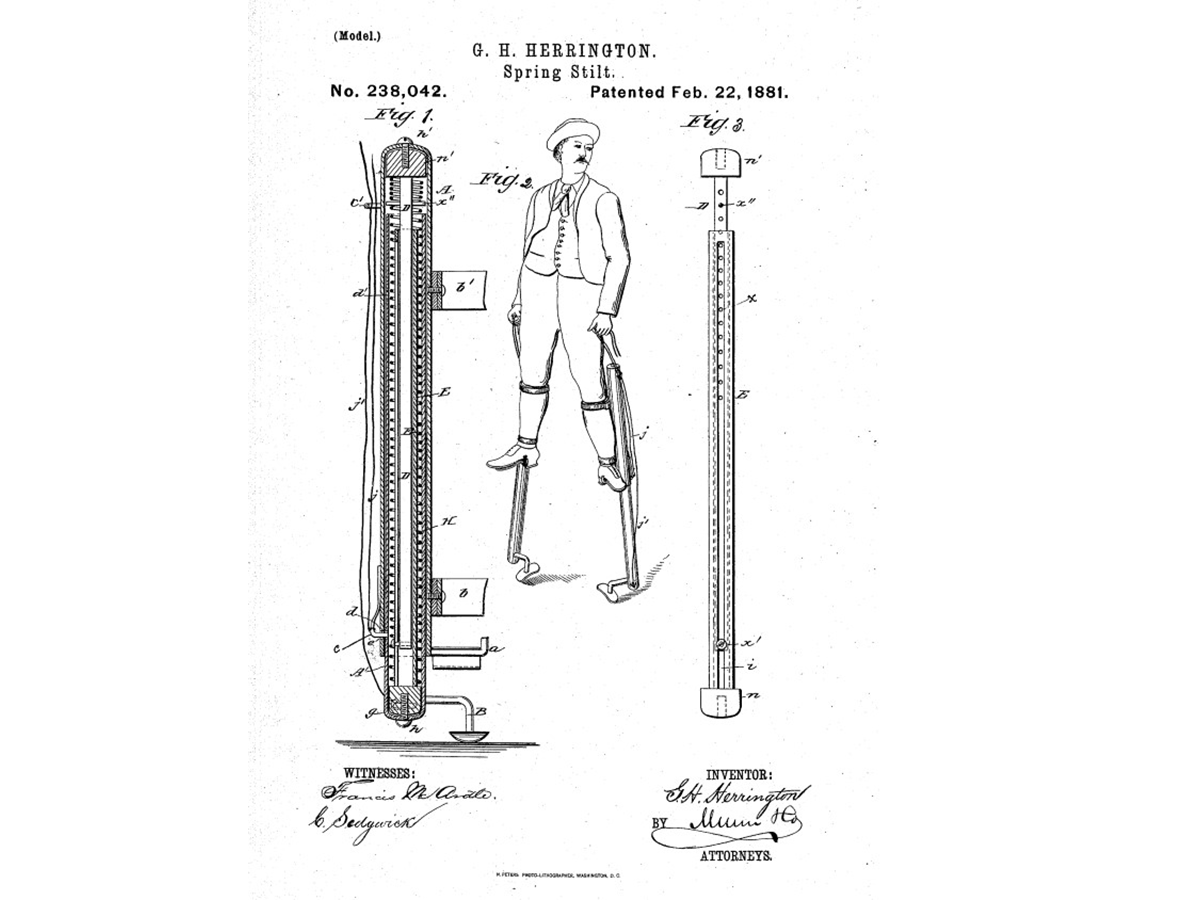 Illustration from U.S. Patent 238,042, issued to George H. Herrington of Wichita, Kansas, on February 22, 1881 / United States Patent and Trademark Office
The Hopping '20s
Fast forward to Europe. Germans Ernst Gottschall and Max Pohlig received a patent in 1920 for a "springy-looking hopping stuff." Unlike Herrington’s, it was just one stilt, with a spring mounted between the pole and base and a double footrest. The name “pogo” is believed to be derived from the first two letters of their last names—a common naming practice in Germany at the time. Around the same period, British inventor Walter Lines patented a similar vertical single-handled “hopping-pole."
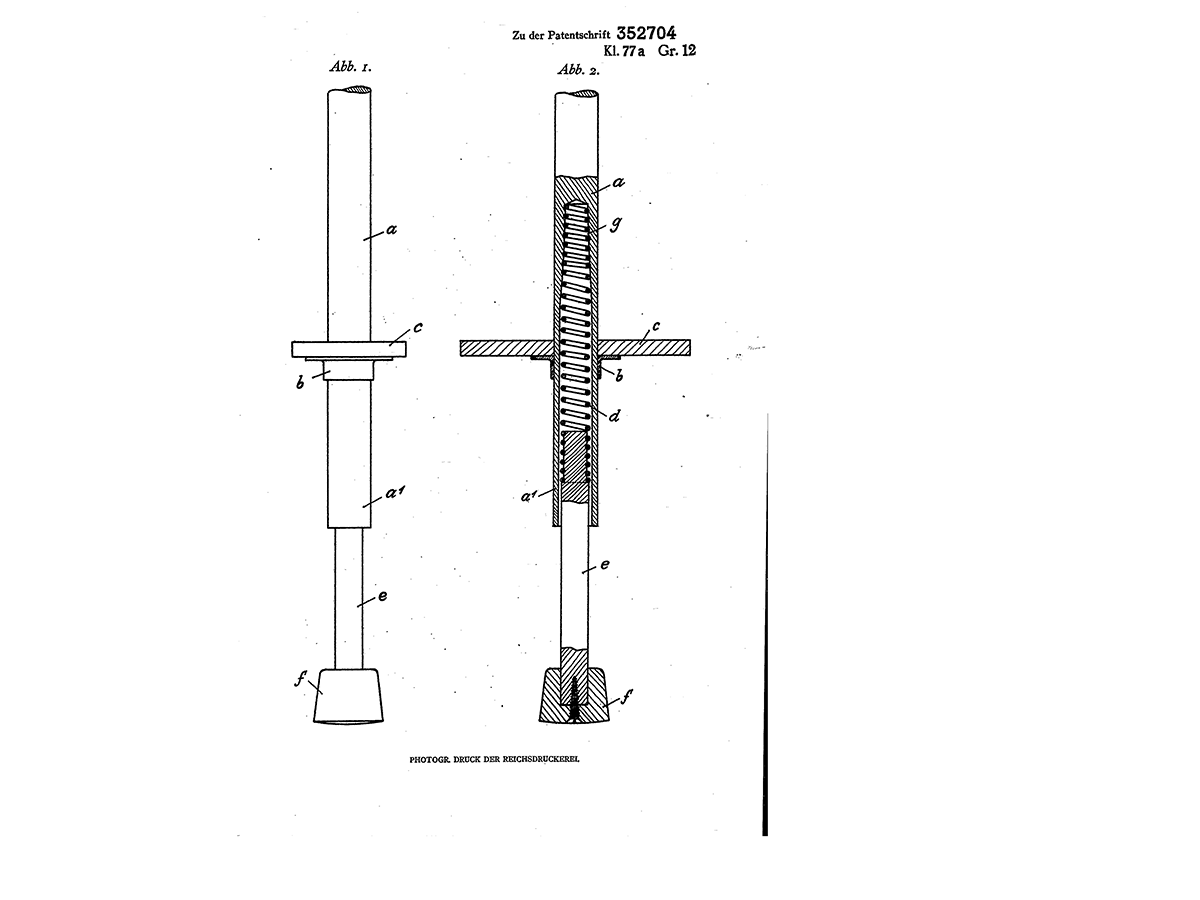 An illustration from Gottschalk and Pohlig’s patent for the “Federnd wirkende Hupfstelze” (“springy-looking hopping stilt”), issued in Hanover, Germany, March 9, 1920 / German Patent and Trade Mark Office.
As pogo sticks gained popularity in Europe, American sporting goods and department stores placed orders with overseas manufacturers. One New York City department store, however, received an order of pogo sticks that had mildewed and decomposed due to the damp conditions on the ship. Stores began looking for U.S manufacturers. George Hansburg’s SBI Enterprises in Ellenville, New York, started manufacturing pogo sticks. By June 1922, the word “pogo” was trademarked in the United States to refer to a jumping stick.
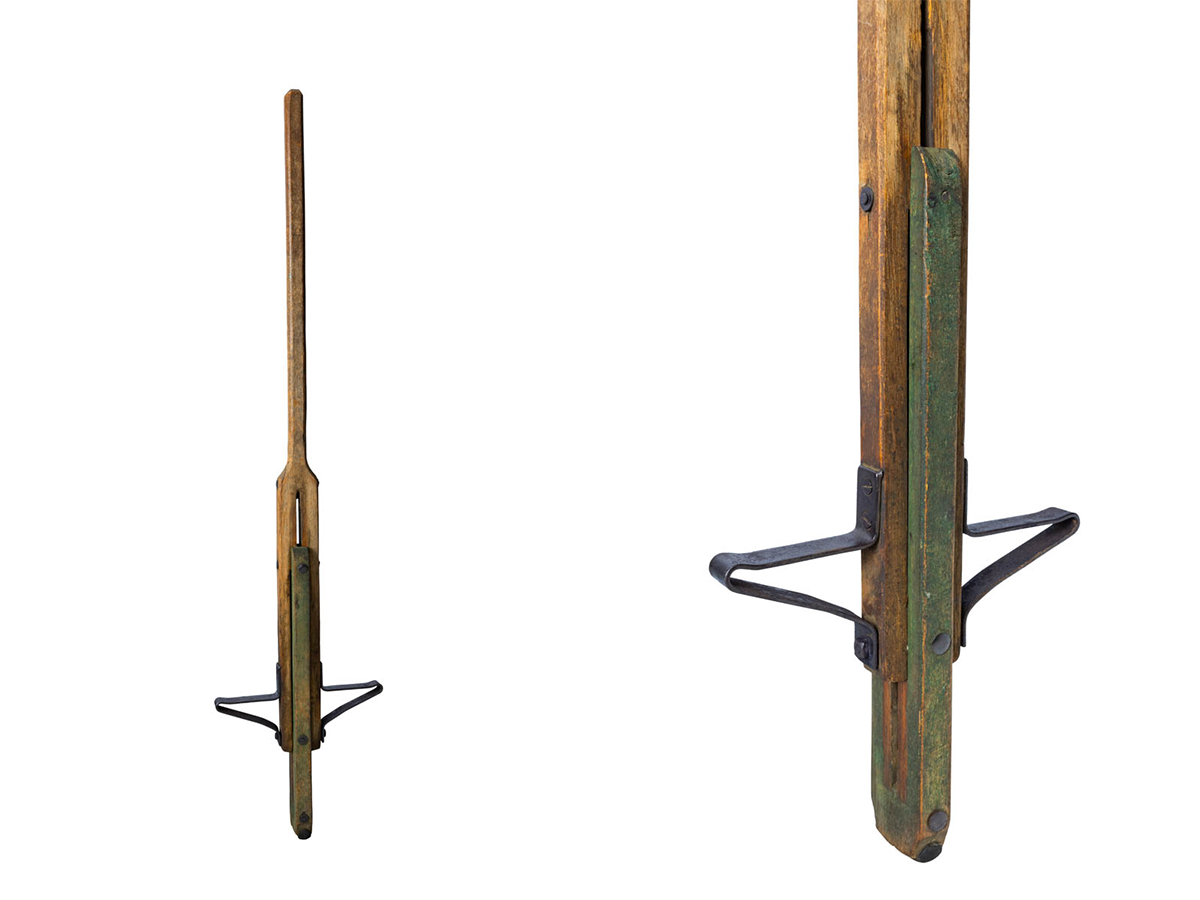 A 1920s pogo stick with a single vertical post, which could cause injuries to the rider’s chin. / THF805470 (left), THF805474 (right)
Though often credited as the pogo stick’s inventor, George Hansburg did not patent anything resembling a pogo stick in the 1920s. However, the United States experienced its first pogo stick boom in the 1920s due to the increased domestic production. Contests, races, and other pogo stunts popped up across the country. The Ziegfeld Follies even developed a stage show that featured performers on pogo sticks. Hansburg eventually redesigned the pogo stick – with double horizontal handles to reduce the risk of chin injuries from the vertical pole and received a U.S. patent for this improved design in 1957.
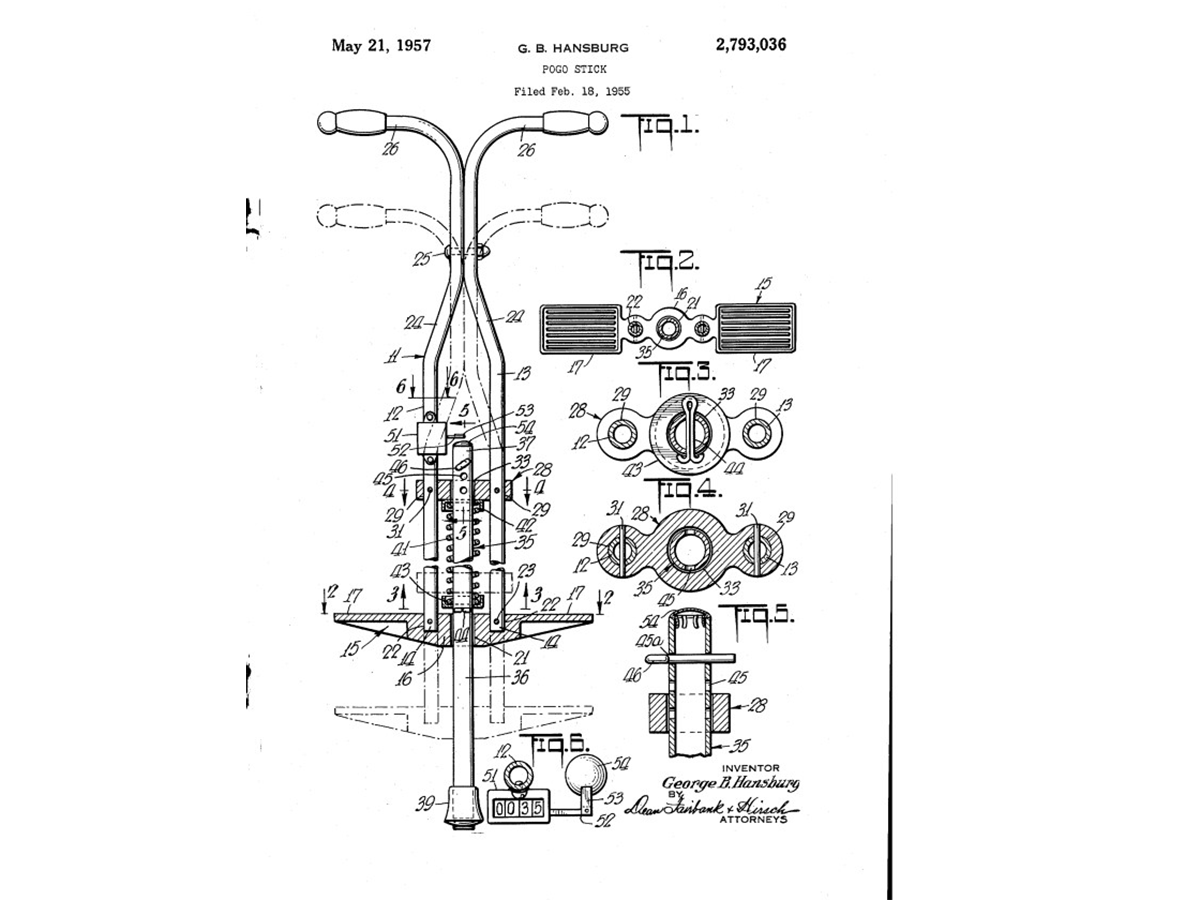 George Hansburg did not invent the pogo stick, but he helped improve it. This illustration of his patent from 1957 shows the horizontal handles that decreased incidences of facial injuries. / United States Patent and Trademark Office
Adding Fuel to the Hopping Craze
The pogo sticks experienced a resurgence in the 1950s, becoming a favorite of the baby boom-era children hopping around suburban neighborhoods. It was during this time that Elwood, Indiana, farmer Gordon Spitzmesser had an idea: what if you added an engine?
Spitzmesser experimented with various designs, including combining the barrel of a grease gun with a piston from an old lawnmower and a Ford Model A spark coil. His son Edwin was his test jumper, trying out various fuel mixtures. Oxygen and acetylene resulted in intense jumps, but in the end, Spitzmesser settled on butane as the safest. In March 1960 Spitzmesser received a patent for a “Combustible Gas Powered Pogo Stick” which he called the “Pop Along.”
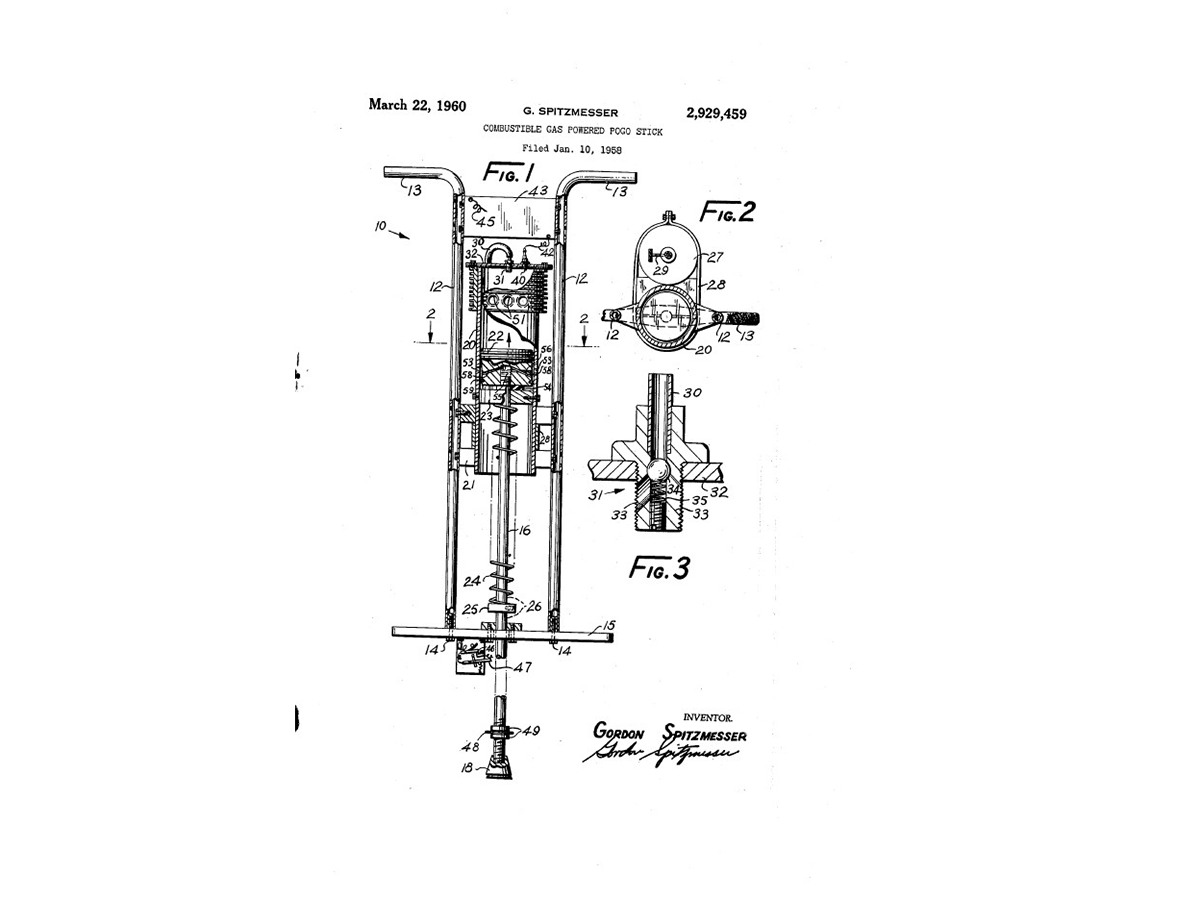 Gordon Spitzmesser's 1960 patent that eventually became the basis for the Hop Rod. / United States Patent and Trademark Office
In 1961 Spitzmesser and his son appeared on national television. Edwin hopped around while his father explained the mechanics behind his invention. Although Spitzmesser never pursued mass production of his “Pop Along,” his patent was eventually acquired by Chance Manufacturing Co. of Wichita, Kansas.
The Hop Rod Takes Off
By 1971, Chance Manufacturing - best known for amusement park rides - began developing their own version of Spitzmesser’s design. After a year of testing, they released the Hop Rod, a pogo stick with a one-cylinder, two-cycle engine. It could run for up to 30 minutes - or approximately 600 hops - on four ounces of gas, preferably their proprietary blend called "Pogo-Go,"and eight C batteries. The Hop Rod activated when the rider's weight compressed the piston into the cylinder and activated the spark plug that fired the engine, launching the rider into the air.
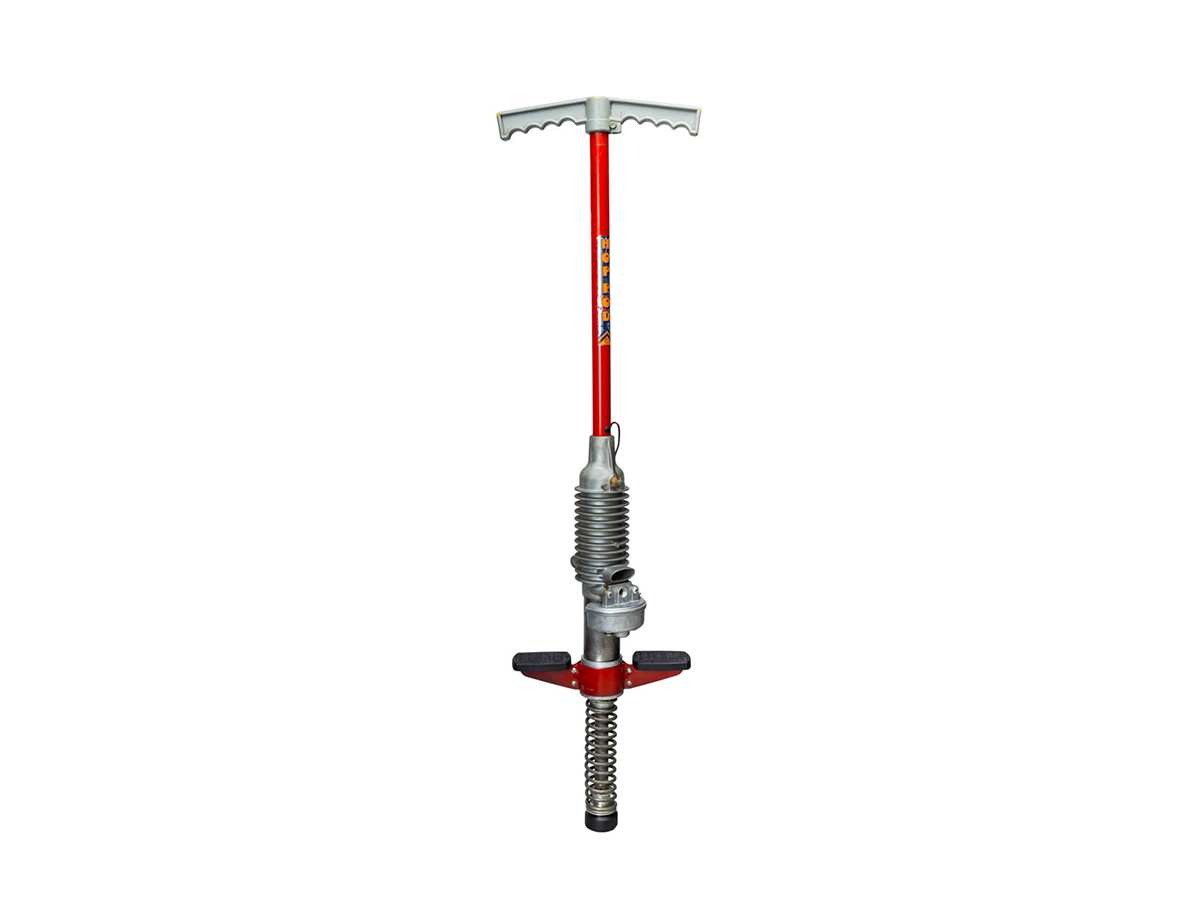 Gordon Spitzmesser's 1960 patent that eventually became the basis for the Hop Rod. / THF803604
Priced at around $70, the Hop Rod was marketed to parents and children, featured in commercials and local newspaper ads. Retailers across the country stocked the Hop Rod, including Young Diversified Industries in New Jersey and Midtown Cycles in Florida. Moto Pogo, Inc. in Vermont even offered a free electric popcorn maker (“Butterpopper”) with purchase in April 1973. The Hop Rod appeared at automobile shows, including the 17th Annual New York Automobile Show in New York City in April 1973. Newspaper articles of the time touted brisk sales, highlighting the Hop Rod as the hot Christmas gift in both 1972 and 1973.
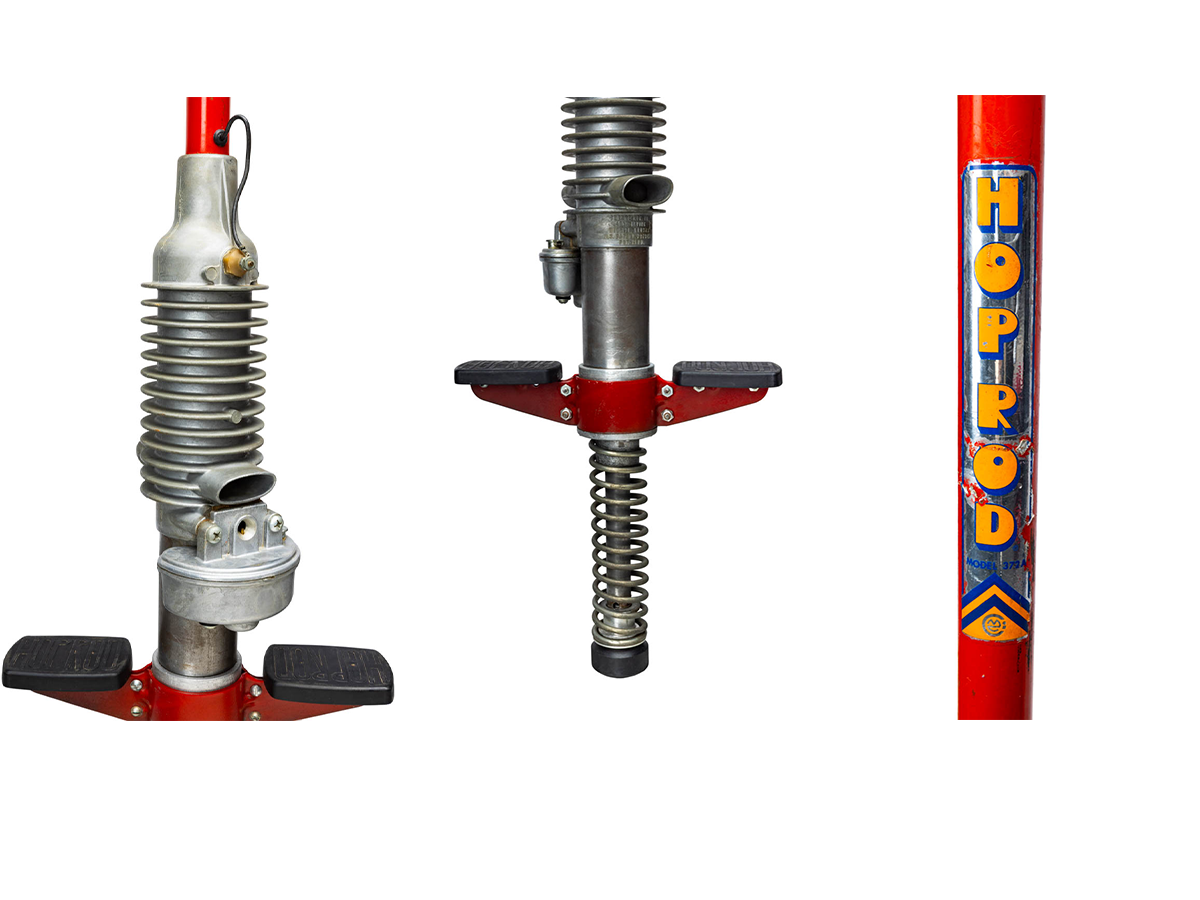 Gordon Spitzmesser's 1960 patent that eventually became the basis for the Hop Rod. / THF803610 (left),THF803607 (center), THF803611 (right)
But the Hop Rod was a shooting star - fast and flashy but too dangerous. Each engine “pop” produced increasingly higher jumps, sometimes beyond what the rider could control. The engine engaged upon impact with the ground - regardless of whether the rider landed vertically or at an angle - making it easy to be flung sideways into trees or other obstacles. Injuries followed, and the new gadget shine quickly wore off. By 1975, sales slumped, and Chance Manufacturing discontinued the Hop Rod.
Modern-Day Hopping
Although fuel-powered pogo sticks have vanished, pogo technology continues to evolve. Today's models use compressed air or solid rubber tube technology to absorb and release energy, enabling higher jumps and extreme tricks. Whether low-tech or high-powered, the pogo stick keeps on hopping into the 21st century.
The Henry Ford’s Hop Rod was conserved, rehoused, and digitized thanks to a grant from the Institute of Museum and Library Services (IMLS).
Aimee Burpee is an Associate Curator at The Henry Ford.
Themes |
|---|