
Enriching Our World
| Published | 8/5/2025 |
|---|
Enriching Our World
| Published | 8/5/2025 |
|---|
The Henry Ford is more than just a tourist attraction, more than just an institution, and more than just a summer stroll. Rather, it is a reflection — a curtain, even — for the horizons of a greener future that are closer at hand than many realize. It may feel a bit tawdry to some to personalize the planet, but it is an indisputable fact that the Earth does a lot for us that we do not recognize often enough. And just as a body must be well kept or a machine well maintained, so too should we endeavor to do our part in rejuvenating the groundsand gardens of The Henry Ford that have so delighted guests and employees.
To fuel this effort, in 2024 The Henry Ford made one of its biggest leaps forward into the frontier of sustainability with a new addition to help the management of Stand 44’s restaurant waste. The CX5 Harp Renewables Bio-Digester is a specialized piece of equipment that creates and manages a meticulously designed internal environment, aimed to yield the most efficient breakdown of food waste and biodegradable material into a soil supplement rich in essential plant nutrients. While it sounds interesting enough on its own, the logistical details are equally compelling, and the journey for a handful of food waste from when it’s disposed of to its reintroduction to the soil takes time and teamwork. It passes through many processes before it ends up in a regenerative garden, including:
Phase 1 – Collection
Waste that is disposed of by staff and guests is collected and then sorted by hand to prevent contamination. This is where guests and staff make the biggest impact to ensure the efficient and sustainable operation of the biodigester. Meanwhile the food service team continues to phase out single-use plastics in favor of biodegradable packaging. Conscientiously disposing of personal waste contributes more than many may realize.
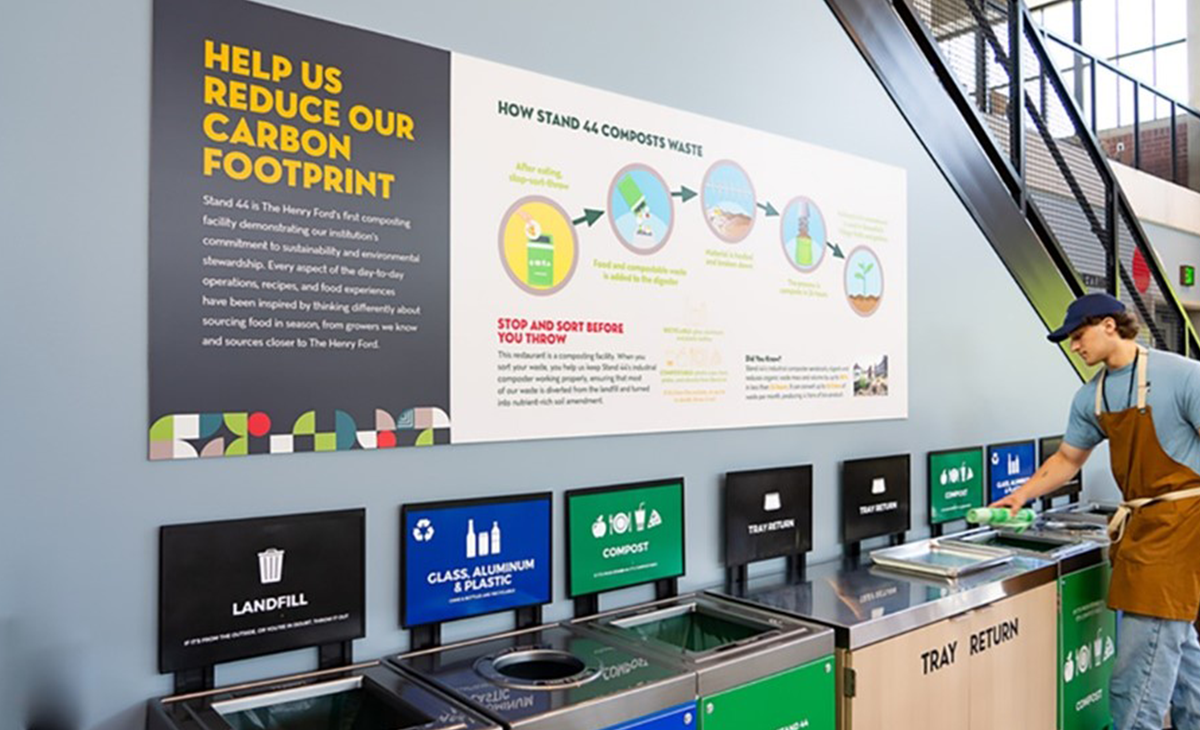
Stand 44’s waste composting method, which makes use of an industrial biodigester, was a key element of the venue's 4-star GRA certification. / Image by The Henry Ford
Phase 2 – Feed the Machine
Believe it or not, the biodigester is a picky eater. It prefers a healthy mix of waste: dry (biodegradable utensils, plates, bones, breads etc.) and wet (vegetables, fruits, dairy products, grounds, plant scraps, etc.). A carefully considered recipe is constantly being improved upon by food service operation to ensure the most effective operation and high-quality output possible. With the careful manipulation of moisture, heat, and bacteria, this chemistry trifecta of natural digestion taken to its technical limit can break organic waste down into an odorless pathogen-free and high-nutrient soil amendment in as little as 24 hours.
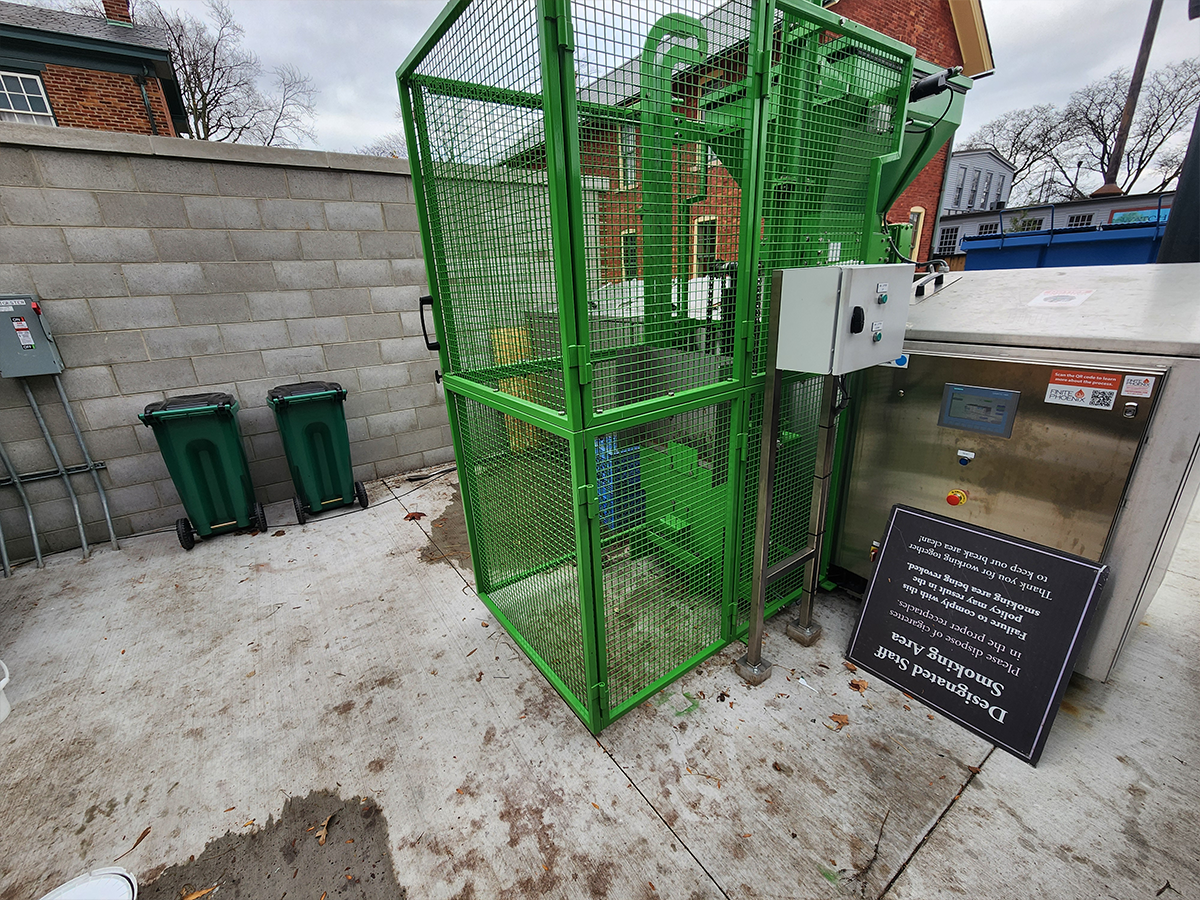
Stand 44's Bio Digester during installation. / Image courtesy of Aias Danier, Construction Management Sustainability
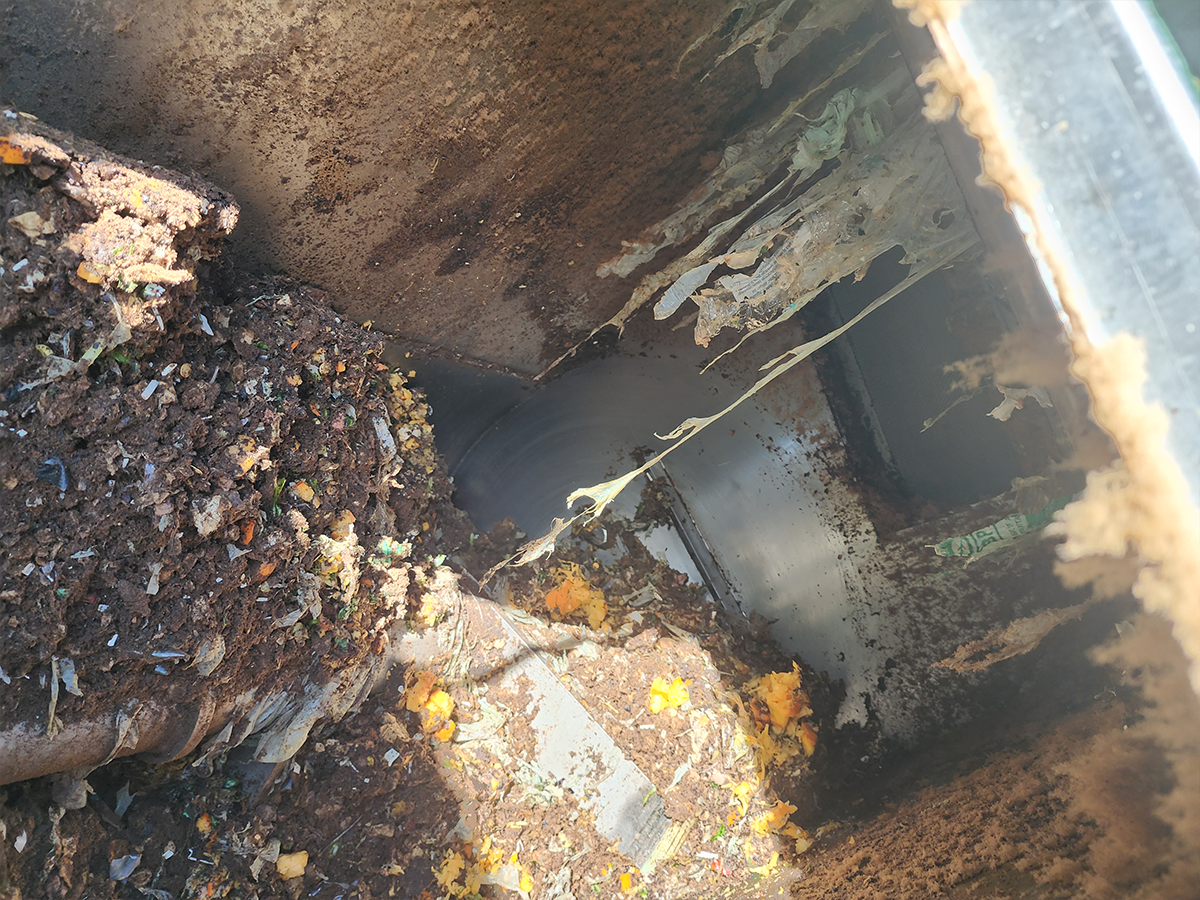
Stand 44’s Biodigester Interior. / Image courtesy of Aias Danier, Construction Management Sustainability
Phase 3 – Addition
As an extra layer of complexity and to seize an even grander opportunity for sustainability, The Henry Ford is committed to treating the end product digestate from the biodigester as just one of the key ingredients in a much larger upcoming campus-wide hot composting initiative that endeavors to turn all of The Henry Ford’s yard and animal waste into fertilizer on-site.
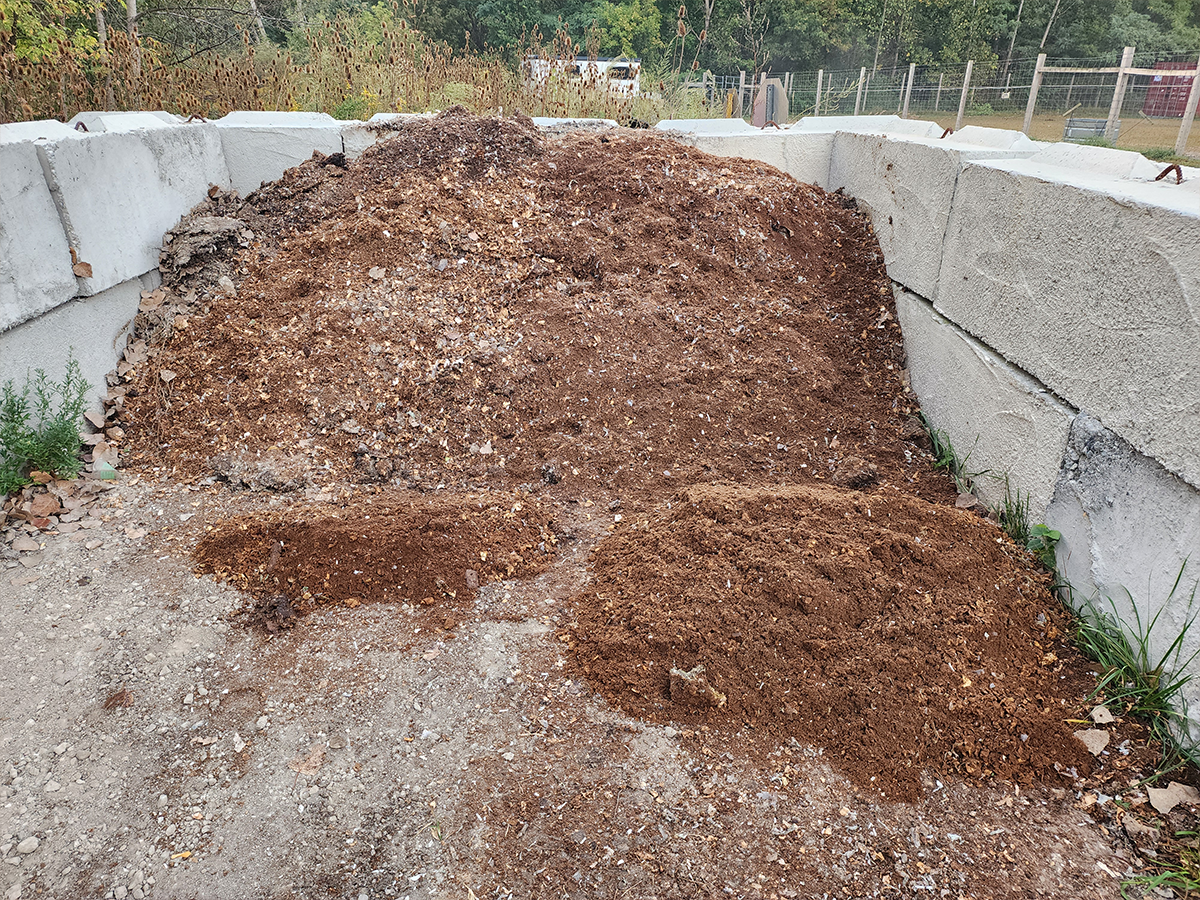
Digestate Aggregate Pile. / Image courtesy of Aias Danier, Construction Management Sustainability
Phase 4 – Return
The resulting material after the completion of the compost cycle is regularly tested to maintain state and federal safety standards. After which comes redistribution to various gardens and fields, where it can be mixed and tilled as needed for the future. Ideally, if all goes well, this compost can help in the on-site production of fruits and vegetables to be used by food services.
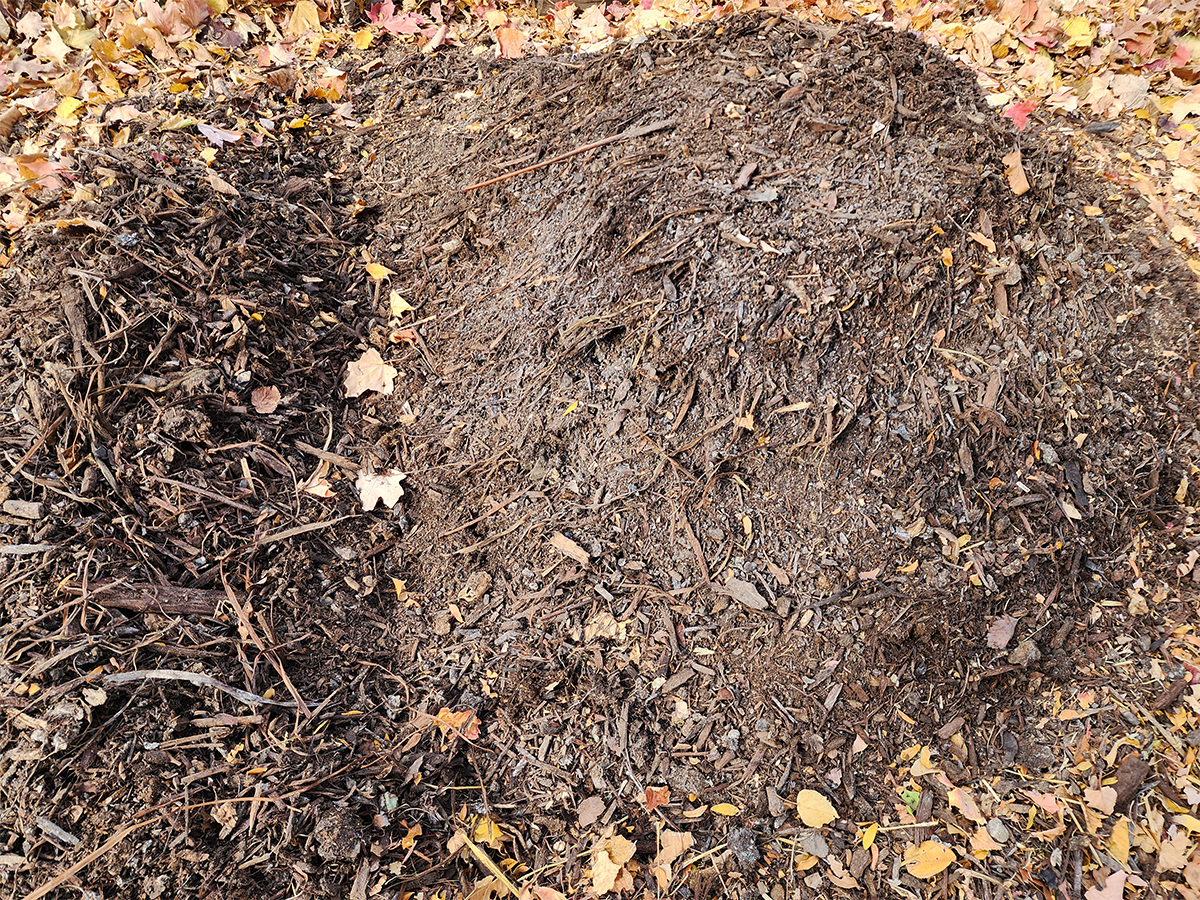
Experimental compost pile. / Image courtesy of Aias Danier, Construction Management Sustainability
It takes many hands not only to complete this upcycling circle, but also to support The Henry Ford’s mission to promote a more sustainable approach to its commitment to providing unique educational experiences so that we may have a better future.
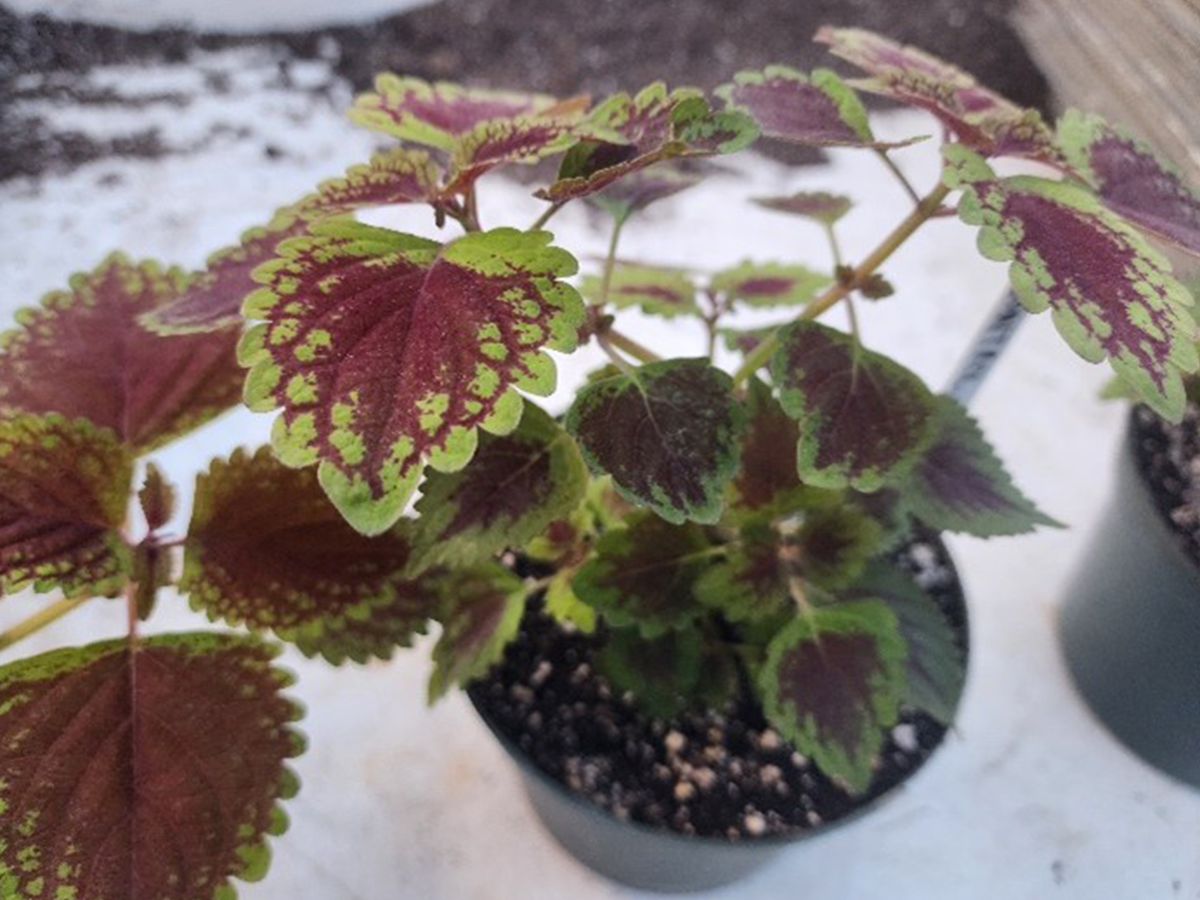
Successful Compost Testing on Trailing Pink Coleus. / Image courtesy of Aias Danier, Construction Management Sustainability
Aias Danier is Assistant Construction Manager at The Henry Ford. Alec Jerome is Director of Facilities Management.
Themes |
|---|