
The Jackson Home: Furnishing It Like It’s 1965
| Written by | Jeanine Head Miller |
|---|---|
| Published | 2/25/2026 |
The Jackson Home: Furnishing It Like It’s 1965
| Written by | Jeanine Head Miller |
|---|---|
| Published | 2/25/2026 |
In this interview, Jeanine Head Miller (Curator of Domestic Life), and Charles Sable (Curator of Decorative Arts) sat down with Kristen Gallerneaux (Curator and Editor-in-Chief of Digital Curation) to share their efforts to restore the interiors and furnishings of The Jackson Home. This article is part of an ongoing series focusing on the history, preservation, and restoration of the landmark Jackson Home experience, slated to open in Greenfield Village in Summer 2026.
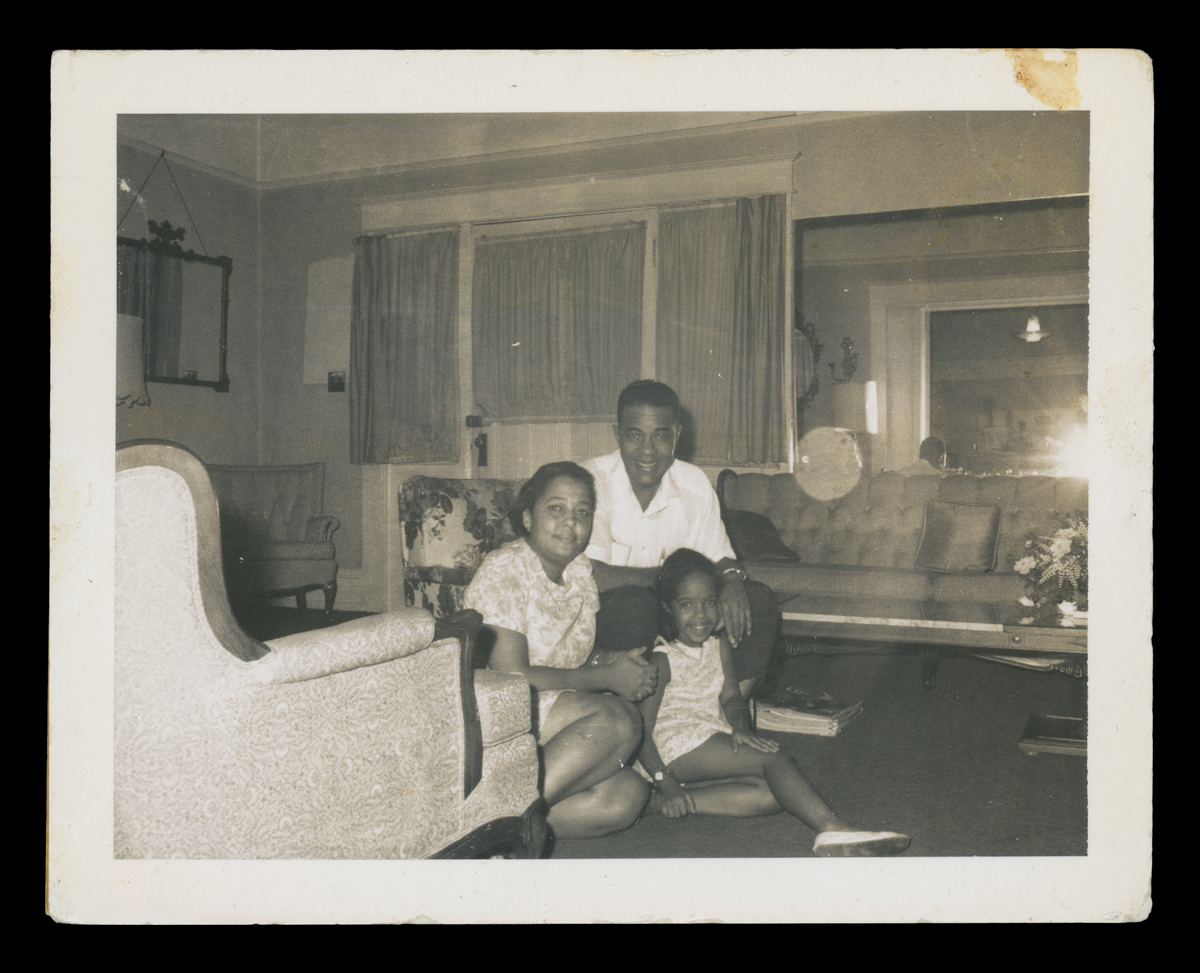
Dr. Sullivan, Richie Jean, and Jawana Jackson in their living room, 1960s. / THF708482
Kristen Gallerneaux: The Jackson Home project has been a very complex undertaking. You have both spent a large part of your respective careers at The Henry Ford, and you each bring complementary forms of expertise to the project through your knowledge of the histories of domestic life and decorative arts. How do your collection responsibility areas complement this project? And in turn, how does your expertise work in collaboration with the rest of the Jackson Home team?
Jeanine Head Miller: Historical environments — like the Jackson Home — help a story come to life by creating the illusion of time and place. Our goal is to return the Jackson Home to its 1965 appearance as closely as possible, the date of significance for the home’s story. As Curator of Domestic Life, my focus is the history of the American home and how domestic settings reflect changes in American society through time — and what those changes meant for people living in a particular time and place. For the Jackson Home, this requires developing an understanding of the lives of the Jackson family of Selma, Alabama, and the world they lived in — and how that story should be reflected in the way the home is furnished. So, our team thinks about how the Jacksons, and others who came to the house, interacted with the space and the objects in it. We use furnishings and accessories to suggest the presence of these individuals and their activities.
Charles Sable: My background is in the history of the decorative arts, specifically, furniture, glass, ceramics, metals, and in a larger context, the history of interiors. In this case I take my knowledge of mid-20th century decorative arts and apply it to the Jackson House story. In this project I examine the period photographs in great detail and work with what we have from the family. Then I collaborate with the team to accurately portray how the home was lived in. The goal is to show our guests what life was like for the Jackson family in 1965.
KG: Are there any unique layers of history and interpretation in this project that differ from previous Greenfield Village projects?
JHM: The Jackson Home is very different! Greenfield Village is filled with buildings dating from the 1600s to the early 1900s — buildings from bygone eras. The story of the Jackson Home dates to the mid-1960s, making it by far the most modern experience encountered in a Greenfield Village building. (The Jackson Home will be the only historic house in Greenfield Village with an indoor bathroom and a driveway!) It also dates from an era within the the living memory of many people today.
With the Jackson Home, we are very fortunate. We have an unusual number of available research resources on the history of the home and its occupants. Vintage photographs taken in the home, Richie Jean Jackson’s 2011 book, House by the Side of the Road, and her oral interviews, as well as the recollections of her daughter Jawana and others, help guide us in restoring the home to its 1965 appearance. We have more information about the 1965 appearance for some rooms (the living room) and less for others (the bathroom and music room). So, we must use our understanding of the Jacksons and the era to determine additional objects or accessories with which to furnish the home.
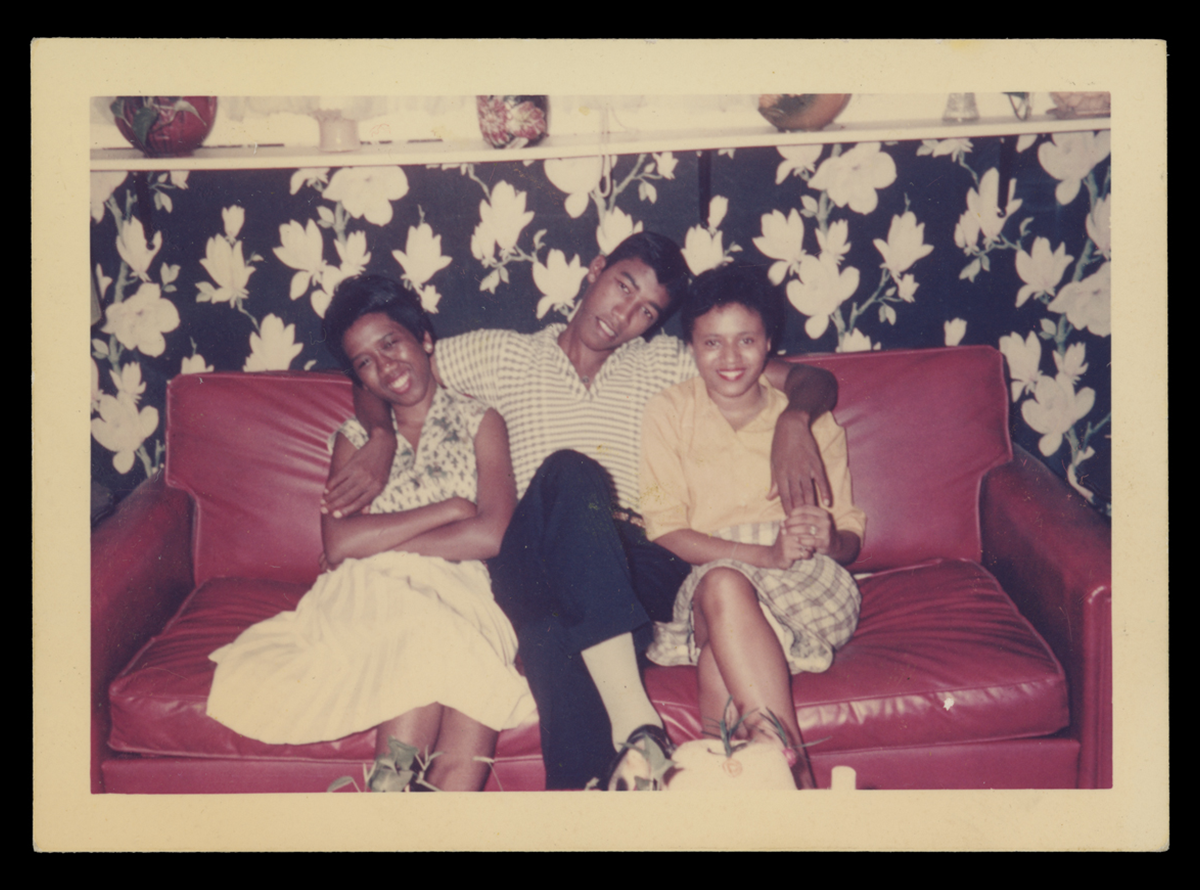
1960 photo of three people sitting on a couch in the Music Room. Behind, you can see a hint of the curtains. / THF731071
This home offers a significant, entirely new story to Greenfield Village. It reflects the lives of middle-class Black professionals in the mid-20th century segregated South and their key role in supporting the voting rights movement, as well as the efforts of the Black community that led to the marches — and ultimately to the Voting Rights Act of 1965.
CS: This project is radically different from other Greenfield Village homes. We have much (nearly two thirds) but not all of the family’s furnishings. This creates opportunities and challenges. This house was built in 1919 occupied consecutively by three families until 2010 or so. We have literally generations of furnishings given to us by the Jackson family. We spent a great deal of time examining the contents to identify objects dating to our period of interpretation, the early 1960s. In the process, we’ve learned much about the Jacksons and their predecessors’ tastes.
We know that Richie Jean and her husband, Dr. Sullivan Jackson, moved into the house shortly after their 1958 wedding. They shared the house with Mrs. Benny Portlock, a widow, who had lived in the house since 1940. Over a period of four to five years, Richie Jean Jackson redecorated the house to her own taste, called “transitional.” This was a popular style in the 1960s, incorporating historical with more modern elements. Once we learned Richie Jean Jackson’s aesthetic, combined with a knowledge of “transitional” style, we were able to gather what we need to tell our story.
KG: Can you talk about some of the interesting problems — and importantly, the solutions — that have emerged so far in your work on the Jackson Home? Are there particular rooms or interior spaces that you’ve spent more time on than others?
CS: The most important room in the house is the living room, which is where the Jacksons, Dr. Martin Luther King Jr., and many associates gathered on March 15, 1965, to watch President Johnson deliver his televised speech to Congress on the Voting Rights Act of 1965. This gathering was photographed for an article in Life Magazine. It gives us unprecedented documentation of the room – so we know exactly what was there — which is a blessing and a challenge. We have most of the items, but finding missing objects is difficult since our knowledge of them is so specific.
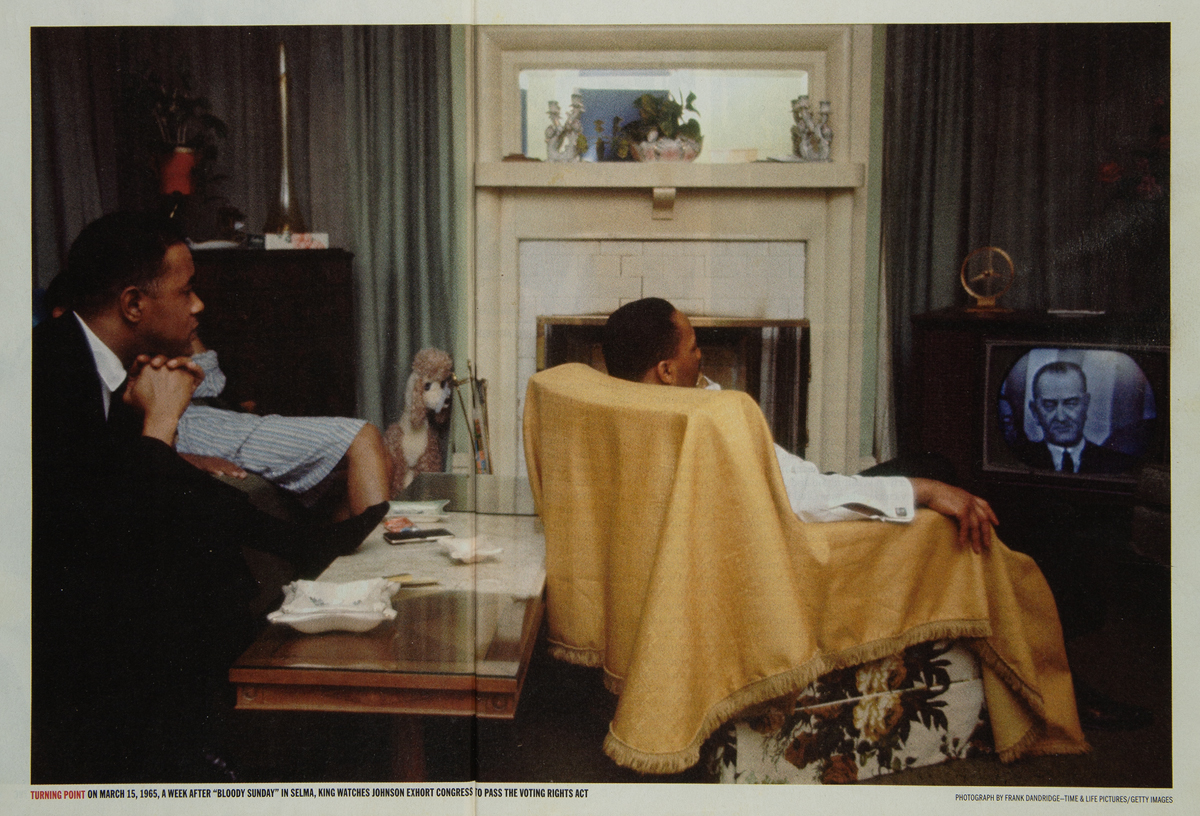
Dr. Sullivan Jackson (left) and Dr. Martin Luther King Jr. (center) watch President Johnson’s televised speech on March 15, 1965 in this Life magazine photograph. / THF724118
A good example is the living room oval mirror. Fortunately, the mirror came to us with the contents of the house—unfortunately, the pair of matching sconces did not. The back of the mirror revealed a maker’s label, “Syroco,” for the Syracuse Ornamental Company, Syracuse, New York. With this information, we searched for the matching sconces for sale online. We additionally used the Google Lens app as a shortcut to find replacement sconces. This has proved a great strategy for finding a number of other items for the house.
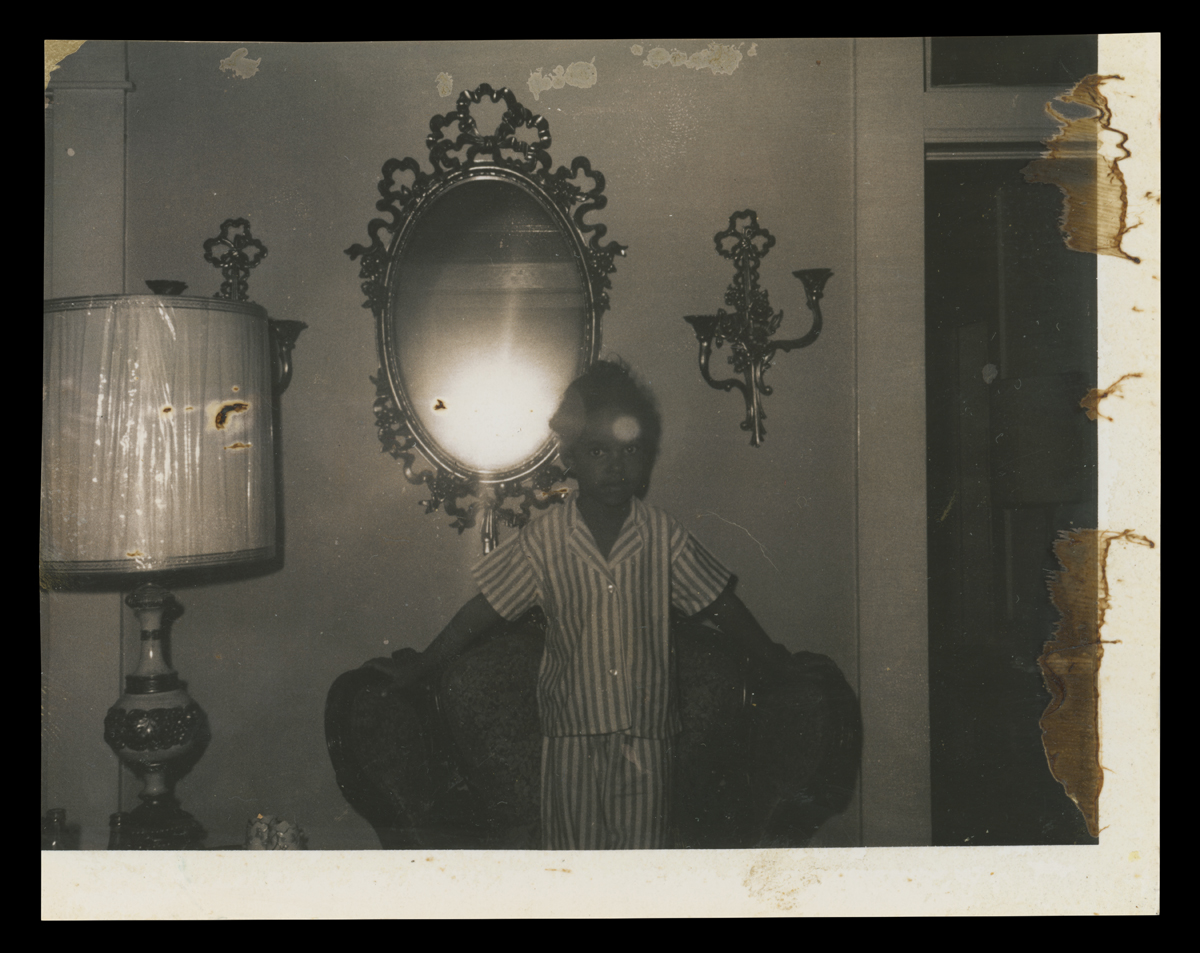
Jawana Jackson, the Jacksons’ daughter, in front of the mirror and sconces about 1965. / THF708621
JHM: The detective work for the kitchen has proved to be somewhat of a challenge. There were lots of changes from 1919 to 1965, as each of the three families who lived there placed their personal stamp on the room. We peeled back the layers of paint, wallpaper, and floor coverings both literally and figuratively. Then put the physical clues together with what we know about the home’s residents over time to discern what the kitchen looked like in 1965.
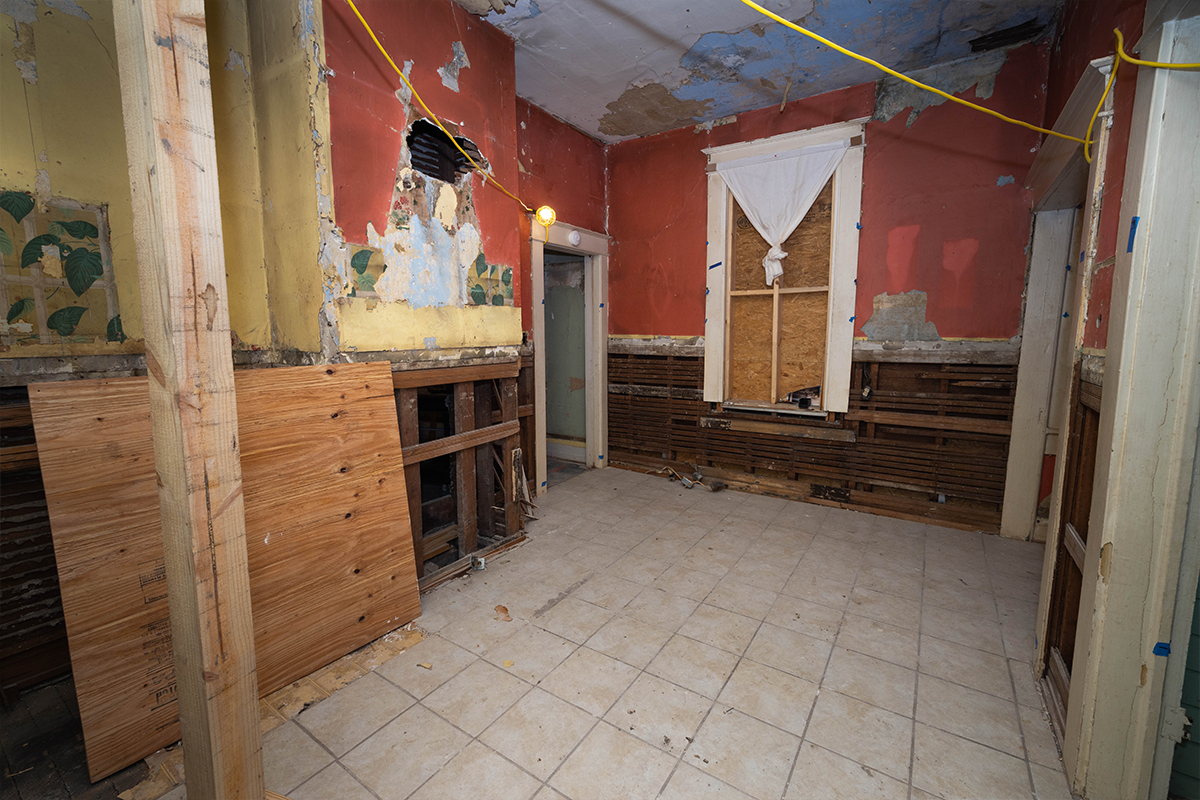
Wall treatments went from paint to wallpaper and back again. “Ghosting” on the wall revealed placement of objects like the range hood and a cupboard. / Photo by The Henry Ford
KG: How are you working with the Jackson Home team to ensure those important “lived moments” that occurred in the house are preserved and shine through for guests?
JHM: We are ensuring that the appearance of the interiors not only align with the historical images of the home, but that furnishings and supporting objects allow our visitors to not only see and hear the story — but help them to feel it as well. Each room has a theme to convey, so the objects in the room — and their placement — must provide visual support for each story. Even the bathroom will play an important role. It will reflect the theme “Care & Keeping,” indicating the hospitality, support, and safe space that Richie Jean and Sullivan Jackson provided during this crucial time. Many people involved with the movement stayed at the house. So, this room will contain extra towels, toilet paper, and toiletries, along with a pillow and blanke t— one person even slept in the bathtub.
CS: The bedroom of the Jackson’s 4-year-old daughter Jawana conveys the theme “Safety & Youth.” The room will juxtapose the innocence of childhood with racial discrimination — and her parents’ desire to assure their child a better future. The walls were, and will be, decorated with images of nursery rhyme characters and children praying.
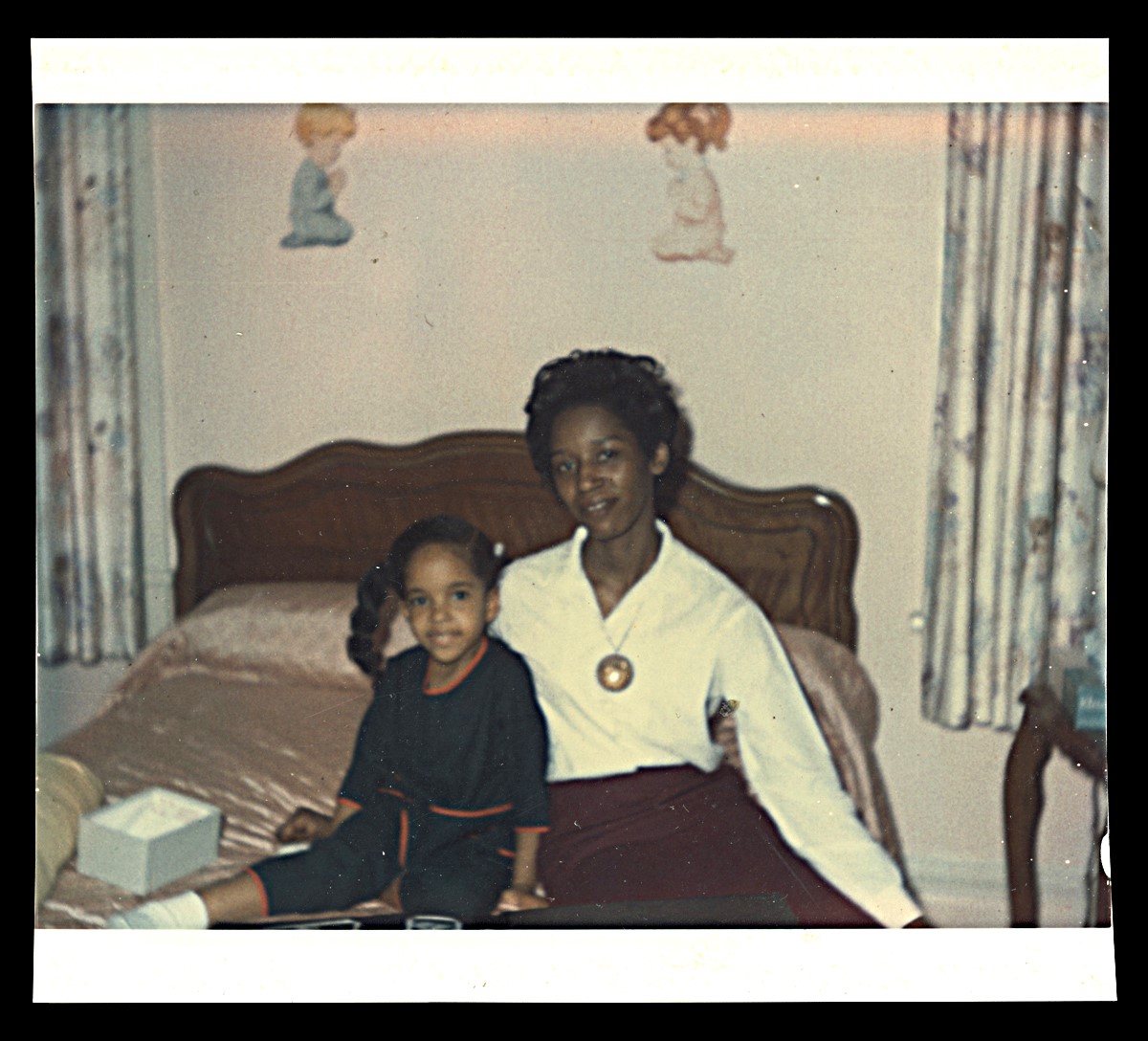
Jawana Jackson (with a babysitter) in her bedroom, about 1968. / Edited from THF708616
KG: What has been the most challenging interior “object” (broadly speaking) that you’ve had to seek out, replace — or re-create so far?
JHM: Finding the appropriate refrigerator is proving quite a challenge! A photo taken in the kitchen of the Jackson home about 1961, shows that the family owned a white Frigidaire Lacework Styling freezer-on-top refrigerator model — a 1959-only design. (The handle on the Jackson refrigerator was a model only made one year by Frigidaire.) This refrigerator — along with a matching white stove — appears to have been still in place in the Jackson house kitchen in 1965, our period of significance. If anyone knows where one of these illusive refrigerators might be, please let us know!

A turquoise version of the 1959 Lacework Styling Frigidaire model, shown in a trade catalog. / THF717091
CS: One of the most difficult objects to replace was a common piece in the 1960s — a brass, floor to ceiling tension pole that held a wire support to display vinyl record albums. This was in the music room. These tension poles were a fad of the period and were out of fashion by the 1970s. With the current public fascination with mid-century modern decoration, these tension poles are difficult to find. When they come up for sale, they quickly disappear, and they can be expensive. After several near misses, our diligent staff located a great example.
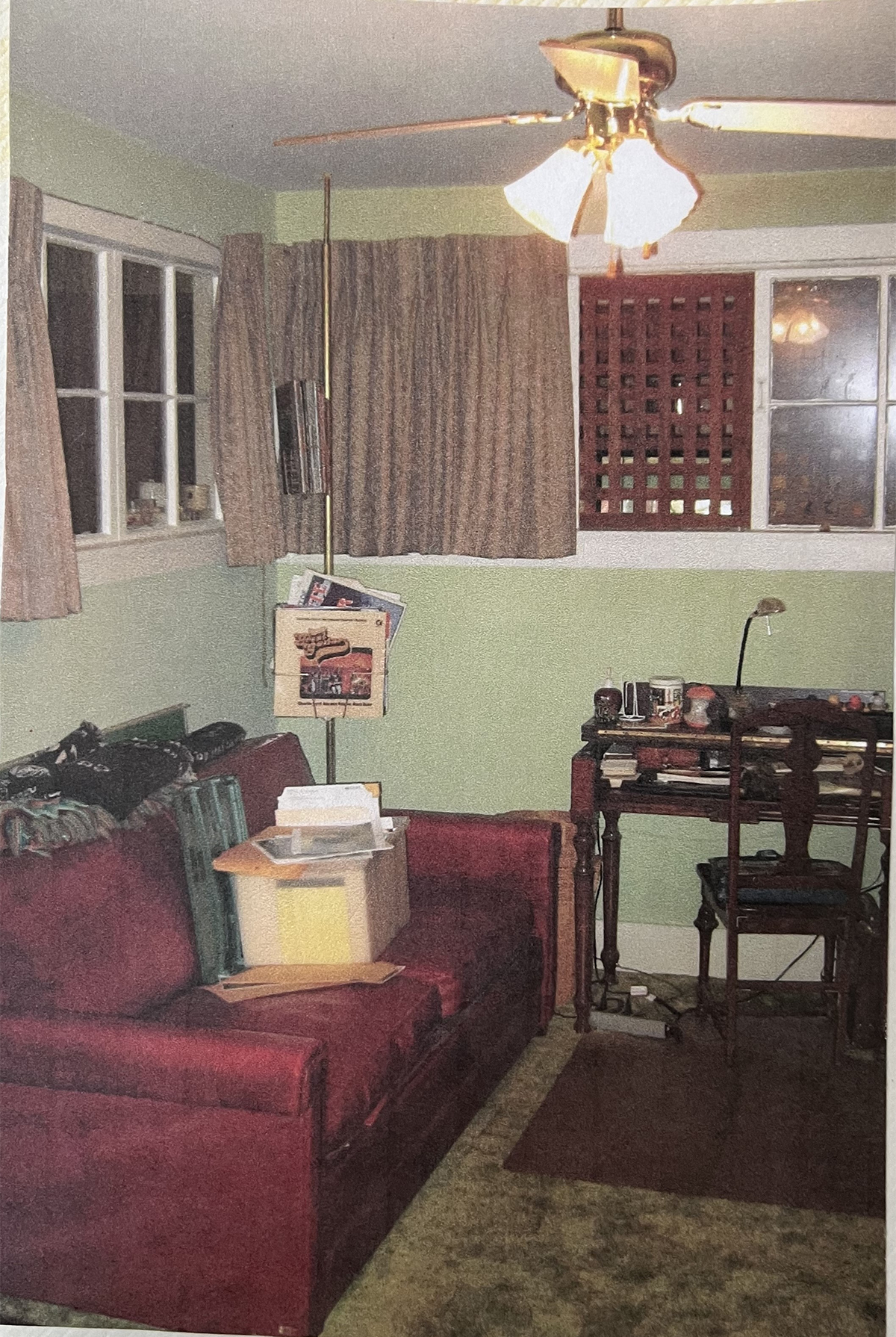
The album holder appears in this photo of the Jackson Home music room, taken about 1990. / Image 8591, courtesy of the Jackson family
KG: Any major surprises or favorite moments so far — or things that I haven’t thought to ask that you would like to talk about?
JHM: We had been told that the bathroom sink that came with home was a later replacement. Maker name and model number in hand, we found the sink in a period Kohler catalog. It IS the original Jackson sink!
CS: One of my favorite outcomes is the conservation of the chair that Martin Luther King was seated in during President Johnson’s speech. This venerated upholstered armchair came to us needing some tender loving care. Through careful conservation, the original upholstery was stabilized and preserved for posterity.
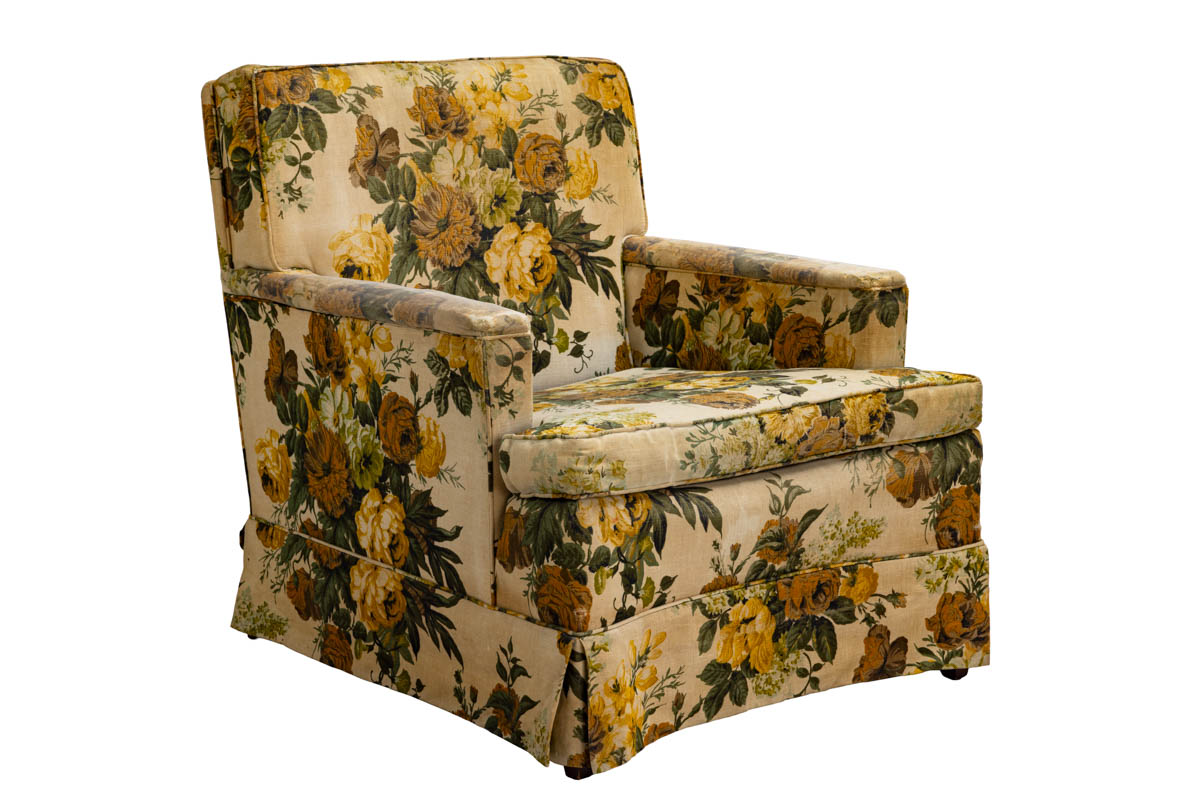
Chair in which Martin Luther King Jr. was seated during President Johnson’s televised speech. / THF804175
Jeanine Head Miller is Curator of Domestic Life and Charles Sable is Curator of Decorative Arts at The Henry Ford .
Series | |
|---|---|
Themes |