
The Oldest Cars Shine at 2025 Old Car Festival
| Written by | |
|---|---|
| Published | 10/2/2025 |
The Oldest Cars Shine at 2025 Old Car Festival
| Written by | |
|---|---|
| Published | 10/2/2025 |
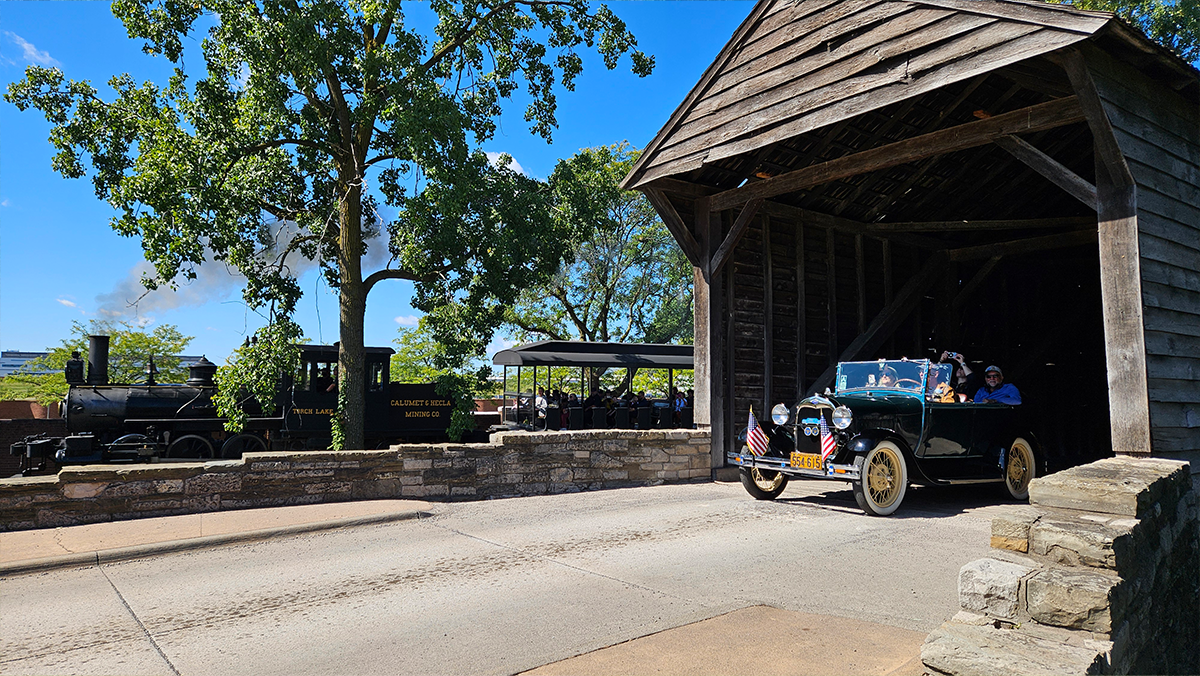
Its top down under bright skies, this Ford Model A kept pace with the Torch Lake locomotive at the 2025 Old Car Festival. / Image by Matt Anderson
Pleasant temperatures and sunny skies greeted visitors and participants alike at our 2025 Old Car Festival, held in Greenfield Village on September 6 and 7. More than 750 vintage cars, trucks, motorcycles, and bicycles registered for this year’s event, making for one of the largest festivals in recent years. Throughout the weekend, the village was filled with the sights and sounds of early gasoline, steam, and electric cars all dating no later than 1932.
We choose a special theme for each year’s show. Often it’s a specific make or model, and sometimes it’s a geographic location or style of automobile. This year we went big by celebrating an entire century with our focus on Nineteenth-Century Motoring. The automobile may have defined the twentieth century, but its origins and earliest impacts lie firmly in the 1800s, from Karl Benz’s pioneering Patent-Motorwagen of 1885 to the Duryea brothers’ first series-produced automobile in 1896.
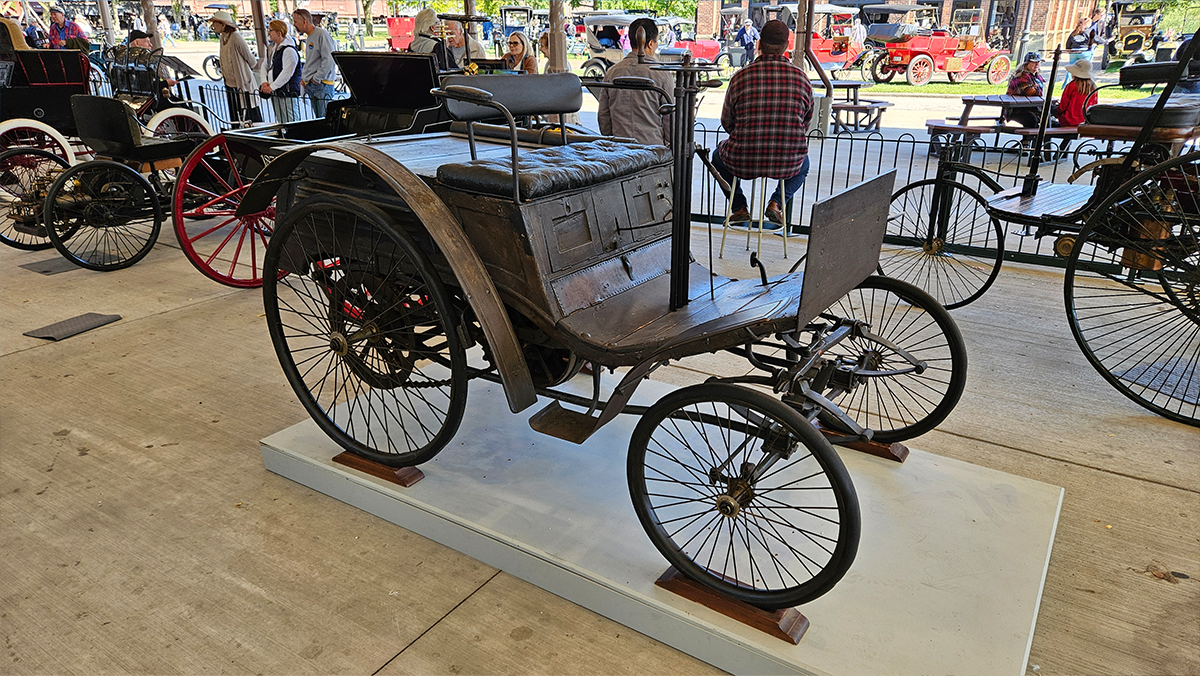
The Henry Ford’s 1893 Benz Velocipede, one of eleven pre-1900 vehicles shown in Detroit Central Market, embodied the festival’s Nineteenth-Century Motoring theme. / Image by Matt Anderson
Incredibly, Old Car Festival featured eleven pre-1900 vehicles in Detroit Central Market. Four of them came from The Henry Ford’s own collection including an 1893 Benz Velocipede, our replica of Henry Ford’s 1896 Quadricycle, an 1898 Autocar Runabout, and, perhaps most interesting of all, a conjectural full-size model of George Selden’s Motor Buggy based on his notorious patent first applied for in 1879 and awarded in 1895. Participants added another five vehicles to the mix, including a replica of an Iowa-built 1890 Morrison Electric, an 1896 Riker Electric prototype, an 1897 De Dion-Bouton Tricycle, an 1898 Beeston Quadricycle, and an 1899 Marot-Gardon. Our neighbors at the Automotive Hall of Fame provided two additional vehicles: replicas of the Benz Patent-Motorwagen and Gottlieb Daimler and Wilhelm Maybach’s 1885 Reitwagen motorcycle.
Visitors were treated to a variety of experiences throughout the village. Not far from the entrance, at the Ford Home, the Early Engine Club staged a Farm Power Expo showcasing early tractors and stationary engines, including The Henry Ford’s Pullford farm tractor — created from a Ford Model T using a widely marketed conversion kit. Outside the nearby Bagley Avenue Workshop, presenters demonstrated a replica of Henry Ford’s 1893 Kitchen Sink Engine that represented his first steps in the nascent automotive industry.
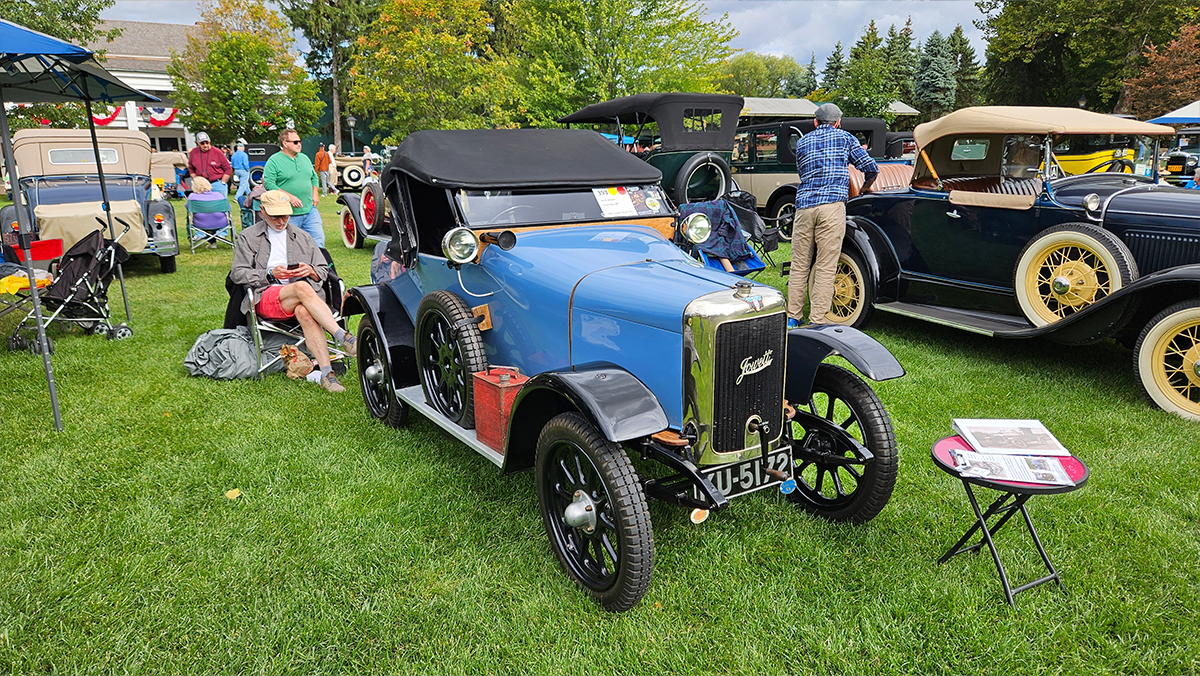
Old Car Festival included a number of imports like this 1924 Jowett made in Great Britain. / Photo by Matt Anderson
As is the custom at Old Car Festival, participating vehicles were parked in chronological order throughout Greenfield Village. The earliest automobiles sat near the Armington & Sims Machine Shop near the village entrance, while late 1920s and early 1930s cars had space near the Daggett Farmhouse. The Village Green was reserved for judged cars. Vehicle class awards were given based on authenticity, quality of restoration work and the care with which each car was maintained. First-, second- and third-place prizes were awarded in eight classes, and one overall Grand Champion was selected for the festival. We also presented two Curator’s Choice Awards to two unrestored vehicles. The complete list of our 2025 Old Car Festival award winners is available here.
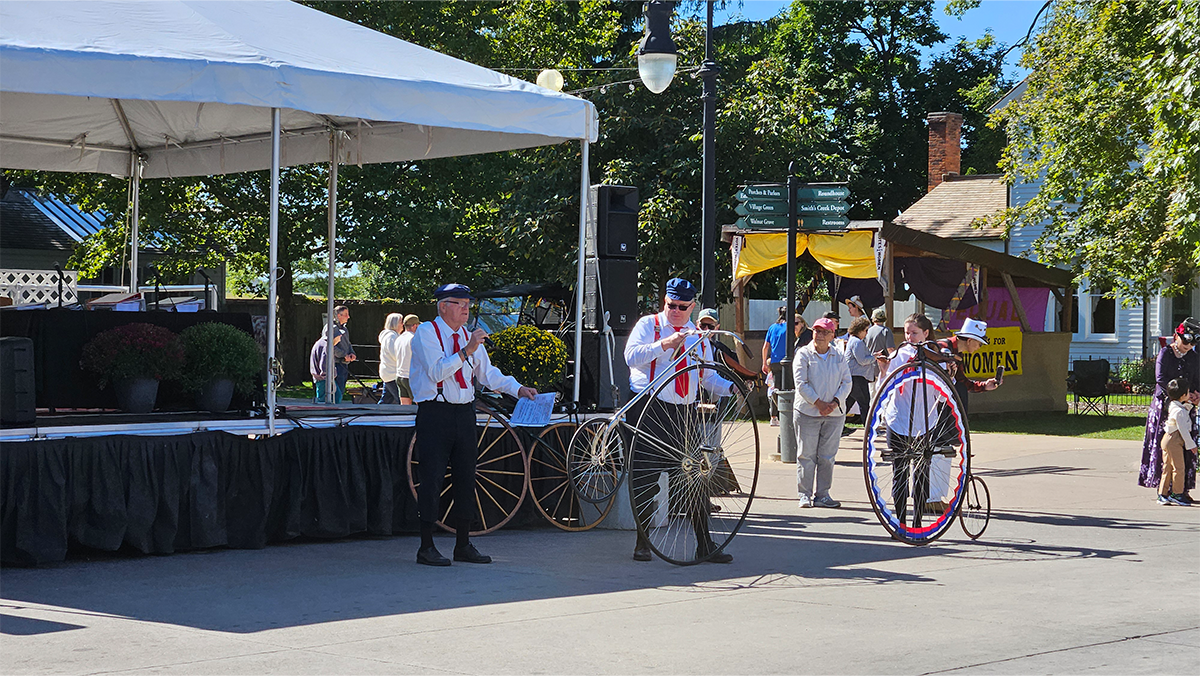
Bicycles had their own pass-in-review sessions, ably narrated by Bill Smith, on Saturday and Sunday mornings. / Photo by Matt Anderson
Old Car Festival visitors were welcome to explore the village and learn about the cars on their own. As always, participants were eager to share stories and insights about their vehicles. But visitors interested in a more formal presentation could attend pass-in-review sessions throughout the weekend. Vintage vehicles were driven past a set of bleachers on Main Street where expert historians offered commentary on each one. Sometimes the narration included dates and production figures for a vehicle’s manufacturer, and other times it was a broader statement on that car’s impact on technology or design. These narrated sessions also provided an opportunity for us to individually thank our participants by giving them a moment in the spotlight.
Martha-Mary Chapel hosted its own series of special presentations. Automotive historian Andy Dervan shared a look at Ford Motor Company’s monthly publication, Ford Times, which launched in April 1908. Always promotional but often informative, Ford Times included travelogues, customer testimonials and general news on the company and its products. Roadside historian Daniel Hershberger shared insights on automobile touring and camping in the first decades of the 20th century. Not far from the chapel, next to Scotch Settlement School, Hershberger staged an impressive display of vintage camping equipment. Meanwhile, presenter Ray Swetman offered an informative talk in the chapel about Henry Ford’s efforts to finance Ford Motor Company, his third attempt at auto production, in 1903.
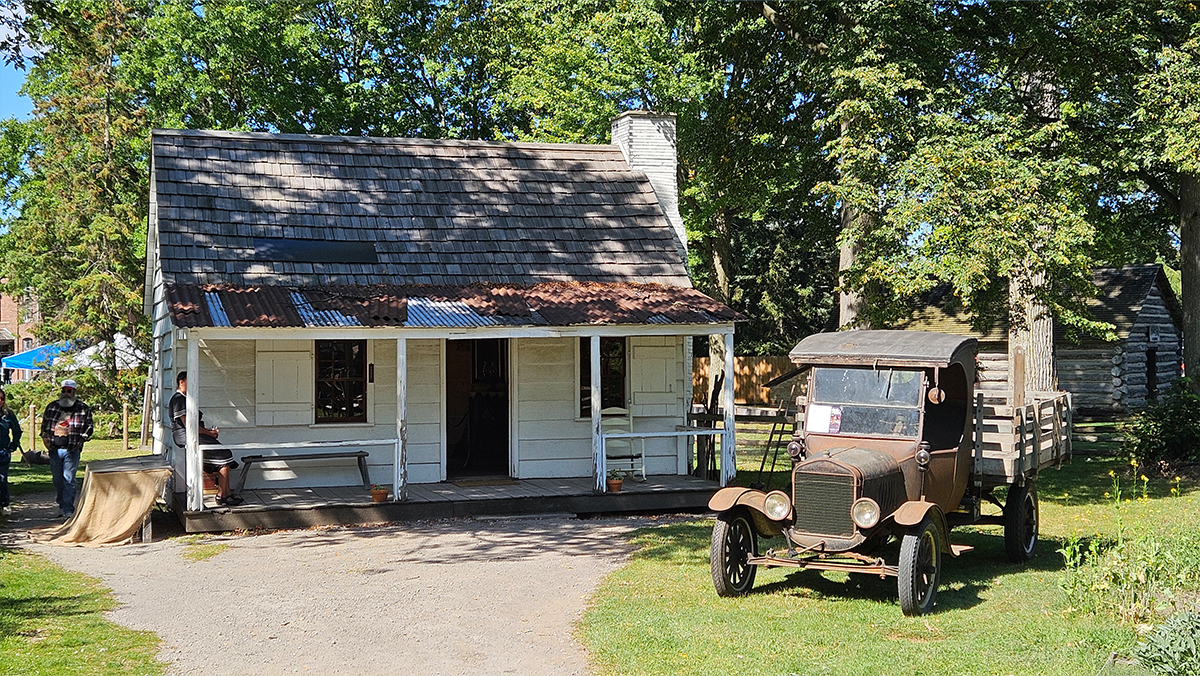
The Georgia farmhouse of Amos and Grace Mattox represented the trying Depression years, accented by a well-worn Ford Model TT parked out front. / Image by Matt Anderson
Music featured prominently in this year’s show. Old Car Festival’s 40-year timespan allowed for a variety of musical styles. The corner of Washington Boulevard and Post Road hosted a ragtime street fair, complete with a cakewalk set to syncopated piano rags by Scott Joplin and other giants of the genre. The River Raisin Ragtime Review orchestra joined the festivities on Saturday evening with a concert on Main Street. Throughout the weekend at the Mattox Family Home, Rosa Warner-Jones performed a selection of poignant gospel and blues songs evocative of the Georgia lowlands during the Great Depression. The Village Trio vocal group, the Greenfield Village Quartet and other artists added to the experience.
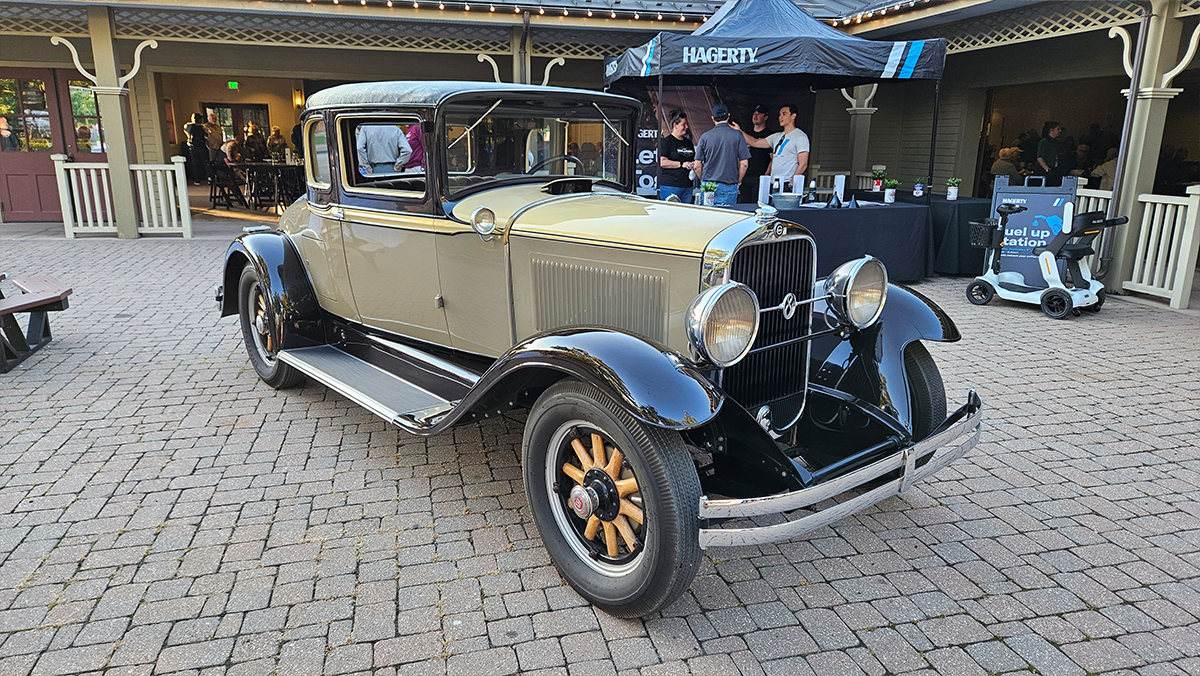
Hagerty’s 1930 Studebaker Victoria coupe drew onlookers at the Lodge. / Image by Matt Anderson
Once again, our friends at Hagerty helped make Old Car Festival the success it was. Not only did they sponsor their terrific youth judging program, in which children 8-10 years old get to view and choose their favorite cars; Hagerty also brought a 1930 Studebaker Commander 8 that fit in perfectly at the show. Hagerty had an active presence near the Herschell-Spillman Carousel with magazines, newsletters and fun promo products available to all comers.
We extend a special thanks to all the participants, presenters, performers and guests who made the 2025 Old Car Festival so special. This one may be in the history books, but you can be sure that we’re already looking forward to next year.
Matt Anderson is Curator of Transportation at The Henry Ford.
Themes |
|---|