
Village Herb Associates: 45 Years and Growing Strong
| Written by | Debra A. Reid |
|---|---|
| Published | 1/30/2026 |
Village Herb Associates: 45 Years and Growing Strong
| Written by | Debra A. Reid |
|---|---|
| Published | 1/30/2026 |
Volunteer gardeners have shared their green thumbs with The Henry Ford for decades. It began when Mary Thompson Gerathy, a teacher, herbalist, and traveler, asked if she could use a garden plot in Greenfield Village to grow plants for the herb classes she taught. It developed into the Village Herb Associates, an organization that illustrates how passionate gardeners laid the foundation for a mutually beneficial community-museum partnership.
A history of the Village Herb Associates recounts an oft repeated story. Mary taught herb classes for the Edison Institute (now The Henry Ford). She ran out of materials and appealed to the manager of the adult education program to see if she could grow her own on-site. Approval given, Mary Gerathy organized like-minded individuals, many of whom had taken her classes, to study herbs, share their findings with the team, and apply their knowledge to grow herbs in a production garden in Greenfield Village.
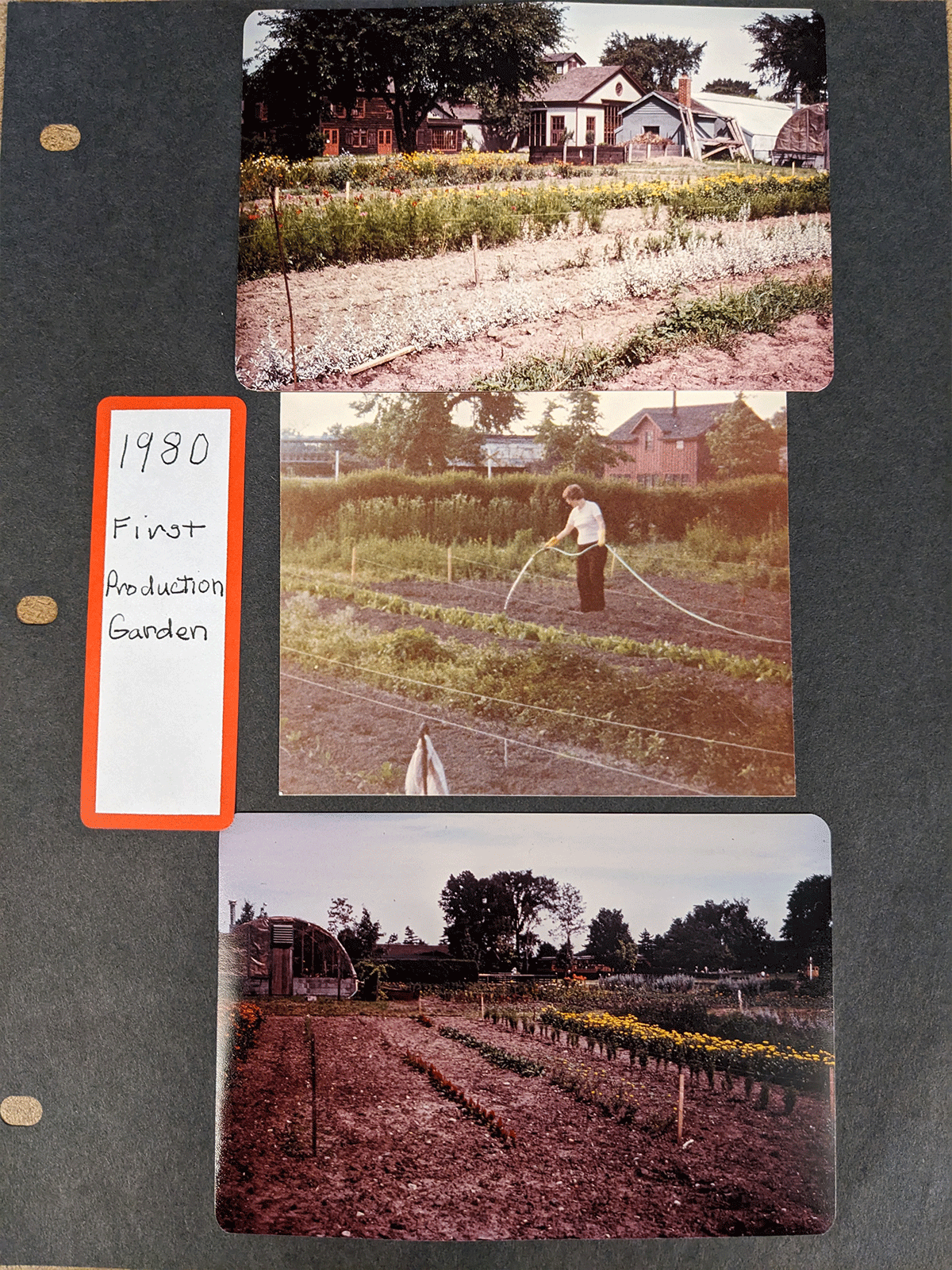 First production garden, located by greenhouses near the entrance to Greenfield Village, now the site of Firestone Farm fields. From a scrapbook in the records of the Village Herb Associates, E.I. 396, Benson Ford Research Center, The Henry Ford, Dearborn, Michigan. / Photo by the Staff of The Henry Ford.
The Village Herb Associates (VHA) organized as the Herb Associates of Greenfield Village in 1981. Adopting the motto, "Each One Teach One," members created monographs about specific herbs and shared these during their regular meetings. This satisfied a need because, while scientific study of herbal remedies had a long and complicated history, few popular-press publications of herbs existed at the time.
In addition to information sharing, Mary sought herbs from a source she trusted. Namely, if VHA members raised their own, they had control over production. They could monitor their plants to ensure the herbs were free of disease, pests, herbicides, and other contaminants.
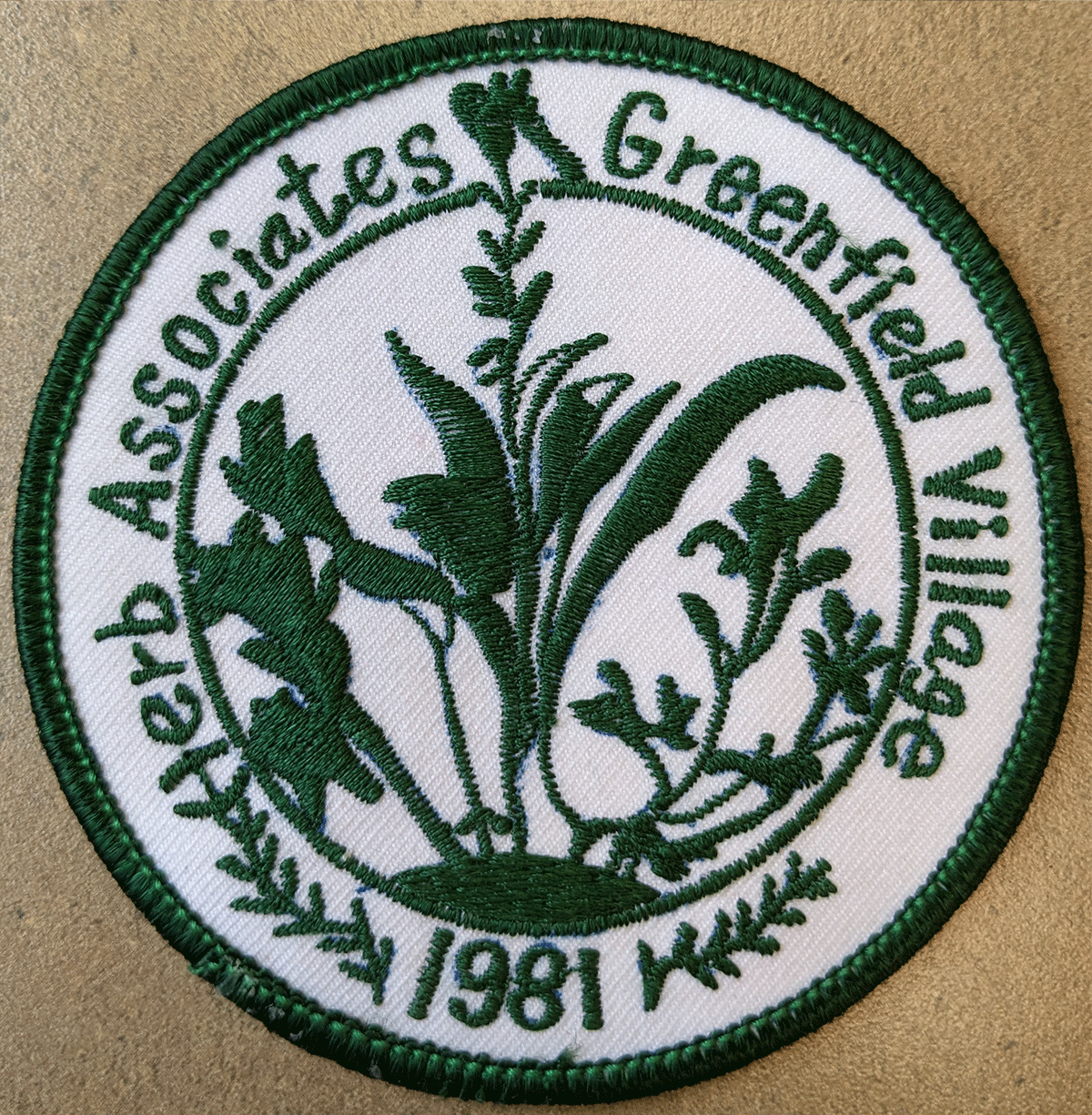 Patch, Village Herb Associates, 1981-1988. Designed by Ginny Schalm. Records of the Village Herb Associates, E.I. 396, Benson Ford Research Center, The Henry Ford, Dearborn, Michigan. / Photo by the Staff of The Henry Ford.
While VHA members maintained their gardens, they also grew their organization. They created a logo in 1981, published the first issue of Herb Associates Newsletter in March 1982, and began inviting speakers to meetings and serving food that featured herbal ingredients. They also set a minimum number of volunteer hours of work in the garden to remain an active member. This began as ten hours per year, set in September 1983. In January 1984 VHA established a gardening roster and schedule. They also drafted rules of membership and adopted a dress code to help them be more recognizable while gardening in the village.
Producing plants to meet consumer demand for courses and herbal wreath sales in museum gift shops required planning. The VHA used the greenhouses at Wayne County, Regional Educational Service Agency to start plants. This began as early as 1981 and continued through 2003.
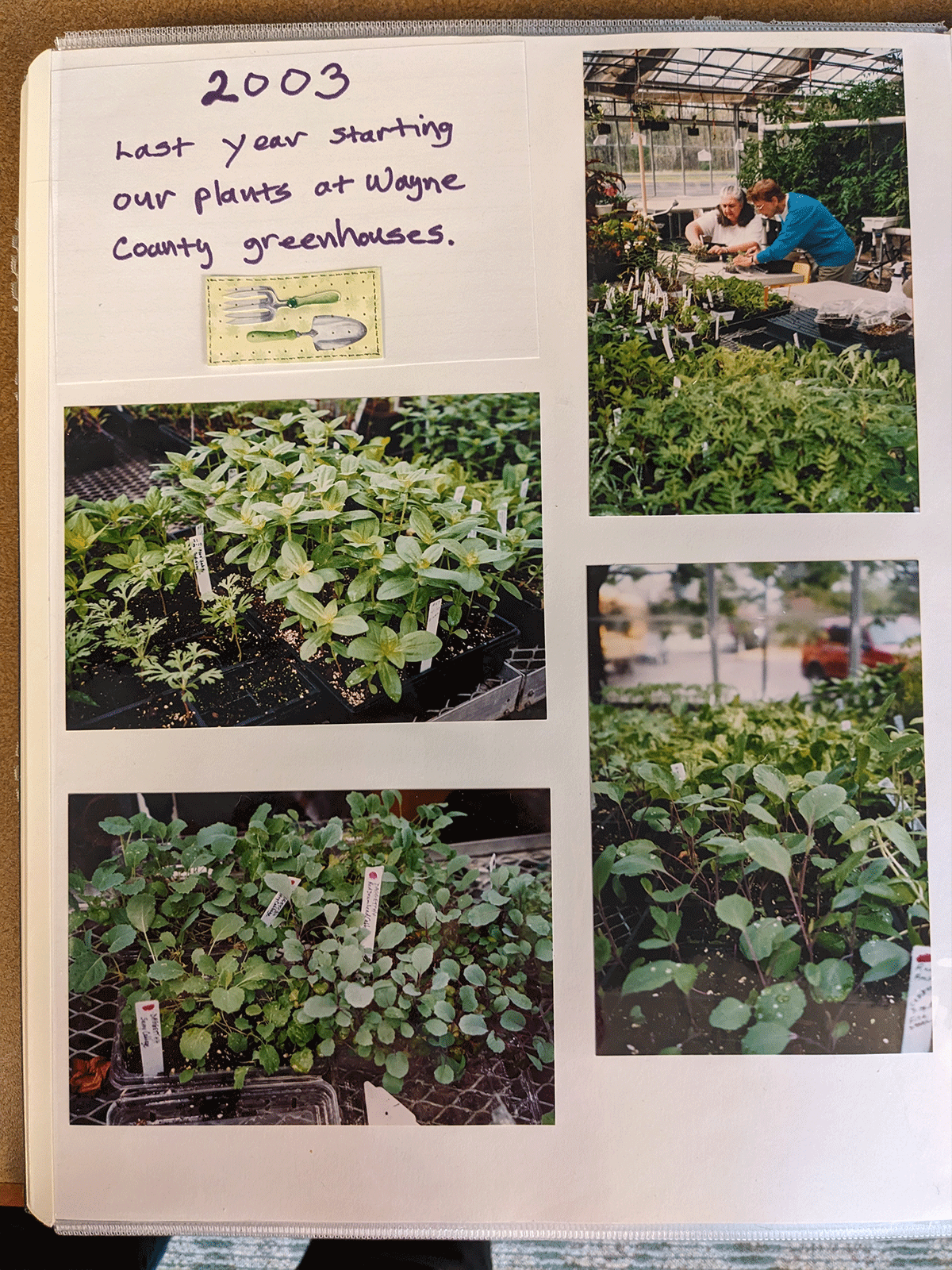 Page from a scrapbook in the records of the Village Herb Associates, E.I. 396, Benson Ford Research Center, The Henry Ford, Dearborn, Michigan. / Photo by the Staff of The Henry Ford.
Change: A Constant for Gardeners
Between 1981 and the present, VHA members established and maintained their production gardens, moved established gardens, and created new garden spaces.
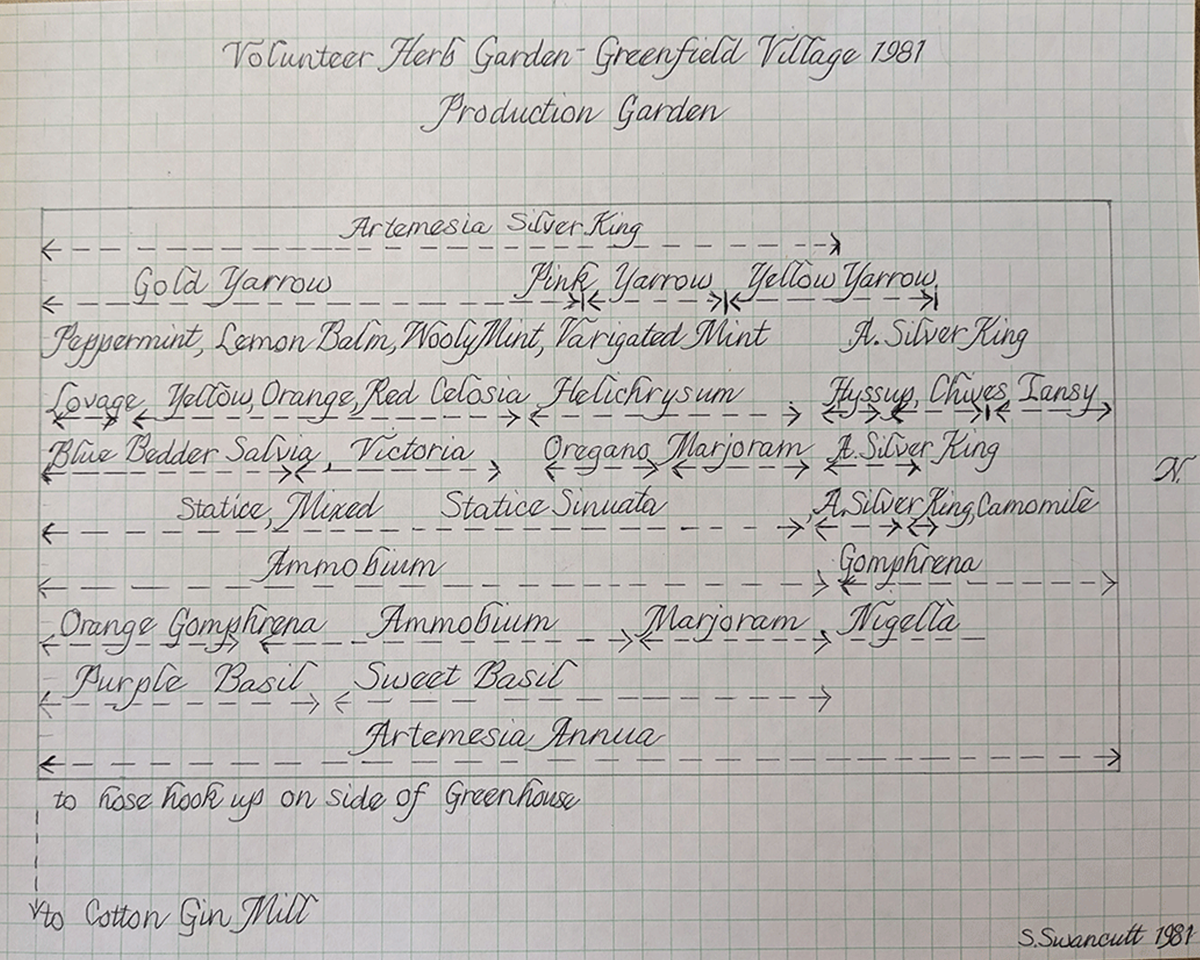 Map of the VHA production garden, drawn by Shirley Swancutt, 1981. Shirley succeeded Mary Gerathy as VHA coordinator in March 1984. From the records of the Village Herb Associates, E.I. 396, Benson Ford Research Center, The Henry Ford, Dearborn, Michigan. / Photo by the Staff of The Henry Ford.
The first VAH garden meant to add context to a historic structure, Dr. Howard's Office, provided an opportunity for members to hone their knowledge and skills with growing herbs used in mid-nineteenth century pharmacological contexts. The VHA members responsible for this garden had to relocate it from one side of the Village Green to the other as part of the rehabilitation of Greenfield Village in 2000. The addition of the Jackson Home to the village reduced space available for Dr. Howard's Garden and meant that VHA members had to rethink their location and herb arrangements.
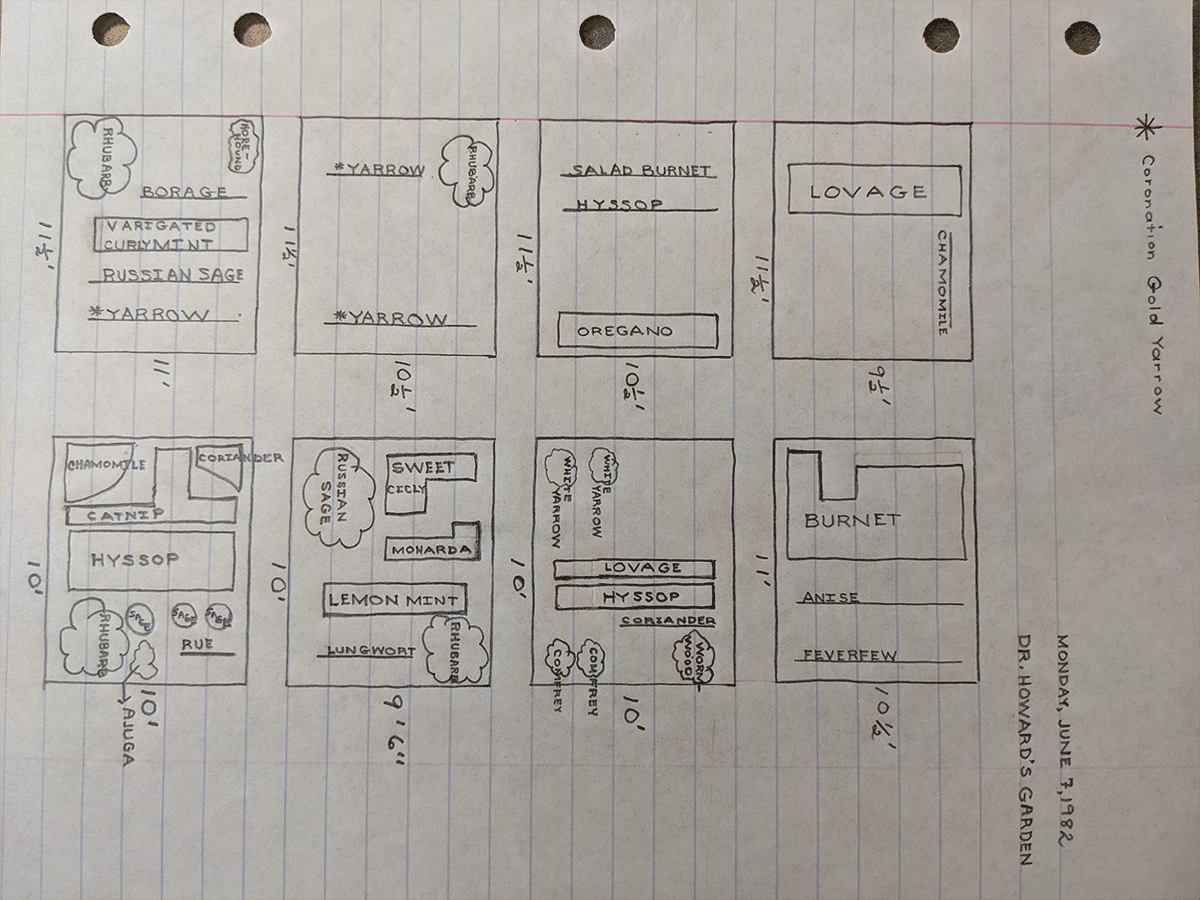 Map of Dr. Howard's Garden, June 7, 1982. From the records of the Village Herb Associates, E.I. 396, Benson Ford Research Center, The Henry Ford, Dearborn, Michigan. / Photo by the Staff of The Henry Ford.
Other major changes over the decades included relocation of the first production garden from the fields repurposed for Firestone Farm fields into "the back forty" of THF property in 1984. It remained there until the dedication of the new Burbank Garden and its operation as a production space in 1996. VHA members also assumed responsibility for plantings around the birthplace of Luther Burbank and the Burbank Information Office.
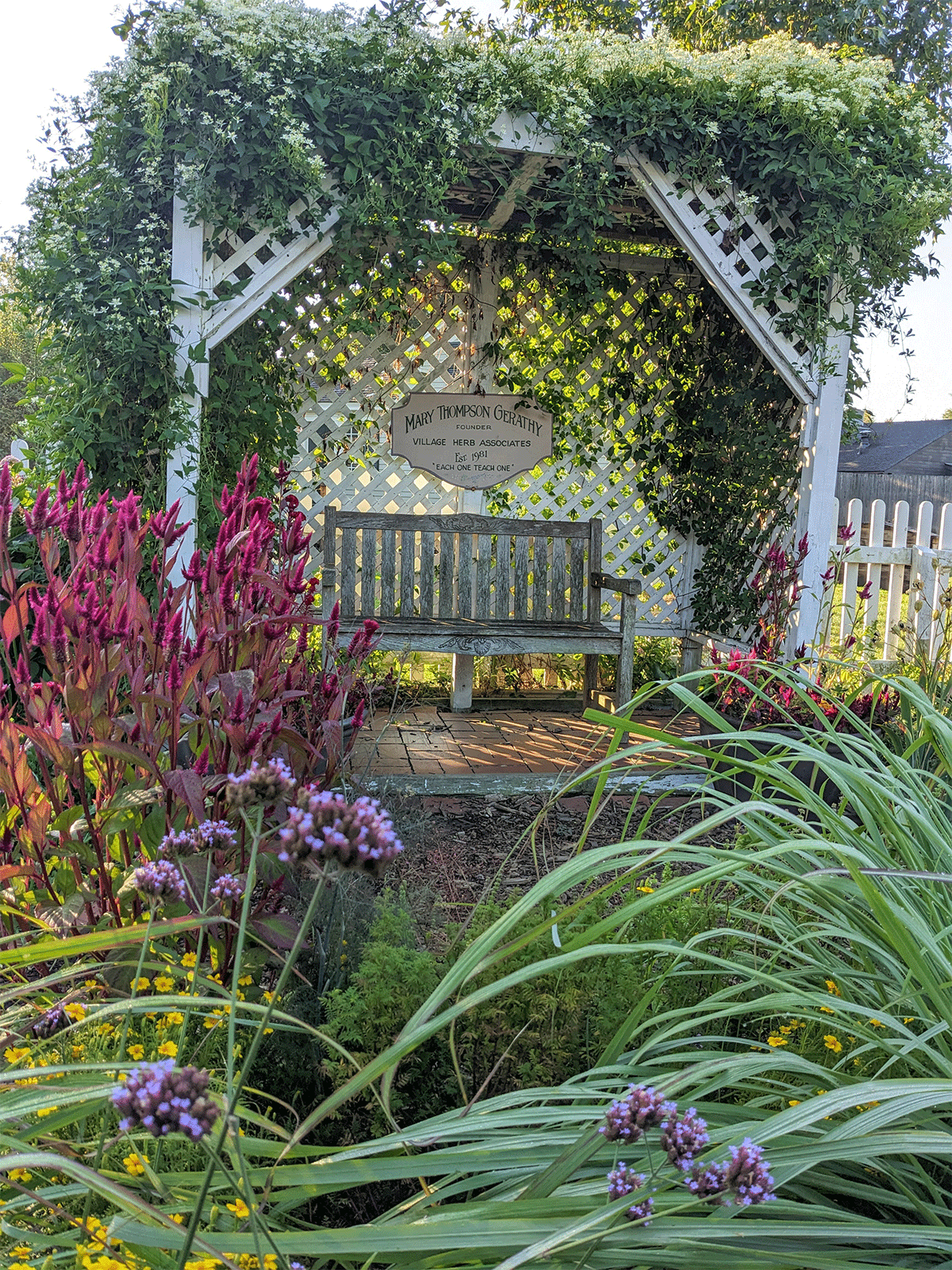 Meditative space with seating, dedicated to VHA founder Mary Thompson Gerathy, in the Burbank Garden. / Photo by the Staff of The Henry Ford.
Members refurbished the Garden of the Leavened Heart in 1988. Then in 1993 members worked with Greenfield Village grounds staff to relocate the garden in front of Martha-Mary Chapel; this was to clear space for A Taste of History restaurant. The reinstallation included a plaque crediting Clara Ford, an avid gardener, as designer of the original Garden of the Leavened Heart, and reminded viewers of the importance of pollinators and the need for compassion.
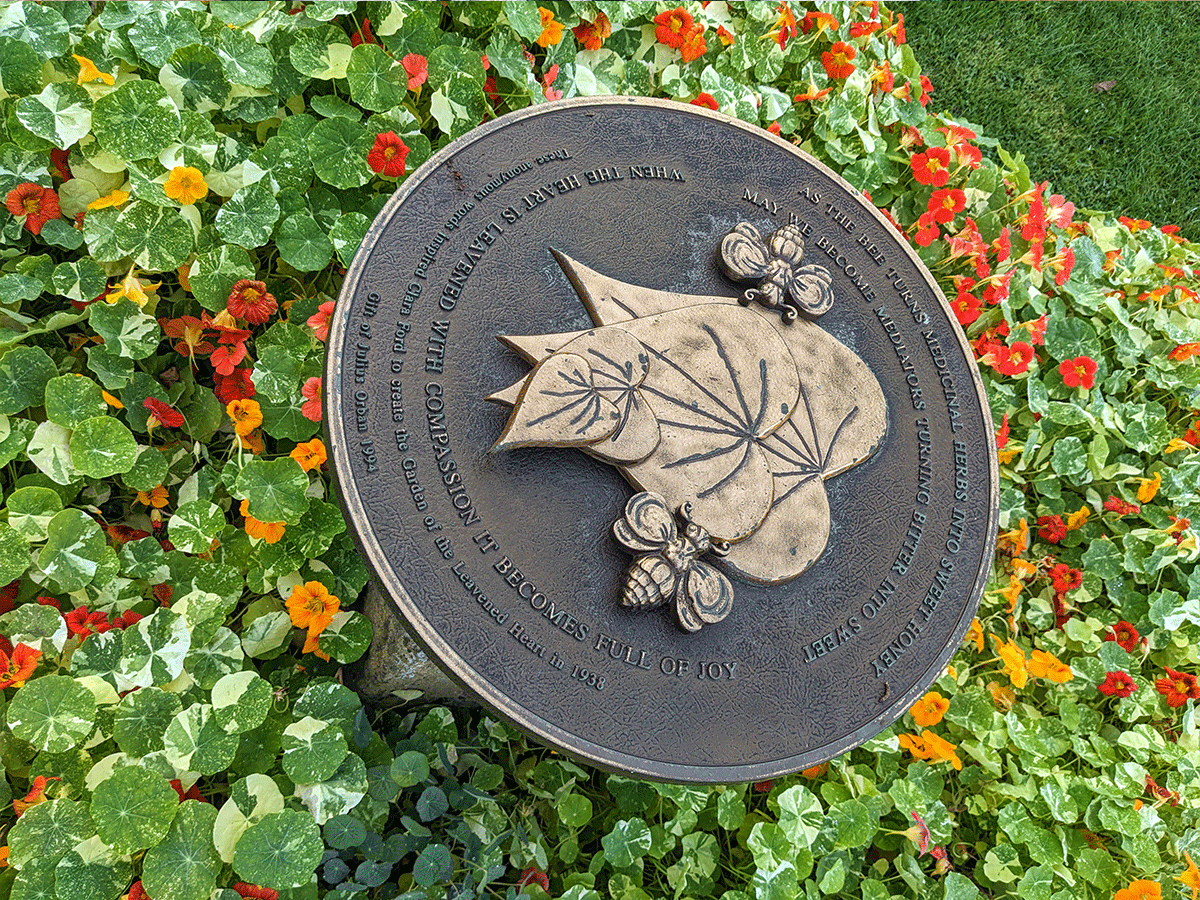 The plaque reads: "As the bee turns medicinal herbs into sweet honey / may we become mediators turning bitter into sweet / when the heart is leavened with compassion it becomes full of joy / These anonymous words inspired Clara Ford to create the Garden of the Leavened Heart in 1938 / 6th of Julius Orban 1994." / Photo by the Staff of The Henry Ford.
Growing Strong
VHA began with a clear vision, and members maintain the momentum through teamwork. They do this as they continue to balance maintenance of beautiful gardens in the public spaces of Greenfield Village and fundraising to support their work. Members turn plants grown in the production garden into herb wreaths, tussie-mussie bouquets, potpourri, and other handmade crafts for sale. Detroit Central Market offers a prime location for VHA to engage with the public during market days as well as a chance to sell their wares.
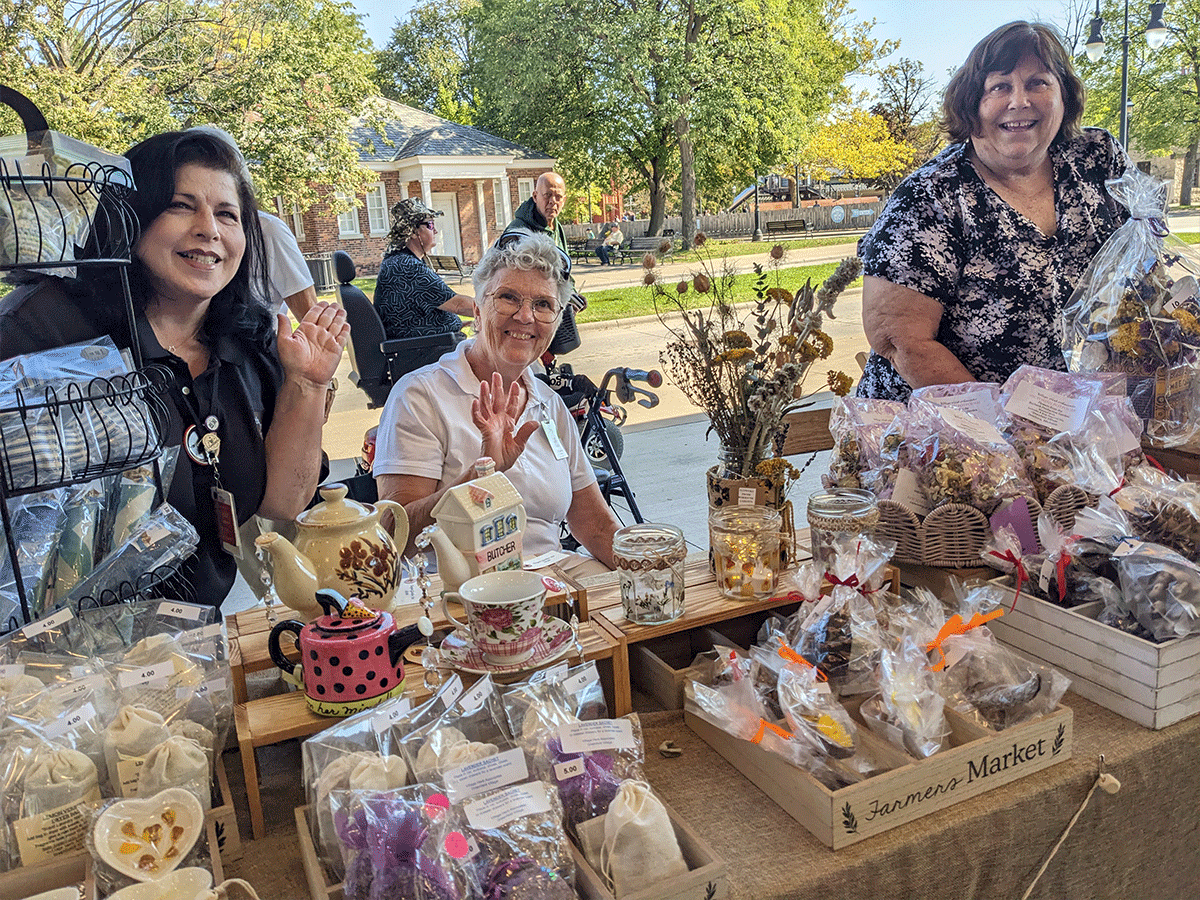 Village Herb Associates members and some of the products created by members for sale during the 2025 September market weekend at Detroit Central Market in The Henry Ford's Greenfield Village. / Photo by the Staff of The Henry Ford.
Self-aware members understood the importance of retaining records to document garden plantings and to keep track of their own work. The group's archive resides in the Benson Ford Research Center at The Henry Ford. To date it includes a brief VHA history, examples of herb reports, information about each garden, and several colorful and complete scrapbooks that document group work from 1981 to 2013. Newsletter files include issues from the first in 1982 to 2020. Active members maintain regular contact with THF archivists and deposit archived material on schedule. This resource makes it easy to recount the organization's history and utility.
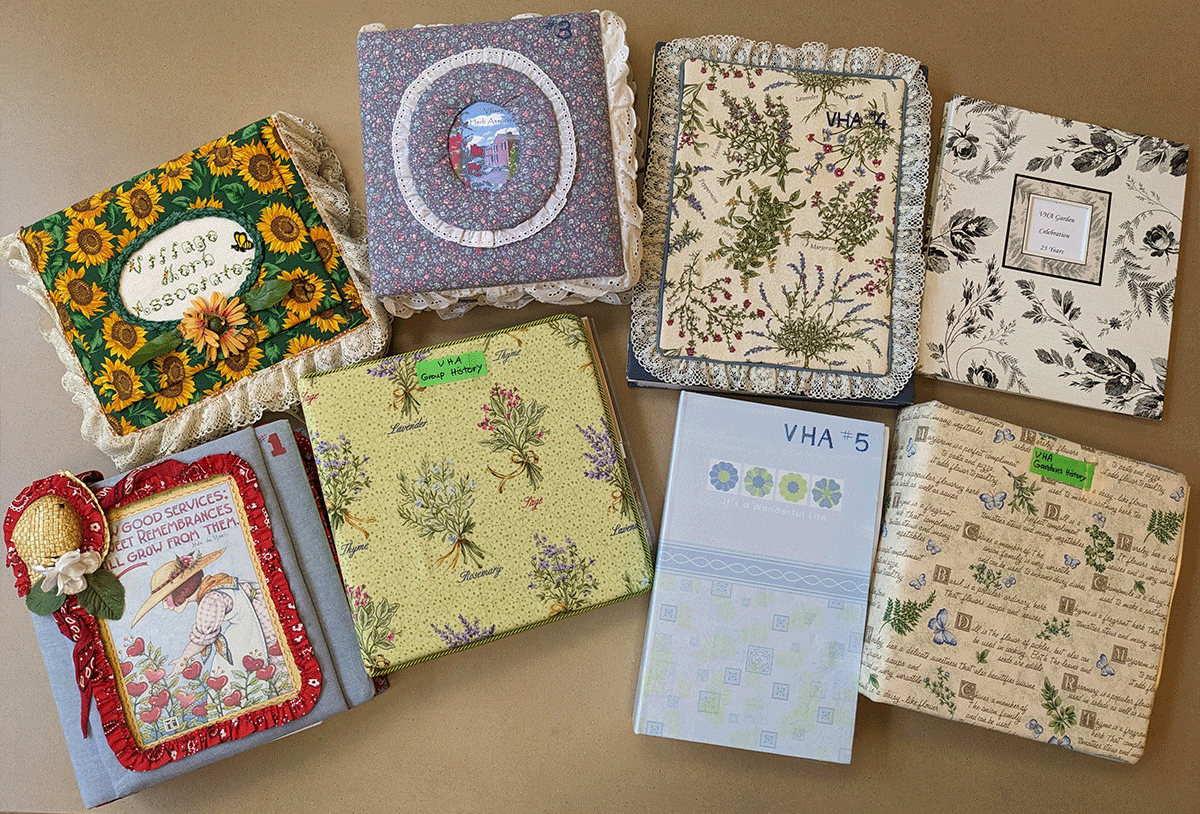 Scrapbooks in the records of the Village Herb Associates, E.I. 396, Benson Ford Research Center, The Henry Ford, Dearborn, Michigan. / Photo by the Staff of The Henry Ford.
The Village Herb Associates remind us of how one person can mobilize a team that affirms personal interests in gardening and that enhances guest experiences in Greenfield Village. Each One Teach One, indeed.
Debra A. Reid, Curator of Agriculture and the Environment, The Henry Ford.
Keywords | |
|---|---|
Series | |
Themes |