
We Shall Overcome: The 60th Anniversary of the Voting Rights Act
| Written by | |
|---|---|
| Published | 7/31/2025 |
We Shall Overcome: The 60th Anniversary of the Voting Rights Act
| Written by | |
|---|---|
| Published | 7/31/2025 |
The Civil Rights Act of 1964 was a landmark piece of legislation that forever changed the lives of many people of color in the United States and set the course for other groups to pursue their full rights as citizens. Yet, despite the successful legislation, many Black people and other people of color across the United States, particularly in the South, continued to be denied the right to vote.
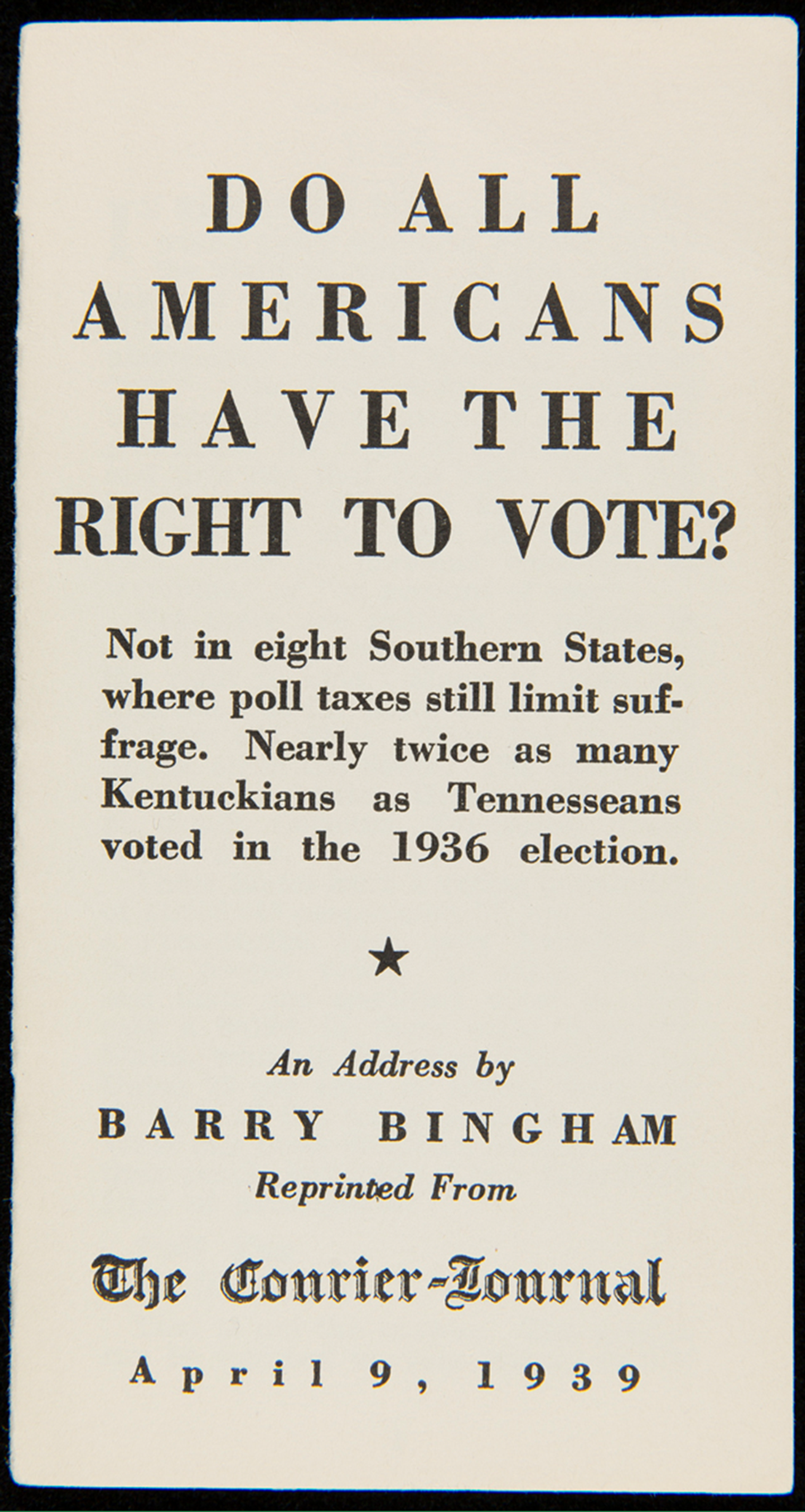
“Do All Americans Have the Right to Vote?” An address by Barry Bingham, April 9, 1939. / THF289023
Do all Americans have the right to vote?
This question has been a concern for decades, particularly before the passage of the Voting Rights Act of 1965. The 15th Amendment prohibits voting discrimination based on race, yet barriers still existed at that time that limit access to voting. Poll taxes, literacy tests, and grandfather clauses made it all but impossible for many groups of people to exercise the rights granted to them in the 15th Amendment — rights that were repeatedly violated.
Grassroots organizing had begun in many areas in the South, and Selma, Alabama, became the center of the movement. The Student Nonviolent Coordinating Committee (SNCC) worked to register people to vote there for months in 1965. Their work did not go unnoticed. Soon, major players in the movement, such as the Rev. Dr. Martin Luther King Jr., and the Southern Christian Leadership Conference, were making their way to Selma. The fight for voting rights eventually led to the passage of the 1965 Voting Rights Act.
Local groups in the Selma area were also doing the hard work. Members of the Dallas County Voters League, known as the Courageous Eight, worked to register people to vote in Dallas County, Alabama. Though they were told multiple times to cease their activities, they did not. These community leaders were committed to securing the vote for themselves and their community.
The figures of the voting rights movement go beyond the names you may already know. Nationally recognizable figures depended on local activists—everyday people who put their lives and livelihoods on the line. One such family, the Jacksons of Selma, rose to the occasion by opening their home to provide shelter, nourishment, and peace, all while putting their personal safety at risk. Their sacrifice helped to create a safe space for the movement’s leaders to strategize and rest.
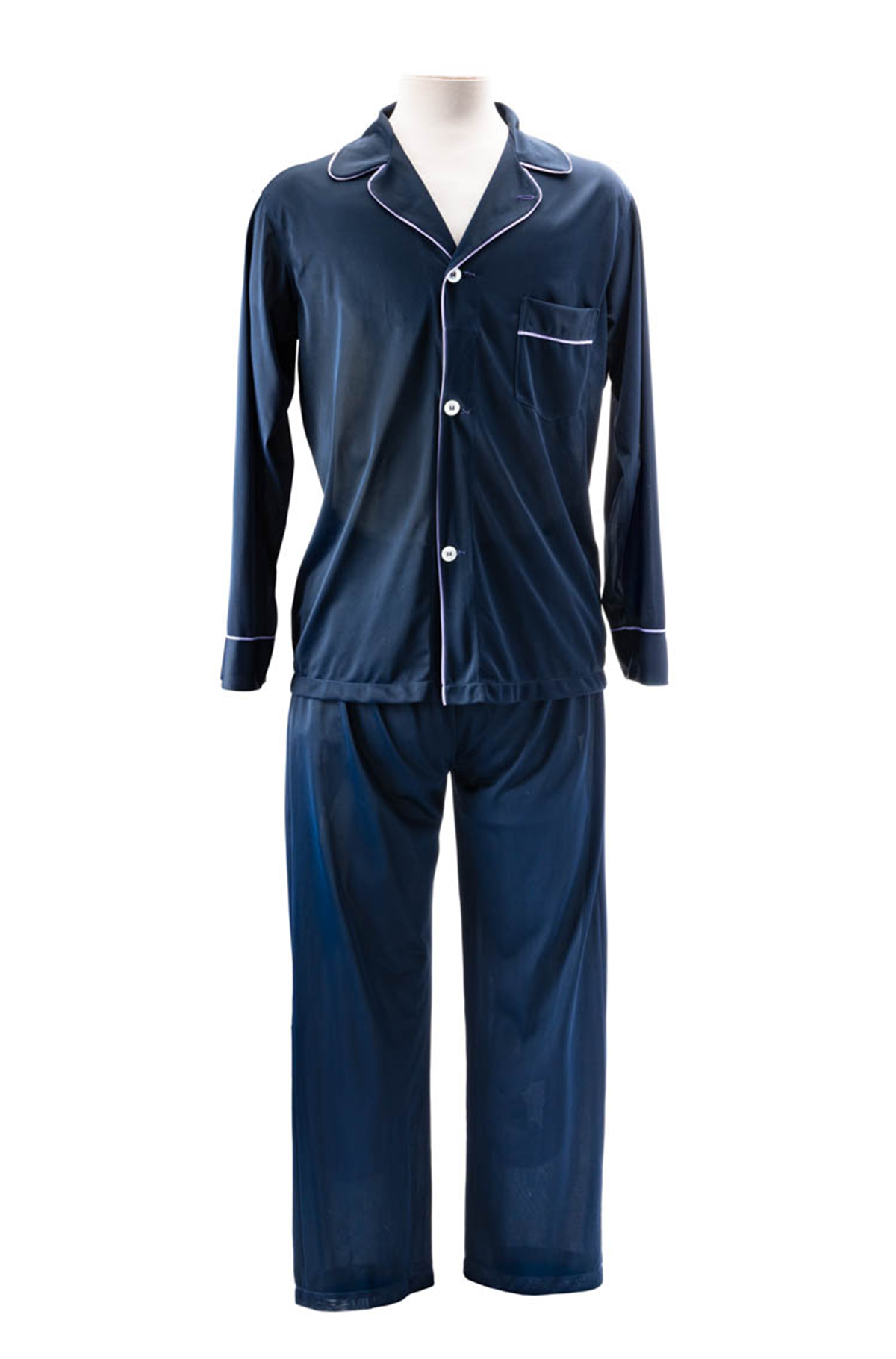
Pajamas worn by the Rev. Dr. Martin Luther King Jr. while at the Jackson’s Home. / THF802666
Mrs. Richie Sherrod Jean Jackson took pride in ensuring that her guests felt comfortable and welcomed. Dr. Jackson provided Dr. Martin Luther King Jr. with pajamas, and Mrs. Jackson fueled the movement with nourishment. The Jackson’s young daughter, Jawana, would listen to the stories her Uncle Martin would tell. But the family did more than provide a haven. They became involved civically as well.
In November 1958, Dr. Sullivan Jackson testified before the U.S. Commission on Civil Rights. Established as part of the 1957 Civil Rights Act, the commission investigated voter discrimination. The hearings were held over a period of two months, between 1958 and 1959. The Commission had several people testify, including Dr. Jackson, who spent hours preparing for his testimony. The Commission assumed the responsibility of voter registration, with a focus on Alabama. Speaking out had its own set of hardships. The Jacksons and others who testified often faced economic repercussions.
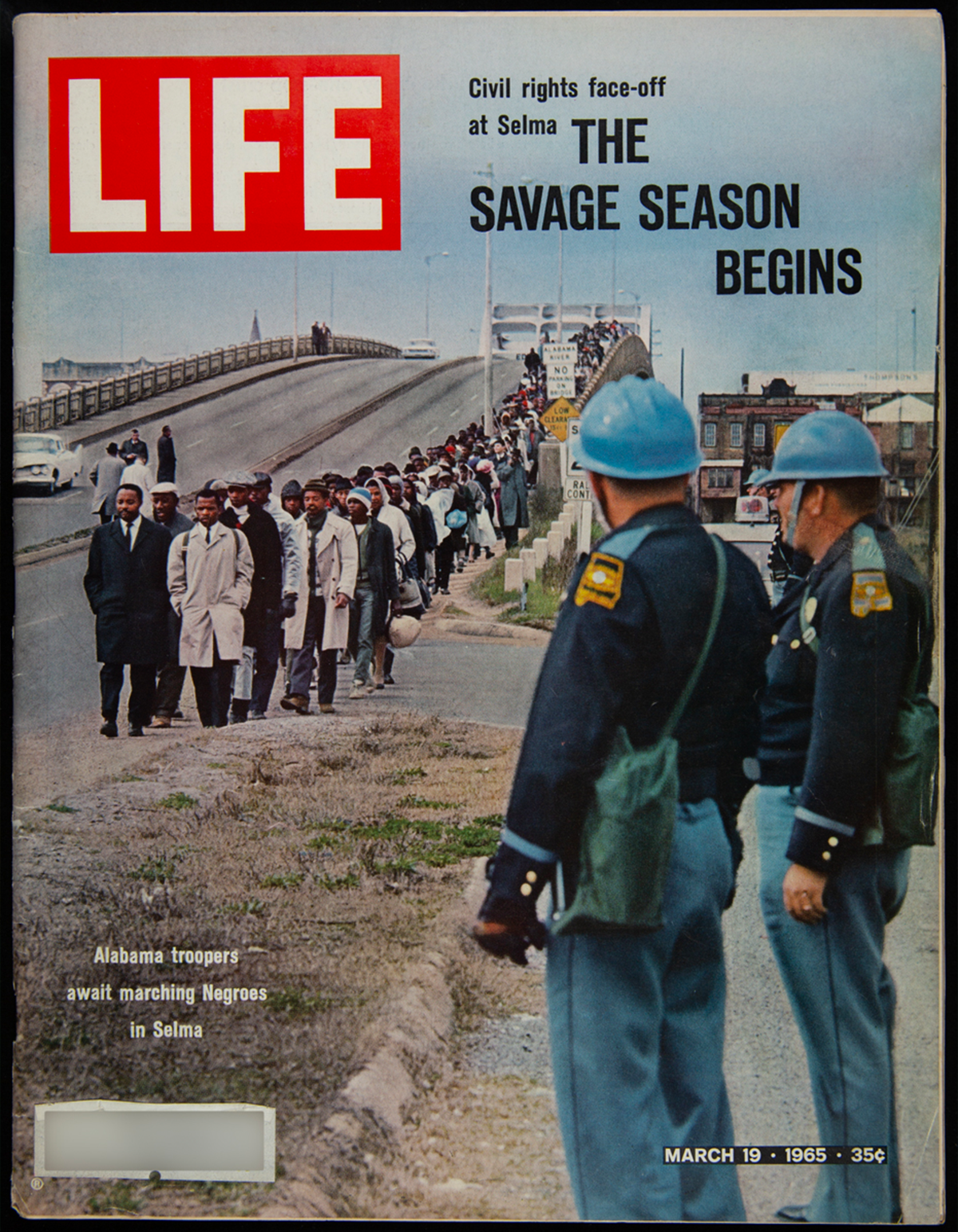
“Life” Magazine, March 19, 1965. / THF715919
Voting is a fundamental right. In the United States, this concept has been ignored more than once. The denial of voting rights to people of color across the country came into sharp focus in March of 1965 in Selma, Alabama. After March 7, 1965—known as Bloody Sunday—Dr. King called for clergy members to go to Selma. Clergy, including Rabbi Abraham Heschel and Rev. James Reeb, among many others, answered the call. On March 15, 1965, President Lyndon B. Johnson addressed the nation and instructed Congress to introduce and pass a Voting Rights Act.
Two days after President Johnson gave his “American Promise” speech, on March 17, 1965, the Voting Rights Act was introduced into Congress. The Senate began its debate on the bill on April 22. Eventually, the Voting Rights Act was passed after much debate, and President Johnson signed it on August 6, 1965. Thus, it enshrined the enforcement of the 15th Amendment and ensured that no one was denied the right to vote.
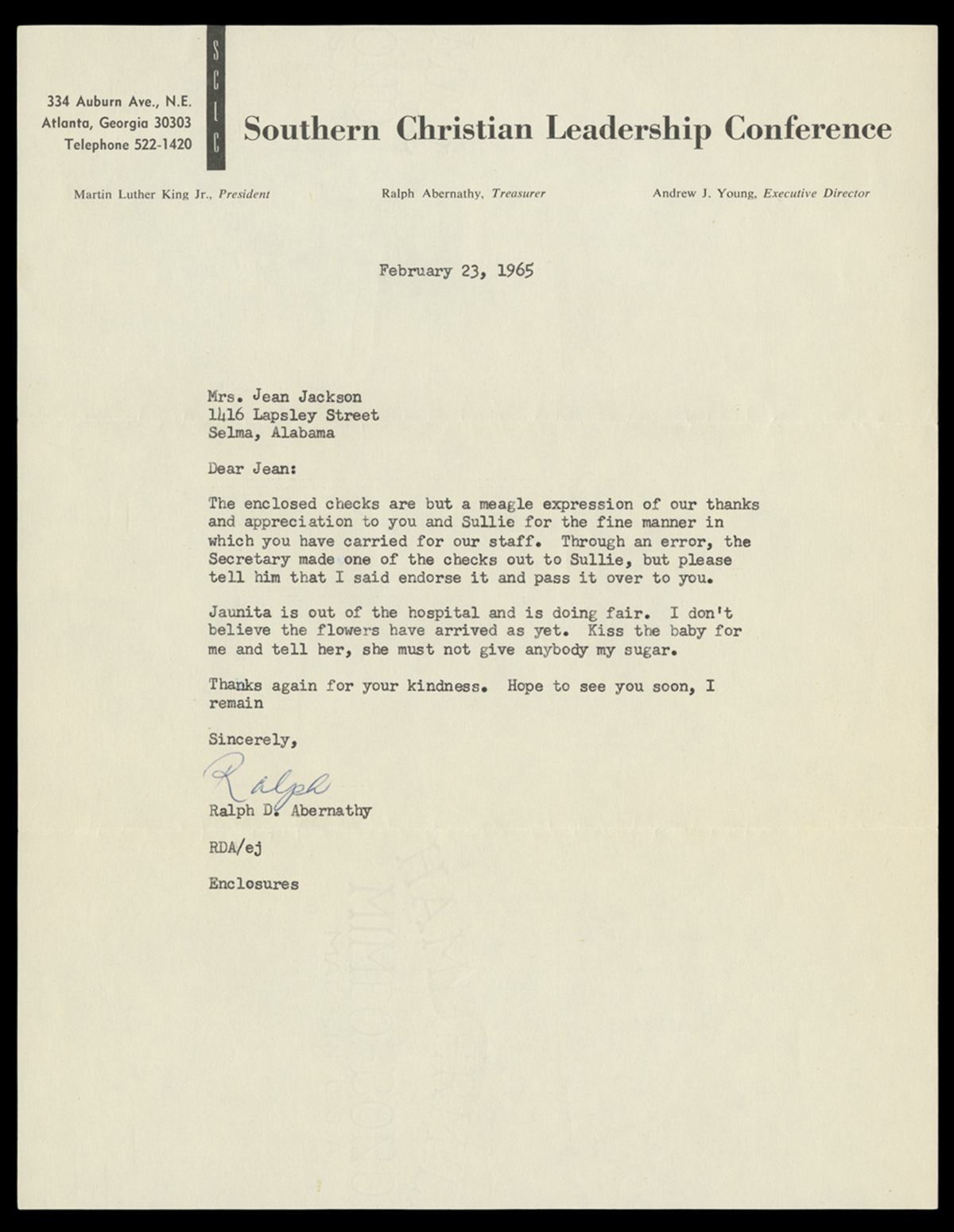
Letter from Rev. Ralph Abernathy thanking her for opening her home to the Southern Christian Leadership Conference. / THF721760
While the Jackson House remained a family home at its core, it also offered refuge and peace during a time of great turmoil. While in Selma, Dr. King stayed with the Jacksons. Rev. Ralph Abernathy, a member of the leadership team for the Southern Christian Leadership Conference, sent Mrs. Jackson reimbursement and letters of gratitude. The Jacksons provided crucial hospitality and support, even if it meant putting their own lives at risk.
As we celebrate the 60th anniversary of the Voting Rights Act, it is essential to remember all those who were involved in the process.
Are you registered to vote? To find out if you are registered or to register, please visit the following websites:
Michigan Residents
To Check Your State
Heather Bruegl (Oneida/Stockbridge-Munsee) is the Curator of Political and Civic Engagement at The Henry Ford.
Series | |
|---|---|
Themes |