
Weaving Stories: Spotlight on The Henry Ford's Indigenous Artist in Residence
| Written by | Heather Bruegl |
|---|---|
| Published | 1/19/2026 |
Weaving Stories: Spotlight on The Henry Ford's Indigenous Artist in Residence
| Written by | Heather Bruegl |
|---|---|
| Published | 1/19/2026 |
“A lot of my work is based on identity and how I relate to my culture, my experiences of being Native, and growing up inside and outside and bouncing back and forth in the community. I explore beadwork in my pieces; I explore florals and storytelling.” —Maggie Thompson (Fond du Lac Ojibwe).
This year, The Henry Ford took steps toward building community with Indigenous nations by expanding the institution’s Artists in Residence program, offered annually in Greenfield Village. To kick off Celebrate Indigenous History programming, we welcomed Maggie Thompson (Fond du Lac Ojibwe) as the inaugural Indigenous Artist in Residence.
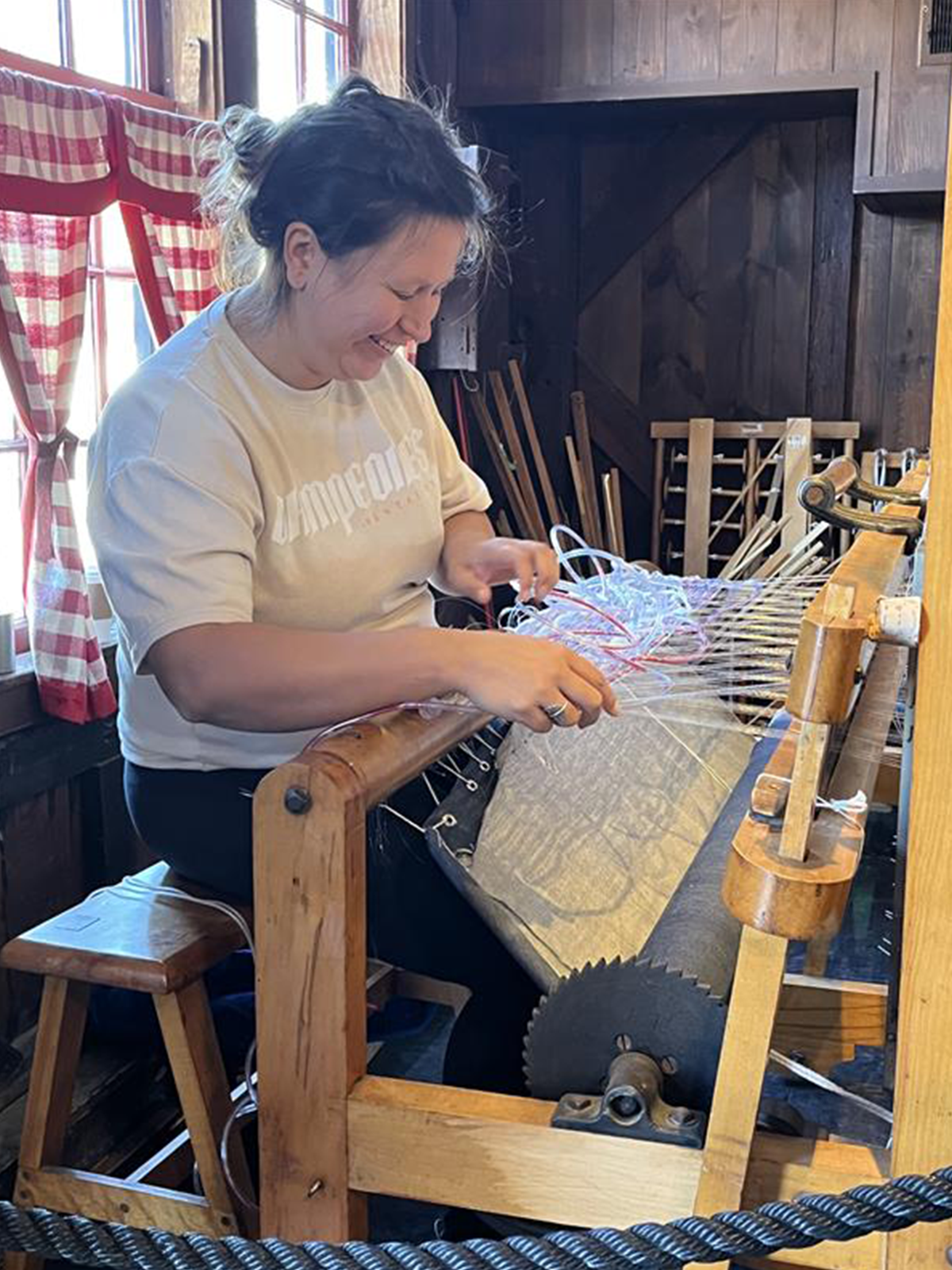
Maggie Thompson begins to weave in Greenfield Village Weaving Shop, October 2025. / Image by Staff of The Henry Ford.
Thompson was born and raised in Minneapolis, Minnesota, and her Ojibwe heritage comes from her father's side. Inspired from a young age, Maggie was creating art by the time she was in the fourth grade. Her mother is a painter, and she has been inspired by other Indigenous artists, including Jim Denomie (Ojibwe) and Dyani White Hawk (Lakota).
She received her bachelor of fine arts in textiles at the Rhode Island School of Design (RISD) in 2013. The following year, she mounted her first solo exhibition, Where I Fit at All My Relations Arts in Minneapolis. In 2024, her work was included in the exhibition The Shape of Power: Stories of Race and American Sculpture at the Smithsonian American Art Museum. And most recently, she was featured at the Detroit Institute of Arts’ celebrated 2025 exhibition, Contemporary Anishinaabe Art: A Continuation.
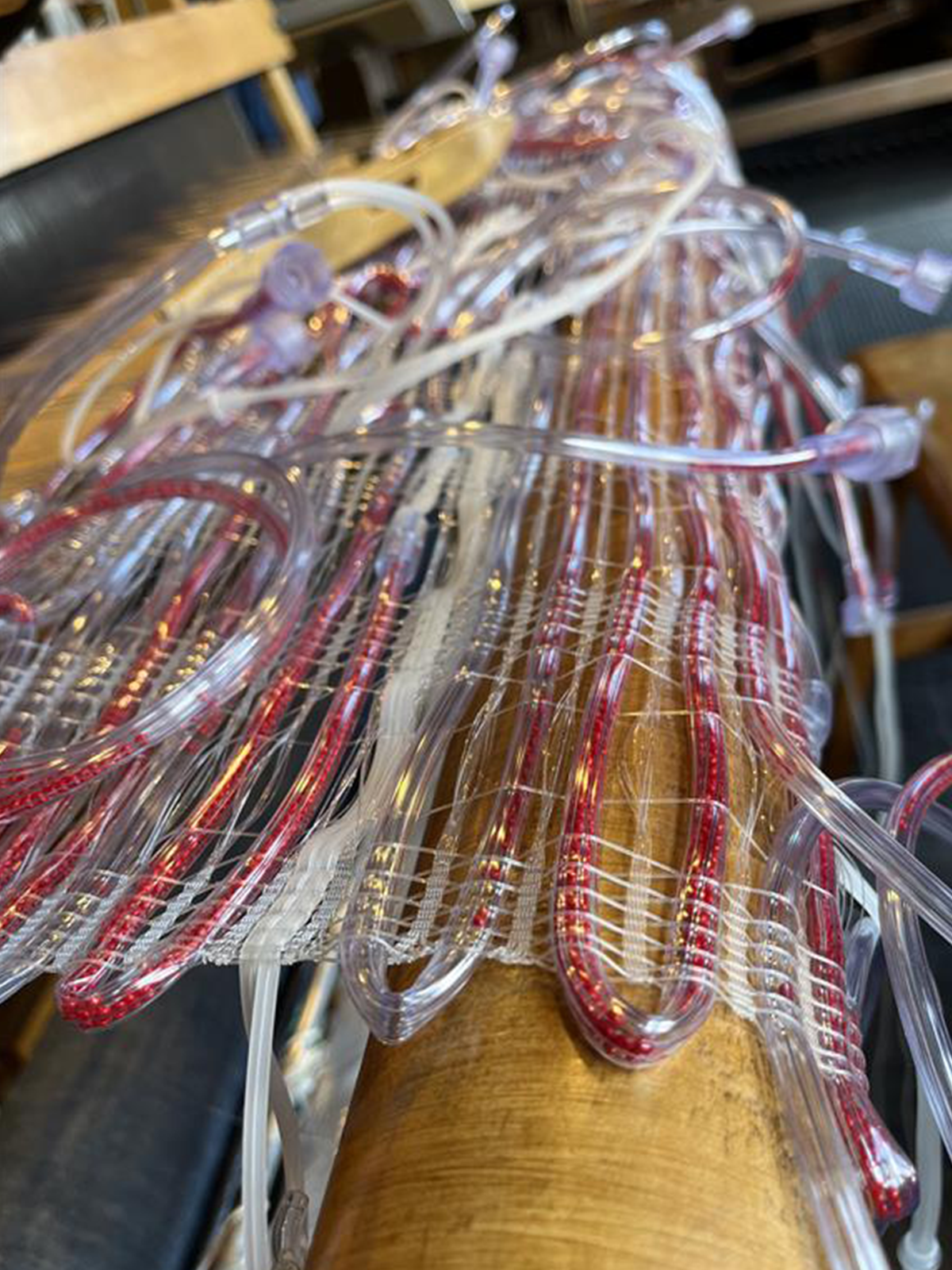
Detail of weaving by Maggie Thompson during the inaugural Indigenous Artist in Residence, October 2025. / Image by Staff of The Henry Ford.
Thompson has been awarded several grants and awards, including the All My Relations and Bockley Gallery Jim Denomie Memorial Scholarship and the Jerome Foundation Jerome Hill Artist Fellowship. Her work is represented in the collections of the Minneapolis Institute of Art, the Minnesota Museum of American Art, and the Field Museum, among others. In addition to her arts practice, Maggie runs a knitwear business called Makwa Studio—an Indigenous-run space that promotes Indigenous creativity, education, and collaboration.
During her residency in Greenfield Village, Thompson activated the Weaving Shop located in Liberty Craftworks. This building—a converted 1840s cotton mill from Bryan County, Georgia—is a popular experience for guests to see daily demonstrations of historic textile production on our many working looms. While Thompson does use traditional weaving materials such as natural fibers in her work, during her residency she relied on nontraditional materials such as nylon monofilament (better known as fishing line) and hollow, plastic, oxygen tubes that she filled with red seed beads.
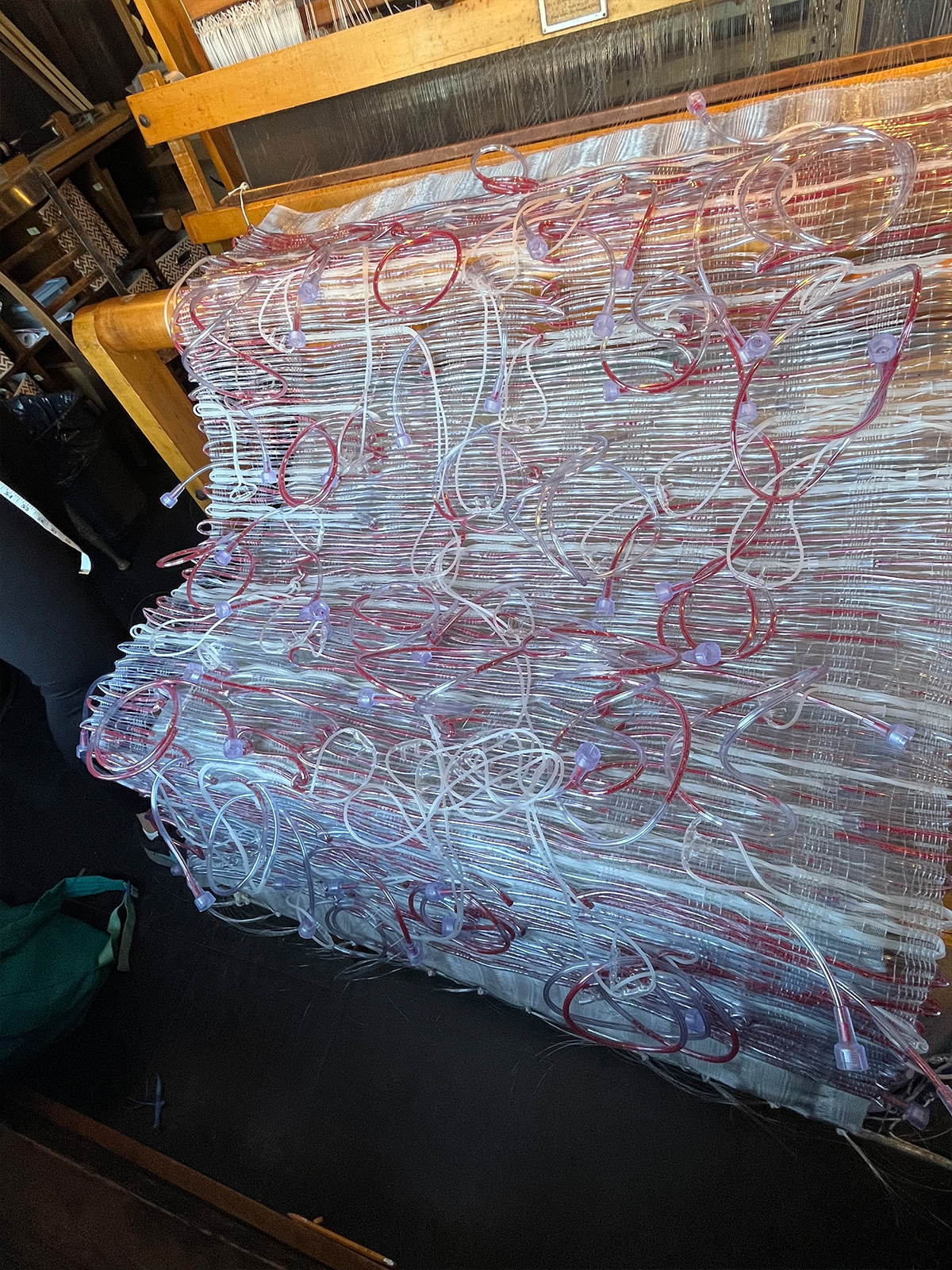
Maggie Thompson’s weaving in progress, Greenfield Village Weaving Shop, October 2025. / Image by Staff of The Henry Ford.
Thompson’s recent weaving projects use nontraditional materials to talk about complex topics that affect many families across the country and within Indian Country: substance use, addiction, and recovery. Many issues contribute to the high rates of substance use among Indigenous populations especially. Poverty, historical trauma, discrimination, and racism—and lack of health insurance—all play a role. A 2018 survey by the American Addiction Centers reports that 10% of Indigenous Americans have a substance use disorder and 7.1% have an alcohol use disorder. These numbers make it so that Indigenous people living in the United States have rates of addiction higher than any other group. With the work that she created at the Weaving Shop, Maggie hopes to raise awareness of these issues.
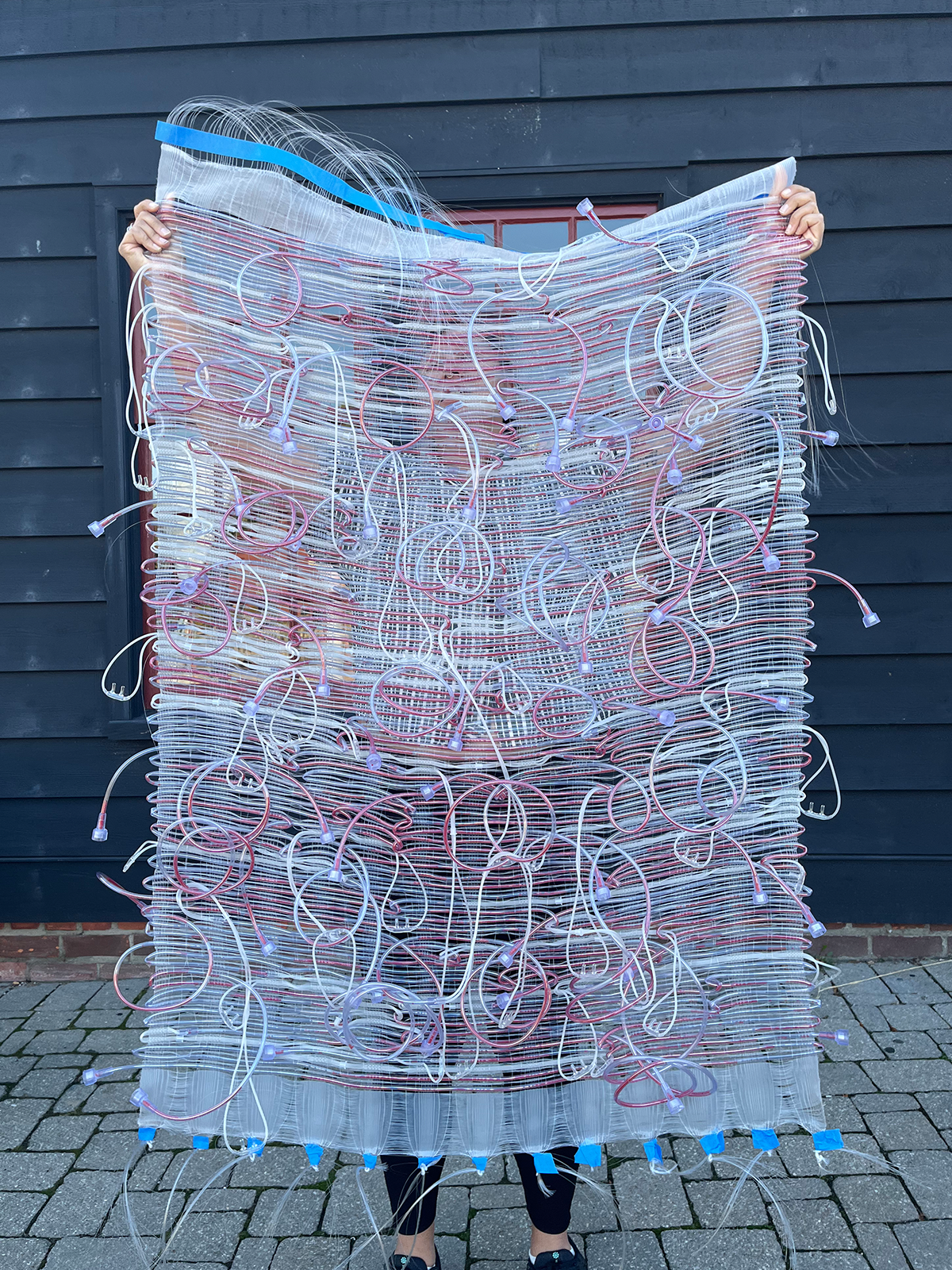
Maggie Thompson holds up the work created during her residency at The Henry Ford. / Image by Staff of The Henry Ford.
Heather Bruegl (Oneida/Stockbridge-Munsee) is the Curator of Political and Civic Engagement at The Henry Ford.
Series | |
|---|---|
Themes |