
Search
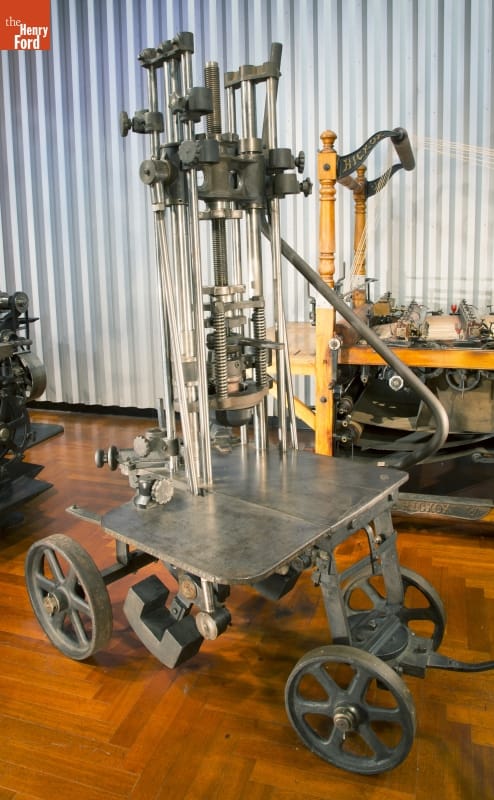
- Side Lever Glass Press, Used by Fostoria Glass Company, 1890-1920 - As early as the 1820s, American glass manufacturers mass-produced pressed glassware to meet the demands of a rapidly growing population. Using presses to shape molten glass in intricately engraved molds, workers could churn out highly decorative -- yet affordable -- pieces that looked like expensive cut or etched glass. By the late 19th century most Americans owned a set of pressed glass tableware.
- 1890-1920
- Collections - Artifact
Side Lever Glass Press, Used by Fostoria Glass Company, 1890-1920
As early as the 1820s, American glass manufacturers mass-produced pressed glassware to meet the demands of a rapidly growing population. Using presses to shape molten glass in intricately engraved molds, workers could churn out highly decorative -- yet affordable -- pieces that looked like expensive cut or etched glass. By the late 19th century most Americans owned a set of pressed glass tableware.
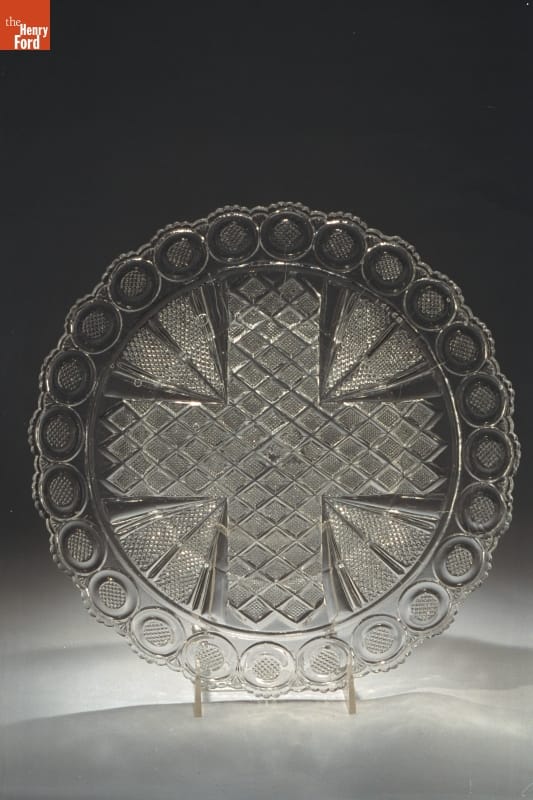
- Pressed Glass Dish,1825-1835 - Mechanically pressed glass was an innovation in glass history, making decorative, "patterned" glass available to a broad audience. One of the earliest types of pressed glass, dating to the 1830s is known as "Lacy Glass". Complex stippled patterns were developed to help hide technical defects caused by early presses, when the glass gather was cut off and dropped into a mold.
- 1825-1835
- Collections - Artifact
Pressed Glass Dish,1825-1835
Mechanically pressed glass was an innovation in glass history, making decorative, "patterned" glass available to a broad audience. One of the earliest types of pressed glass, dating to the 1830s is known as "Lacy Glass". Complex stippled patterns were developed to help hide technical defects caused by early presses, when the glass gather was cut off and dropped into a mold.
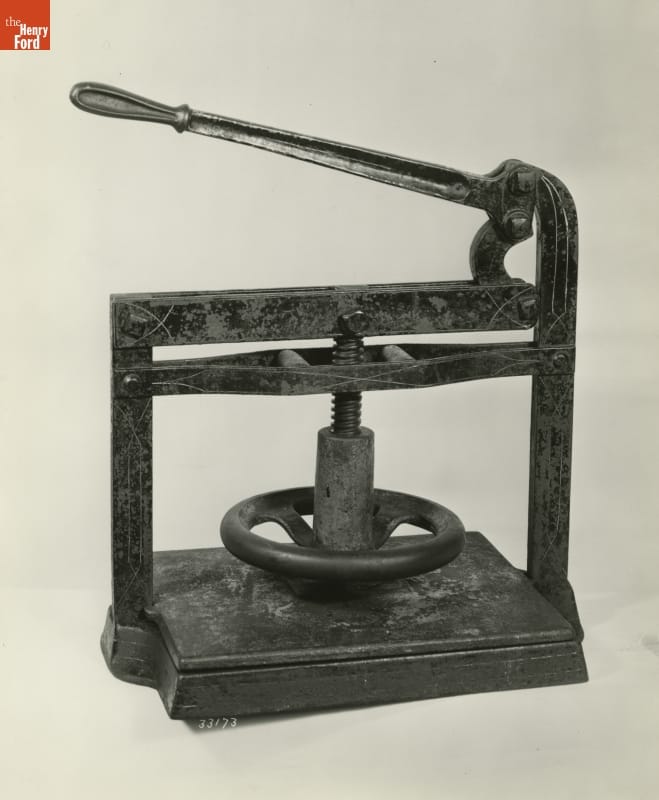
- Copy Press, 1890-1910 - The copy press, while visually similar to certain printing presses, serves a different function. These devices were used to make copies of handwritten correspondence or drawings. A document written in water-soluble ink was moistened and placed in the press to make a duplicate. James Watt--who improved upon and invented important steam engines--patented the perfected copy press in 1780.
- 1890-1910
- Collections - Artifact
Copy Press, 1890-1910
The copy press, while visually similar to certain printing presses, serves a different function. These devices were used to make copies of handwritten correspondence or drawings. A document written in water-soluble ink was moistened and placed in the press to make a duplicate. James Watt--who improved upon and invented important steam engines--patented the perfected copy press in 1780.
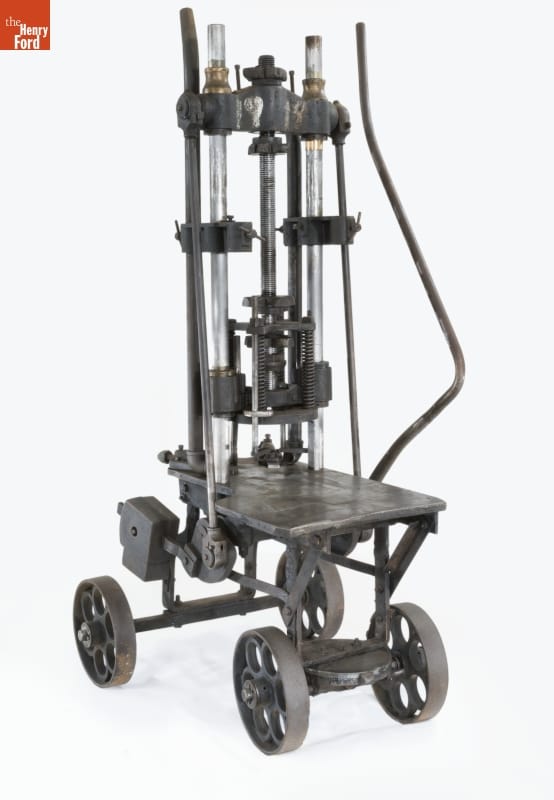
- Glass Press, Used by Cambridge Glass Works, circa 1920 -
- circa 1920
- Collections - Artifact
Glass Press, Used by Cambridge Glass Works, circa 1920
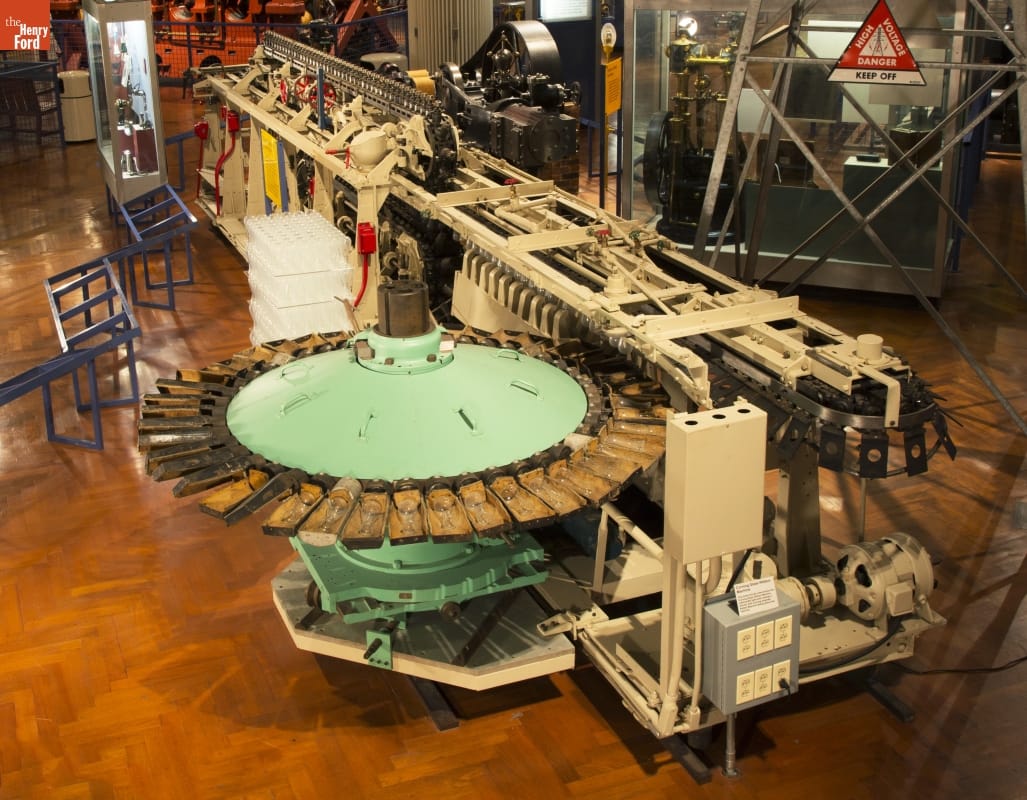
- Corning Glass Ribbon Machine, 1928 - Design as a discipline is rooted in craft but revealed in industry. Similarly the story of incandescent lamp manufacture begins with craft (the earliest ones offered for sale were exquisite hand-made objects) and ends with mass production. This high output machine (ten bulb blanks a second) was developed by a former glass blower and a mechanical engineer.
- 1928
- Collections - Artifact
Corning Glass Ribbon Machine, 1928
Design as a discipline is rooted in craft but revealed in industry. Similarly the story of incandescent lamp manufacture begins with craft (the earliest ones offered for sale were exquisite hand-made objects) and ends with mass production. This high output machine (ten bulb blanks a second) was developed by a former glass blower and a mechanical engineer.
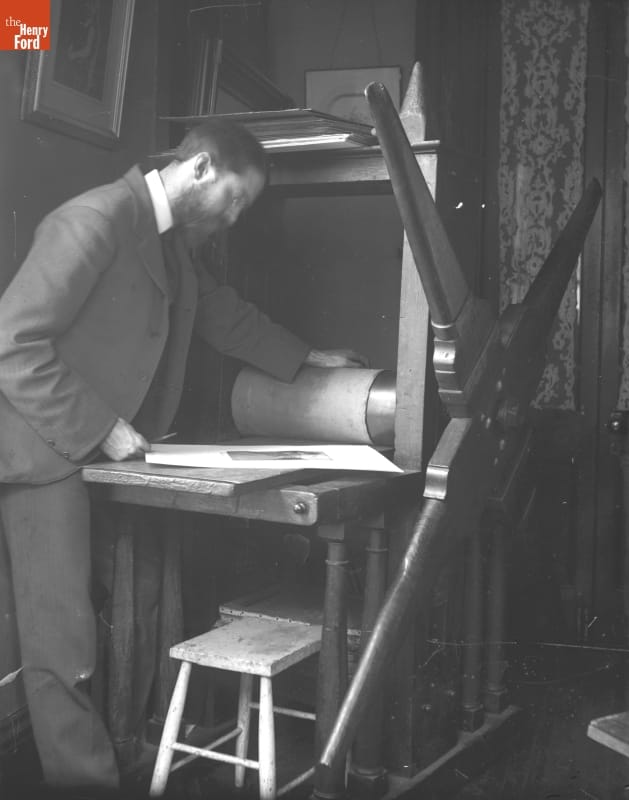
- Trowbridge at Press, 1890-1915 - In 1890, Jenny Young Chandler, 25 years old and recently widowed, began working for the <EM>New York Herald</EM>. As a photojournalist and feature writer, Chandler captured life in Brooklyn, New York, and vicinity. By 1922, the time of her death, she had produced over 800 glass plate negatives. Her sensitive, insightful photographs depict people from all walks of life and the world in which they lived.
- 1890-1915
- Collections - Artifact
Trowbridge at Press, 1890-1915
In 1890, Jenny Young Chandler, 25 years old and recently widowed, began working for the New York Herald. As a photojournalist and feature writer, Chandler captured life in Brooklyn, New York, and vicinity. By 1922, the time of her death, she had produced over 800 glass plate negatives. Her sensitive, insightful photographs depict people from all walks of life and the world in which they lived.
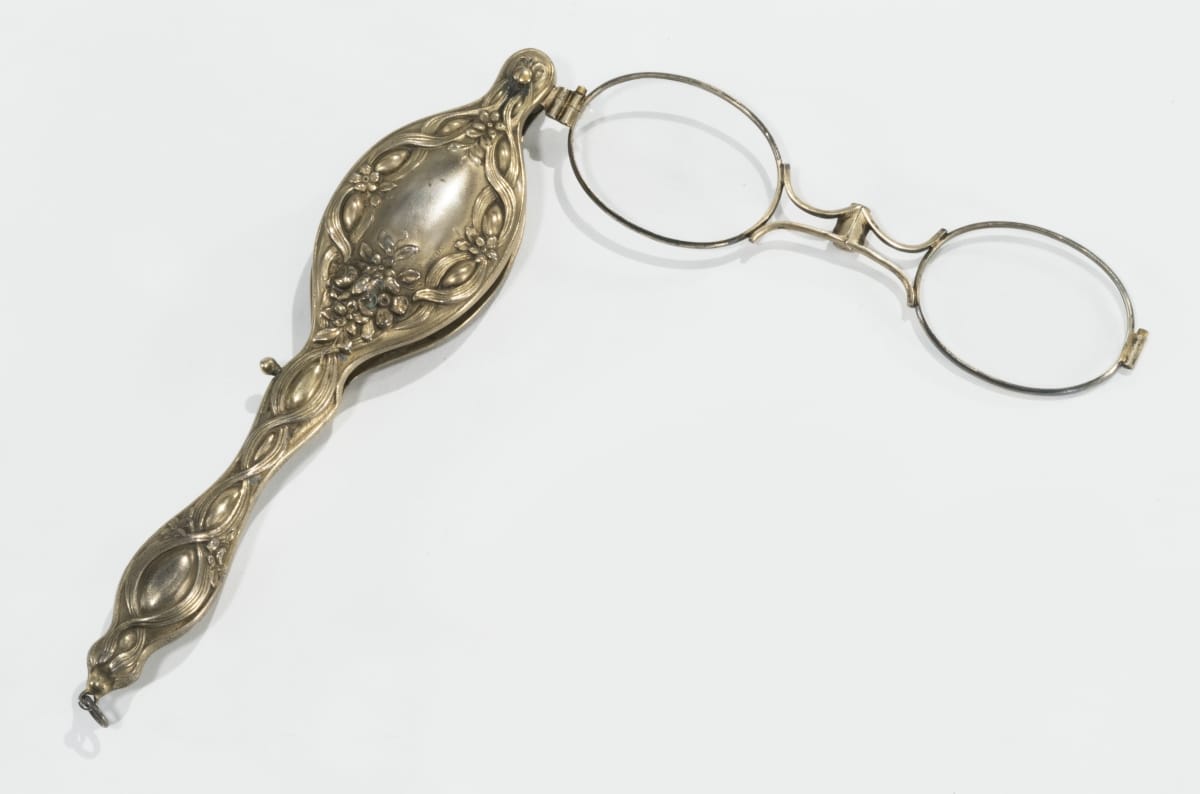
- Opera Glasses, 1890-1905 - By 1900, well-heeled consumers could choose from an array of luxury goods in the popular Art Nouveau style. The curved lines and botanical elements adorning this pair of opera glasses are characteristic Art Nouveau motifs.
- 1890-1905
- Collections - Artifact
Opera Glasses, 1890-1905
By 1900, well-heeled consumers could choose from an array of luxury goods in the popular Art Nouveau style. The curved lines and botanical elements adorning this pair of opera glasses are characteristic Art Nouveau motifs.
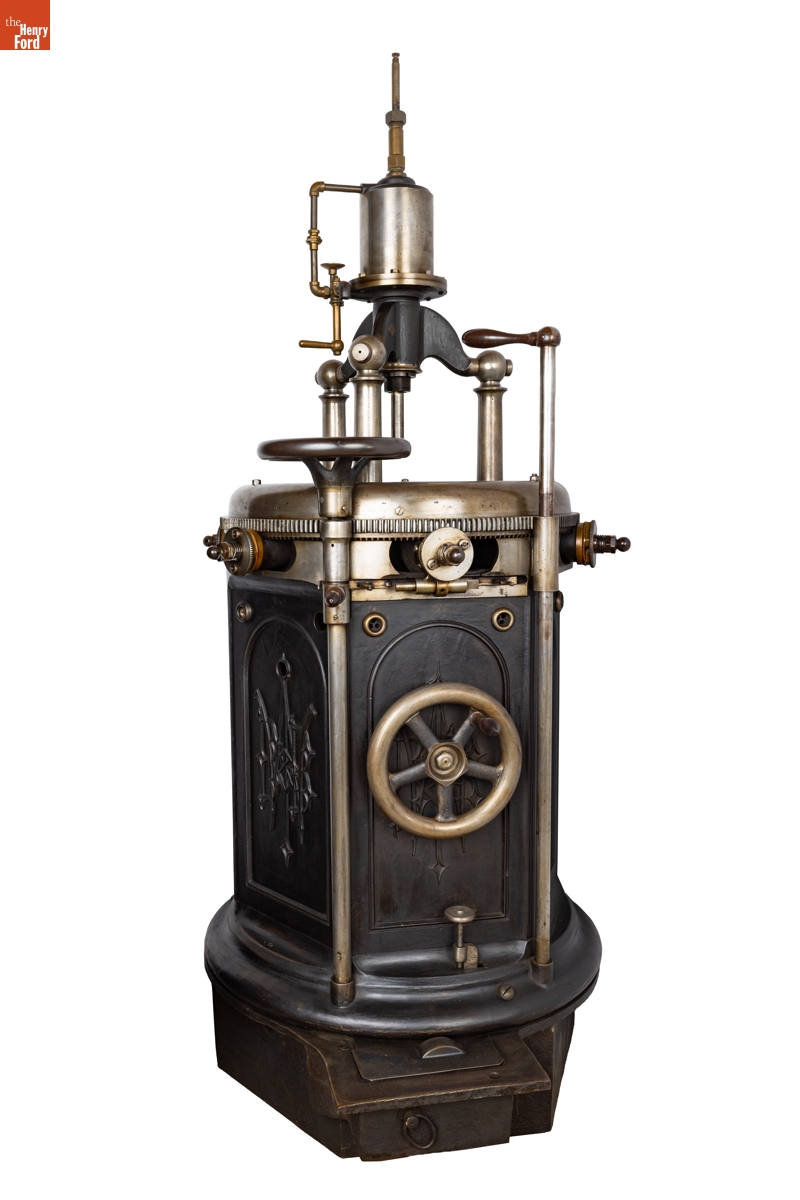
- Milling Machine, circa 1890 -
- circa 1890
- Collections - Artifact
Milling Machine, circa 1890
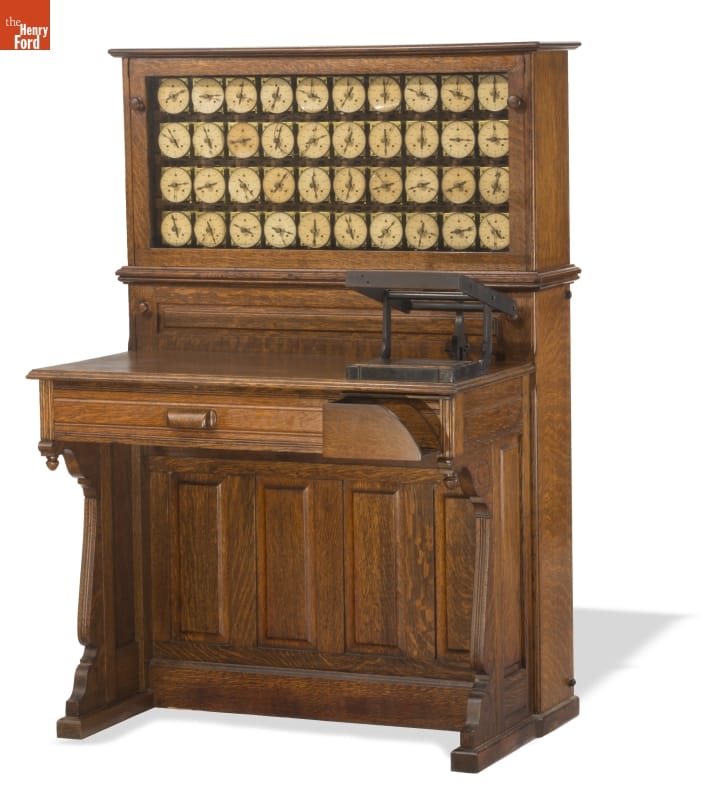
- Hollerith Tabulating Machine, 1890 - After seven years tabulating the 1880 census, the US Census Bureau ran a contest for a quicker method. Herman Hollerith won, and his "computer" was used for the 1890 census. Data was transferred to punched cards, which were pressed under a plate with pins in it. The pins went through punched holes into mercury-filled wells, completing a circuit and registering the data on the machine's dials.
- 1890
- Collections - Artifact
Hollerith Tabulating Machine, 1890
After seven years tabulating the 1880 census, the US Census Bureau ran a contest for a quicker method. Herman Hollerith won, and his "computer" was used for the 1890 census. Data was transferred to punched cards, which were pressed under a plate with pins in it. The pins went through punched holes into mercury-filled wells, completing a circuit and registering the data on the machine's dials.
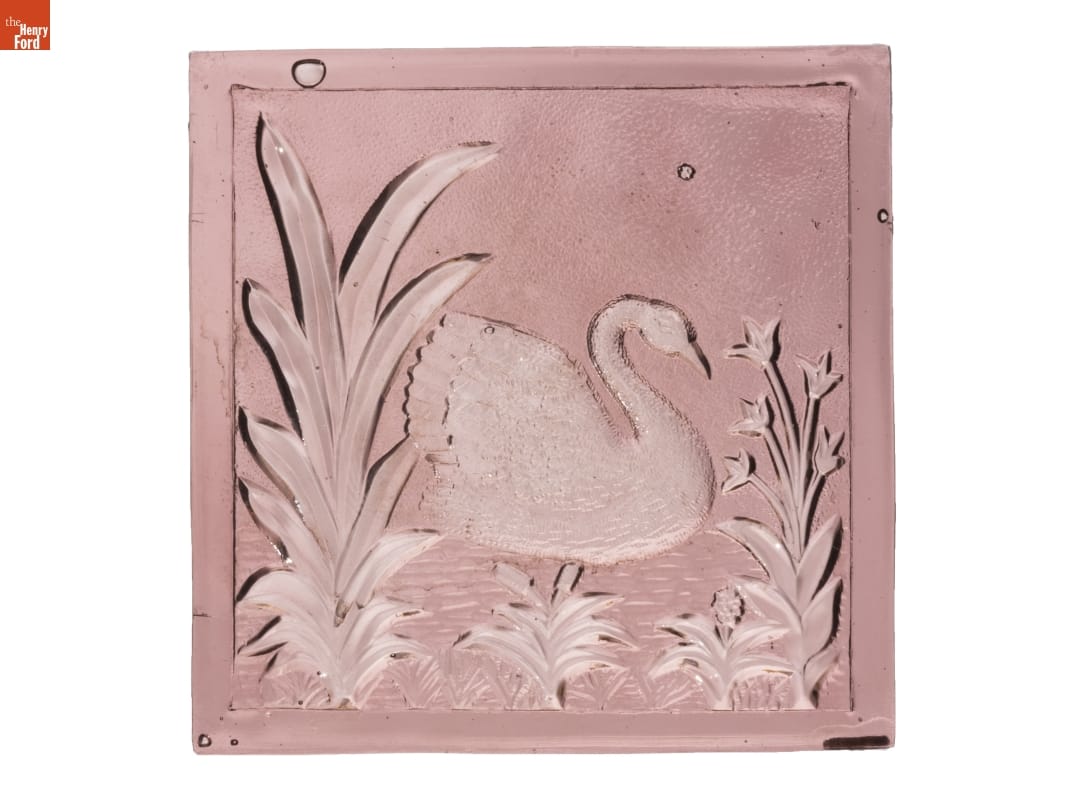
- Glass Tile, 1890-1903 -
- 1890-1903
- Collections - Artifact
Glass Tile, 1890-1903