
Search
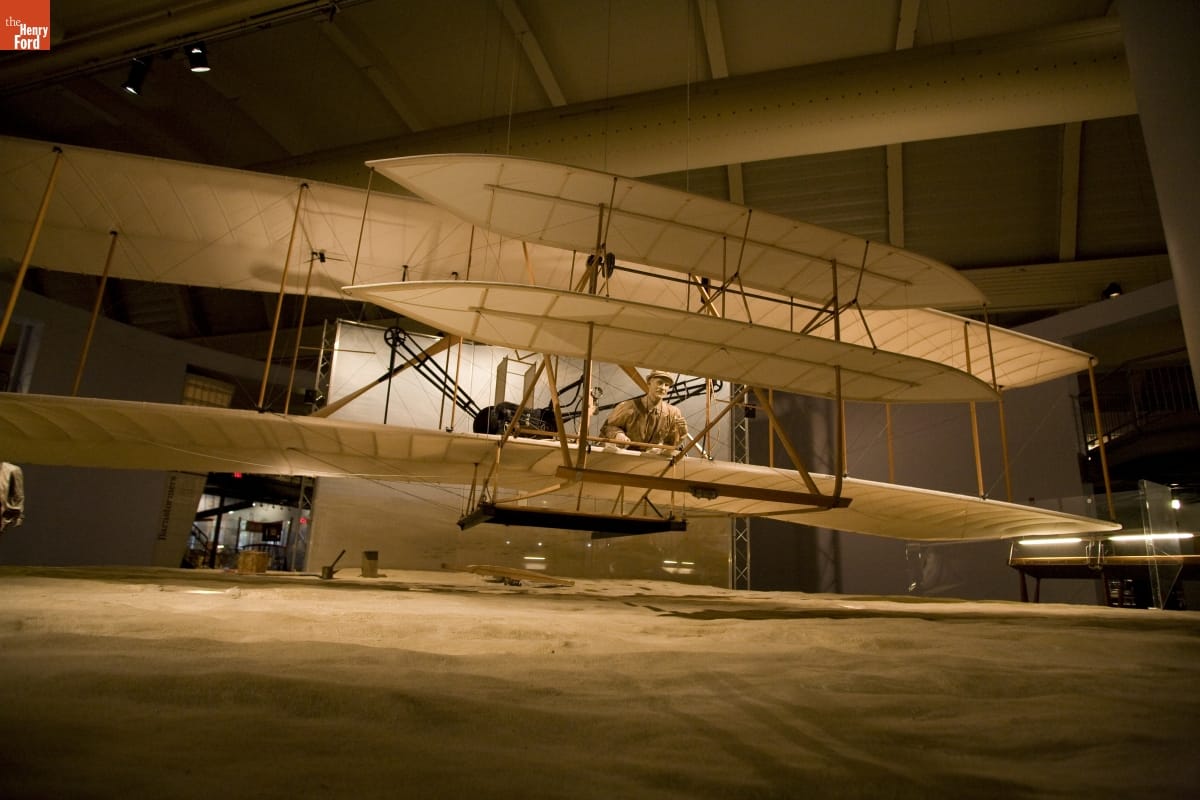
- Replica of the 1903 Wright Flyer - This copy of the 1903 Wright Flyer faithfully replicates the original aircraft. On December 17, 2003, the replica attempted to duplicate the Wright brothers' first flight at Kill Devil Hills, North Carolina, exactly one hundred years after that historic feat. The attempt was foiled by bad weather, though the replica flew successfully in earlier tests.
- 1903
- Collections - Artifact
Replica of the 1903 Wright Flyer
This copy of the 1903 Wright Flyer faithfully replicates the original aircraft. On December 17, 2003, the replica attempted to duplicate the Wright brothers' first flight at Kill Devil Hills, North Carolina, exactly one hundred years after that historic feat. The attempt was foiled by bad weather, though the replica flew successfully in earlier tests.
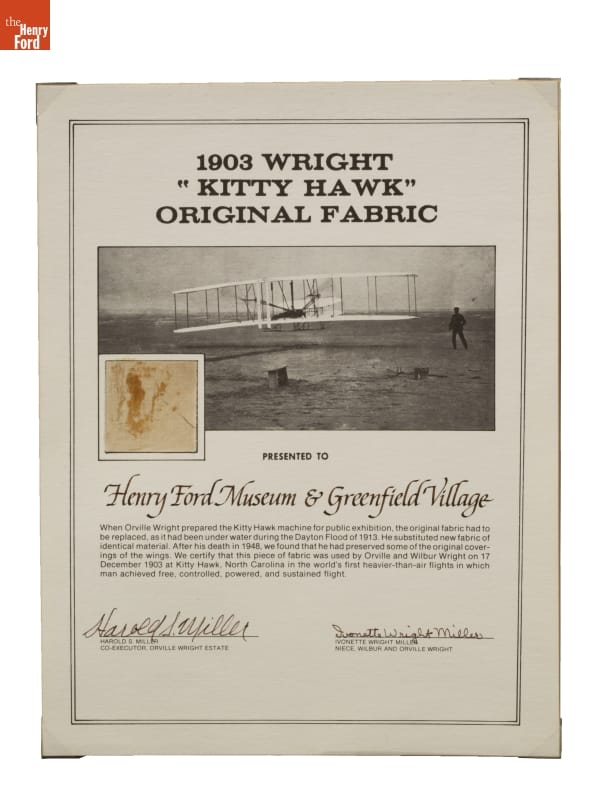
- Fabric Sample from the 1903 Wright Flyer - The Wright brothers abandoned most of their early aircraft but preserved the 1903 Flyer because of its historic significance. The Flyer was damaged in a 1913 flood and re-covered with new fabric. Orville Wright kept pieces of the original material. This fragment is from the original wing covering, as used on the first flight of December 17, 1903.
- December 17, 1903
- Collections - Artifact
Fabric Sample from the 1903 Wright Flyer
The Wright brothers abandoned most of their early aircraft but preserved the 1903 Flyer because of its historic significance. The Flyer was damaged in a 1913 flood and re-covered with new fabric. Orville Wright kept pieces of the original material. This fragment is from the original wing covering, as used on the first flight of December 17, 1903.
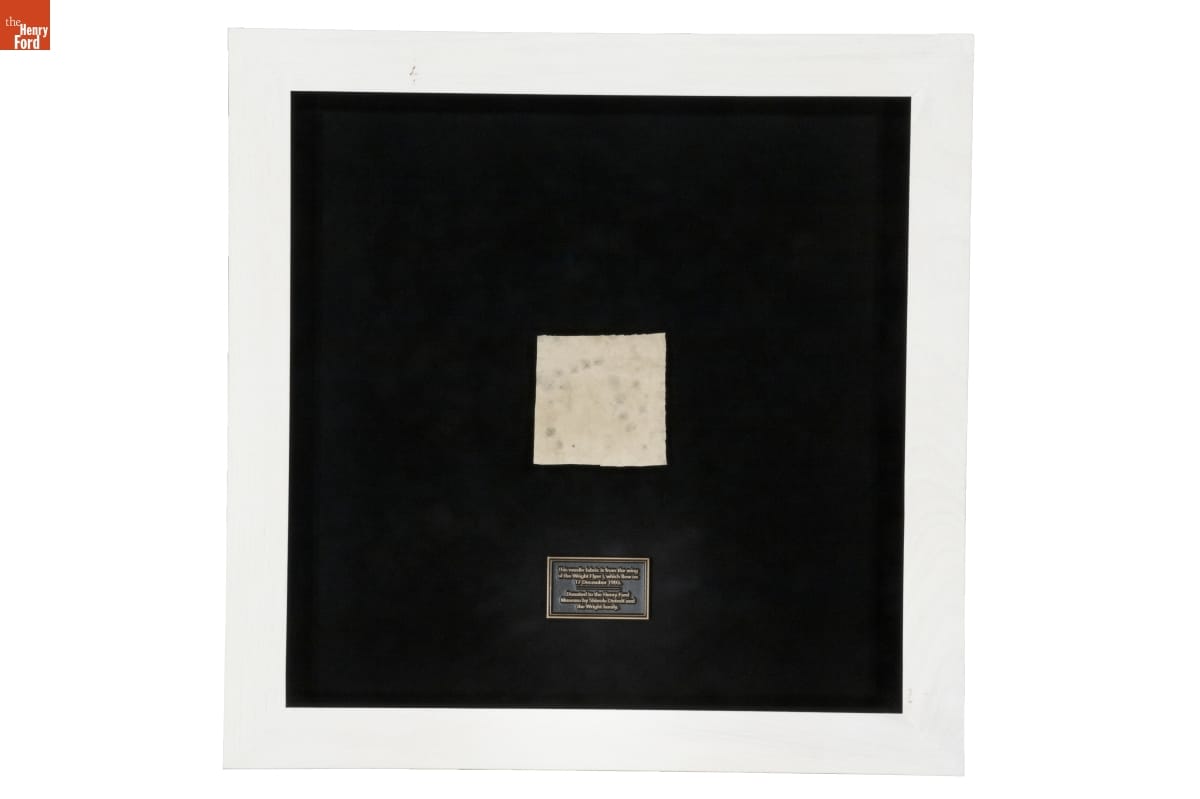
- Fragment of Muslin Fabric from 1903 Wright Flyer - Wilbur and Orville Wright covered the wings of their 1903 Wright Flyer airplane with unbleached muslin cloth. The tightly woven cotton fabric -- sold under the brand name "Pride of the West" -- was strong, flexible, and lightweight. This fragment is said to be from the original muslin used on the Flyer during its historic first flight of December 17, 1903.
- 1903
- Collections - Artifact
Fragment of Muslin Fabric from 1903 Wright Flyer
Wilbur and Orville Wright covered the wings of their 1903 Wright Flyer airplane with unbleached muslin cloth. The tightly woven cotton fabric -- sold under the brand name "Pride of the West" -- was strong, flexible, and lightweight. This fragment is said to be from the original muslin used on the Flyer during its historic first flight of December 17, 1903.
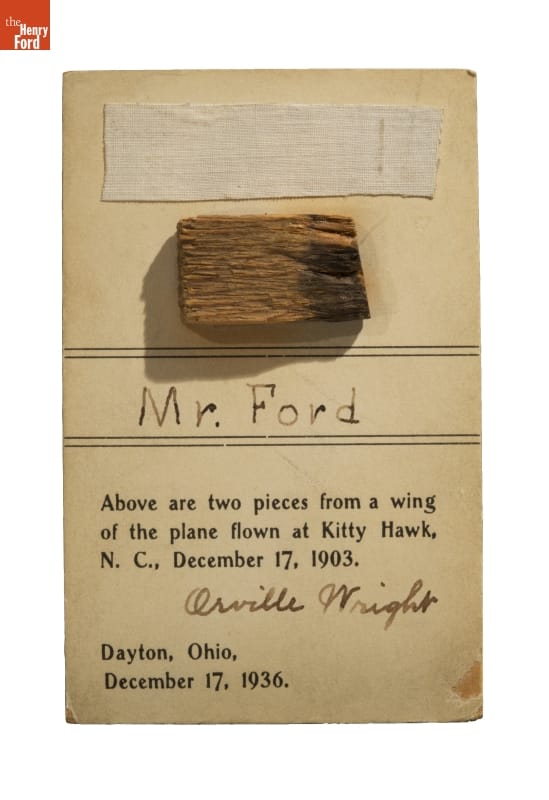
- Wood and Fabric Sample from the 1903 Wright Flyer - Orville Wright presented these samples of fabric and wood, from the 1903 Wright Flyer, to Henry Ford in 1936. Ford was in the process of acquiring the Wright brothers' home and bicycle shop for Greenfield Village. Pieces of the Wright Flyer became important symbols. The Apollo 11 astronauts carried some during the first manned Moon landing in 1969.
- December 17, 1903
- Collections - Artifact
Wood and Fabric Sample from the 1903 Wright Flyer
Orville Wright presented these samples of fabric and wood, from the 1903 Wright Flyer, to Henry Ford in 1936. Ford was in the process of acquiring the Wright brothers' home and bicycle shop for Greenfield Village. Pieces of the Wright Flyer became important symbols. The Apollo 11 astronauts carried some during the first manned Moon landing in 1969.
- The Wright Flyer's First Flight, Kill Devil Hills, North Carolina, December 17, 1903 - When John T. Daniels snapped the shutter on Orville Wright's camera, he captured one of the most significant images ever taken. The photo not only shows the moment of liftoff during the Wright brothers' first flight, but also the instant that heavier-than-air flight began. Daniels, a crewman at the Kill Devil Hills Life-Saving Station, had never used a camera before.
- December 17, 1903
- Collections - Artifact
The Wright Flyer's First Flight, Kill Devil Hills, North Carolina, December 17, 1903
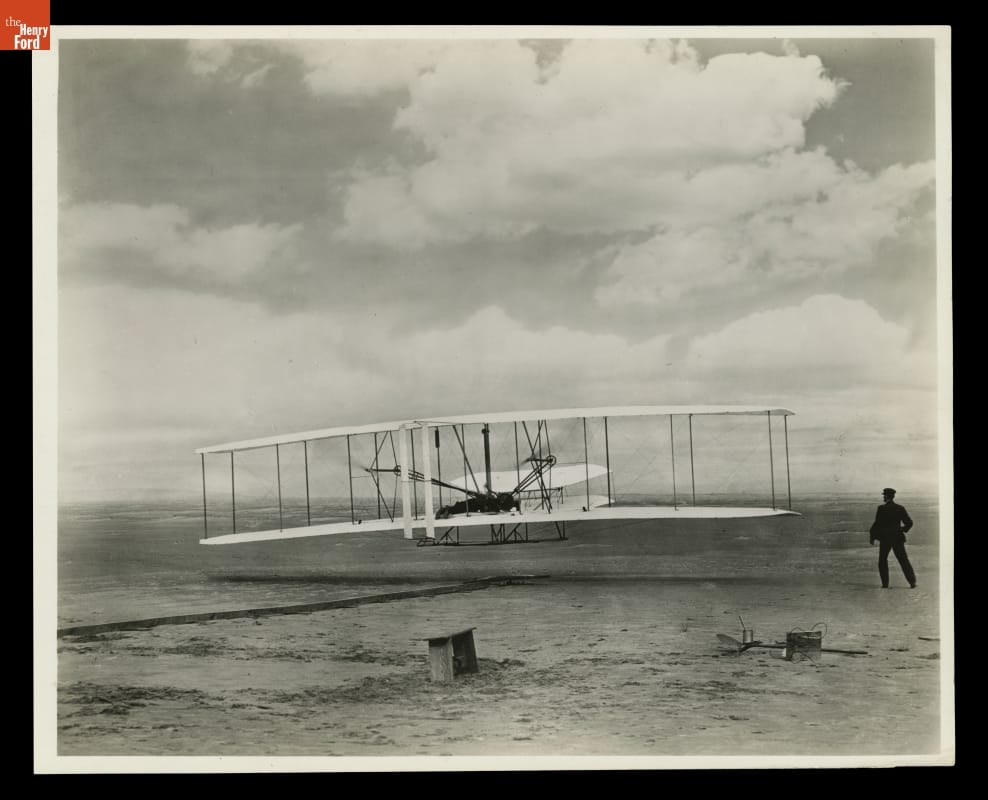
When John T. Daniels snapped the shutter on Orville Wright's camera, he captured one of the most significant images ever taken. The photo not only shows the moment of liftoff during the Wright brothers' first flight, but also the instant that heavier-than-air flight began. Daniels, a crewman at the Kill Devil Hills Life-Saving Station, had never used a camera before.
- Wright Flyer at Kill Devil Hills, North Carolina, circa 1903 - Wilbur and Orville Wright made a total of four flights on December 17, 1903. While the famous first flight, by Orville, lasted all of 12 seconds and covered just 120 feet, each subsequent attempt bettered those marks. The fourth flight, with Wilbur at the controls, traveled 852 feet and lasted a full 59 seconds.
- circa 1903
- Collections - Artifact
Wright Flyer at Kill Devil Hills, North Carolina, circa 1903
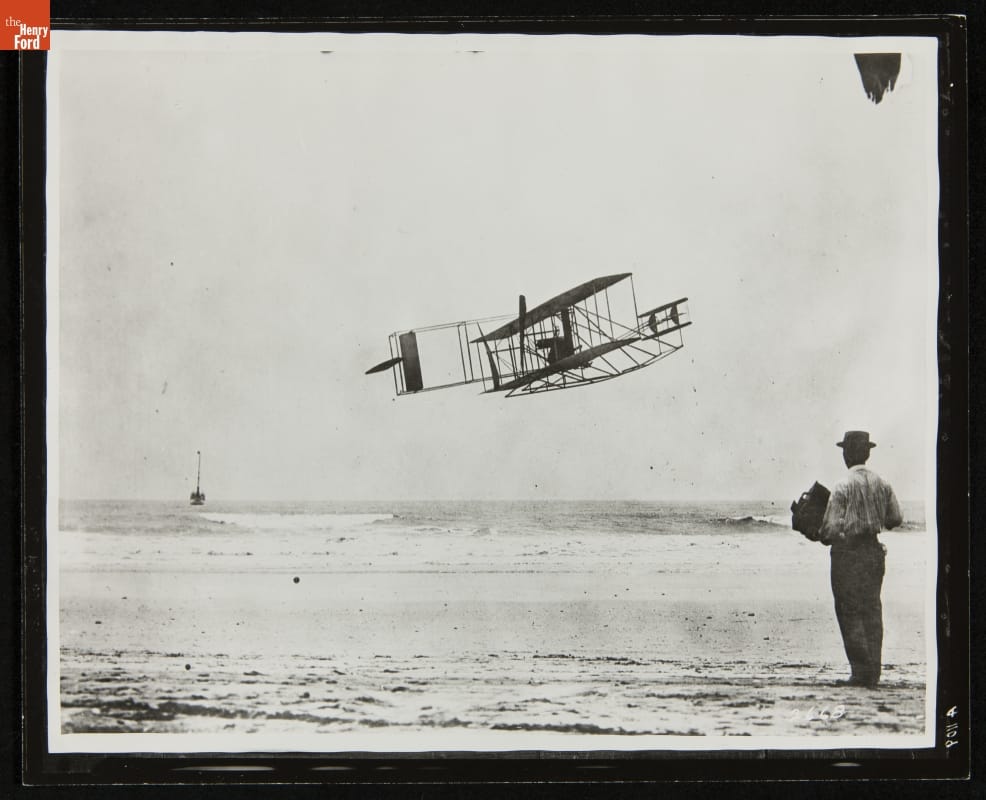
Wilbur and Orville Wright made a total of four flights on December 17, 1903. While the famous first flight, by Orville, lasted all of 12 seconds and covered just 120 feet, each subsequent attempt bettered those marks. The fourth flight, with Wilbur at the controls, traveled 852 feet and lasted a full 59 seconds.
- Wright Flyer at Kill Devil Hills, North Carolina, November 24, 1903 - Orville and Wilbur Wright were both enthusiastic photographers. They took a camera with them to the Kill Devil Hills near Kitty Hawk, North Carolina, and carefully documented their aviation experiments with it. This photo shows the 1903 Wright Flyer at Kill Devil Hills on November 24, 1903. Three weeks later, it made the first successful controlled, powered, heavier-than-air flight.
- December 01, 1903
- Collections - Artifact
Wright Flyer at Kill Devil Hills, North Carolina, November 24, 1903
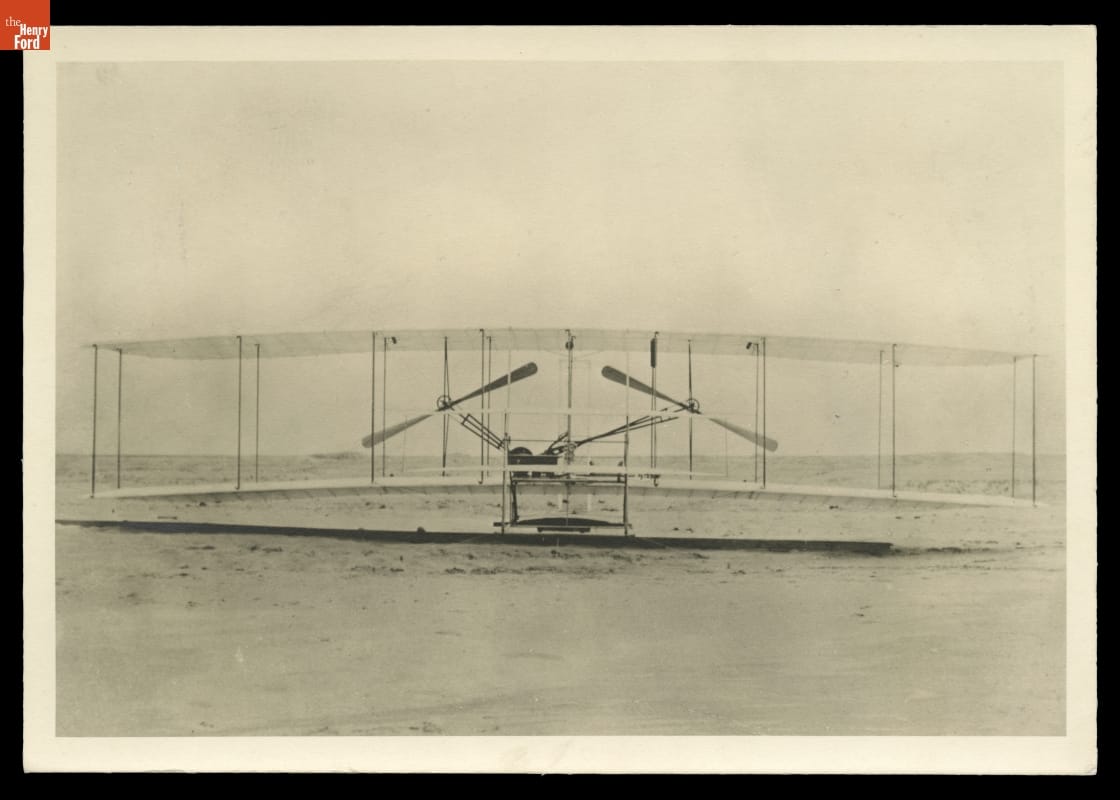
Orville and Wilbur Wright were both enthusiastic photographers. They took a camera with them to the Kill Devil Hills near Kitty Hawk, North Carolina, and carefully documented their aviation experiments with it. This photo shows the 1903 Wright Flyer at Kill Devil Hills on November 24, 1903. Three weeks later, it made the first successful controlled, powered, heavier-than-air flight.
- First Flight of Wright 1903 Flyer at Kill Devil Hills, North Carolina, December 17, 1903 - When John T. Daniels snapped the shutter on Orville Wright's camera, he captured one of the most significant images ever taken. The photo not only shows the moment of liftoff during the Wright brothers' first flight, but also the instant that heavier-than-air flight began. Daniels, a crewman at the Kill Devil Hills Life-Saving Station, had never used a camera before.
- December 17, 1903
- Collections - Artifact
First Flight of Wright 1903 Flyer at Kill Devil Hills, North Carolina, December 17, 1903
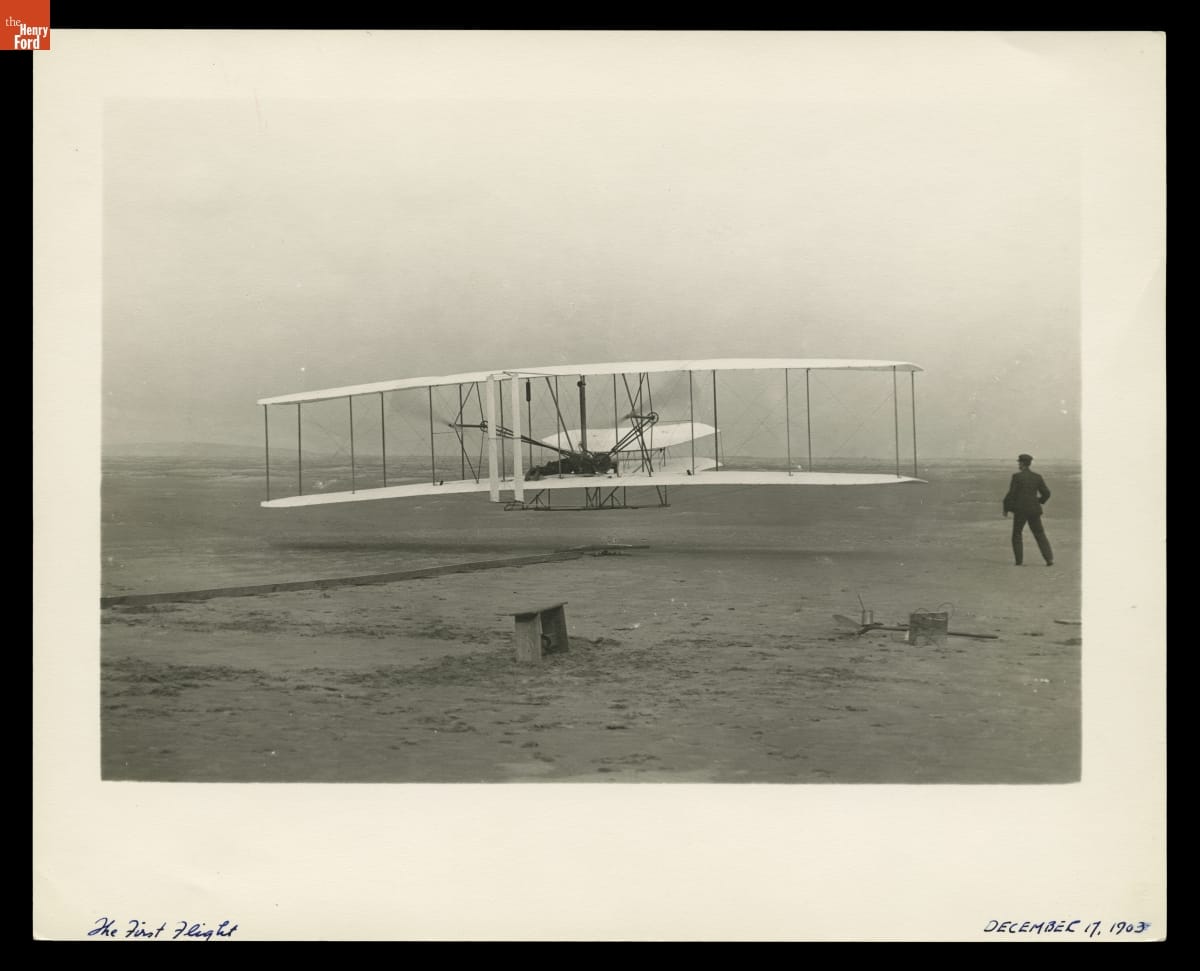
When John T. Daniels snapped the shutter on Orville Wright's camera, he captured one of the most significant images ever taken. The photo not only shows the moment of liftoff during the Wright brothers' first flight, but also the instant that heavier-than-air flight began. Daniels, a crewman at the Kill Devil Hills Life-Saving Station, had never used a camera before.
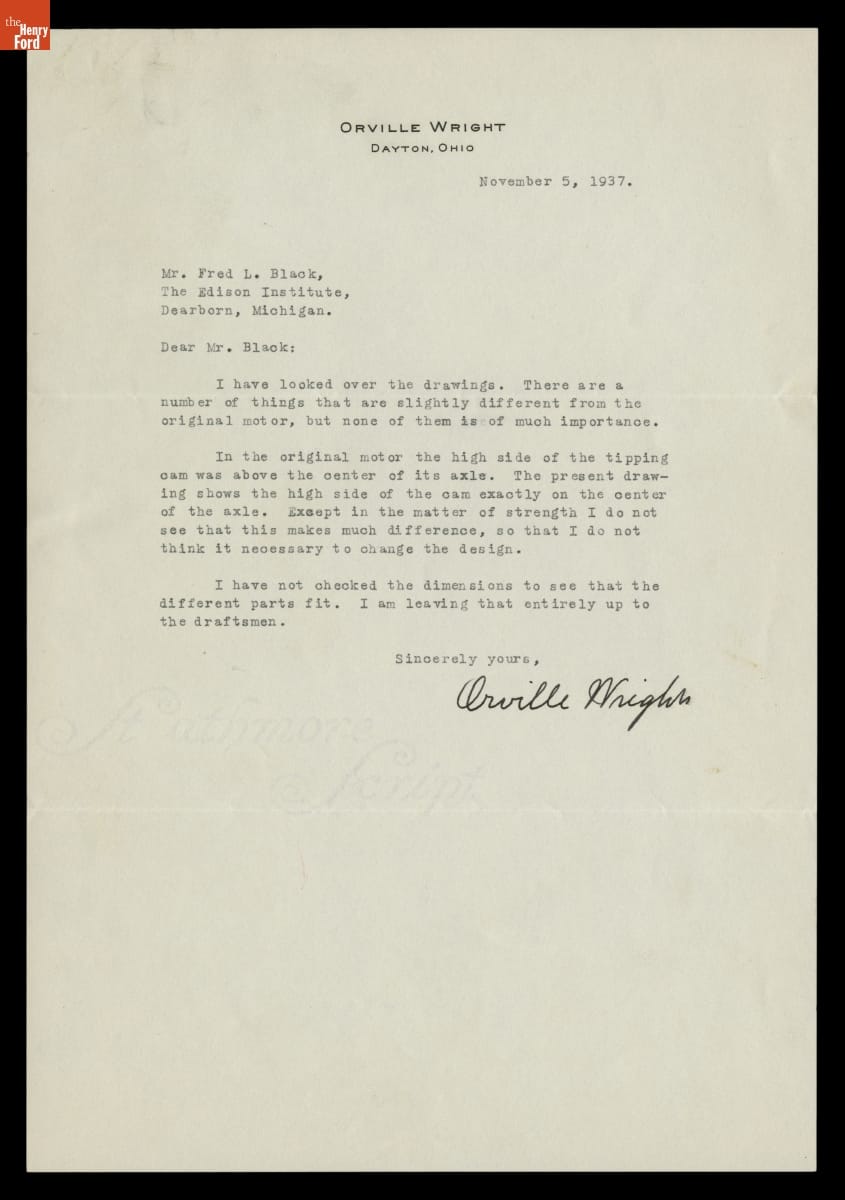
- Letter from Orville Wright to Fred Black about the 1903 Wright Flyer Engine, November 5, 1937 - Henry Ford acquired the Wright brothers' home and cycle shop in 1936, and he relocated the buildings from Dayton, Ohio, to Greenfield Village in Dearborn, Michigan. Orville Wright consulted on the project to ensure accuracy. In this letter to Ford's associate Fred Black, Wright commented on drawings for a replica of the engine used in the brothers' 1903 Flyer airplane.
- November 05, 1937
- Collections - Artifact
Letter from Orville Wright to Fred Black about the 1903 Wright Flyer Engine, November 5, 1937
Henry Ford acquired the Wright brothers' home and cycle shop in 1936, and he relocated the buildings from Dayton, Ohio, to Greenfield Village in Dearborn, Michigan. Orville Wright consulted on the project to ensure accuracy. In this letter to Ford's associate Fred Black, Wright commented on drawings for a replica of the engine used in the brothers' 1903 Flyer airplane.
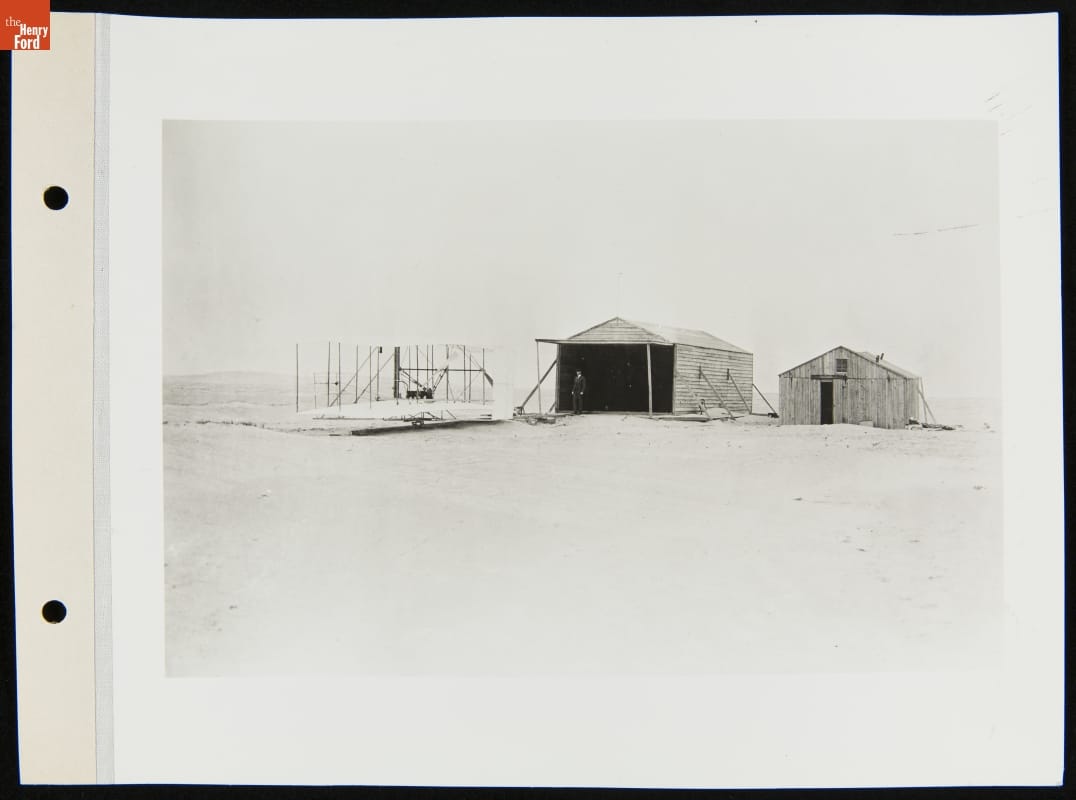
- The Wright Brothers' 1903 Flyer and Camp at Kill Devil Hills, North Carolina - Wilbur and Orville Wright established a modest camp among the sand dunes at Kill Devil Hills. They built a wooden shed to house their glider -- and themselves -- in 1901. When they returned with the powered Flyer airplane in 1903, the brothers built a new, larger hangar and converted the old shed into living quarters. Wilbur jokingly called it their "summer house."
- November 24, 1903
- Collections - Artifact
The Wright Brothers' 1903 Flyer and Camp at Kill Devil Hills, North Carolina
Wilbur and Orville Wright established a modest camp among the sand dunes at Kill Devil Hills. They built a wooden shed to house their glider -- and themselves -- in 1901. When they returned with the powered Flyer airplane in 1903, the brothers built a new, larger hangar and converted the old shed into living quarters. Wilbur jokingly called it their "summer house."